
CO2 Bubbles Per Second: Why Bubble Count Isn't Your Real CO2 Measurement
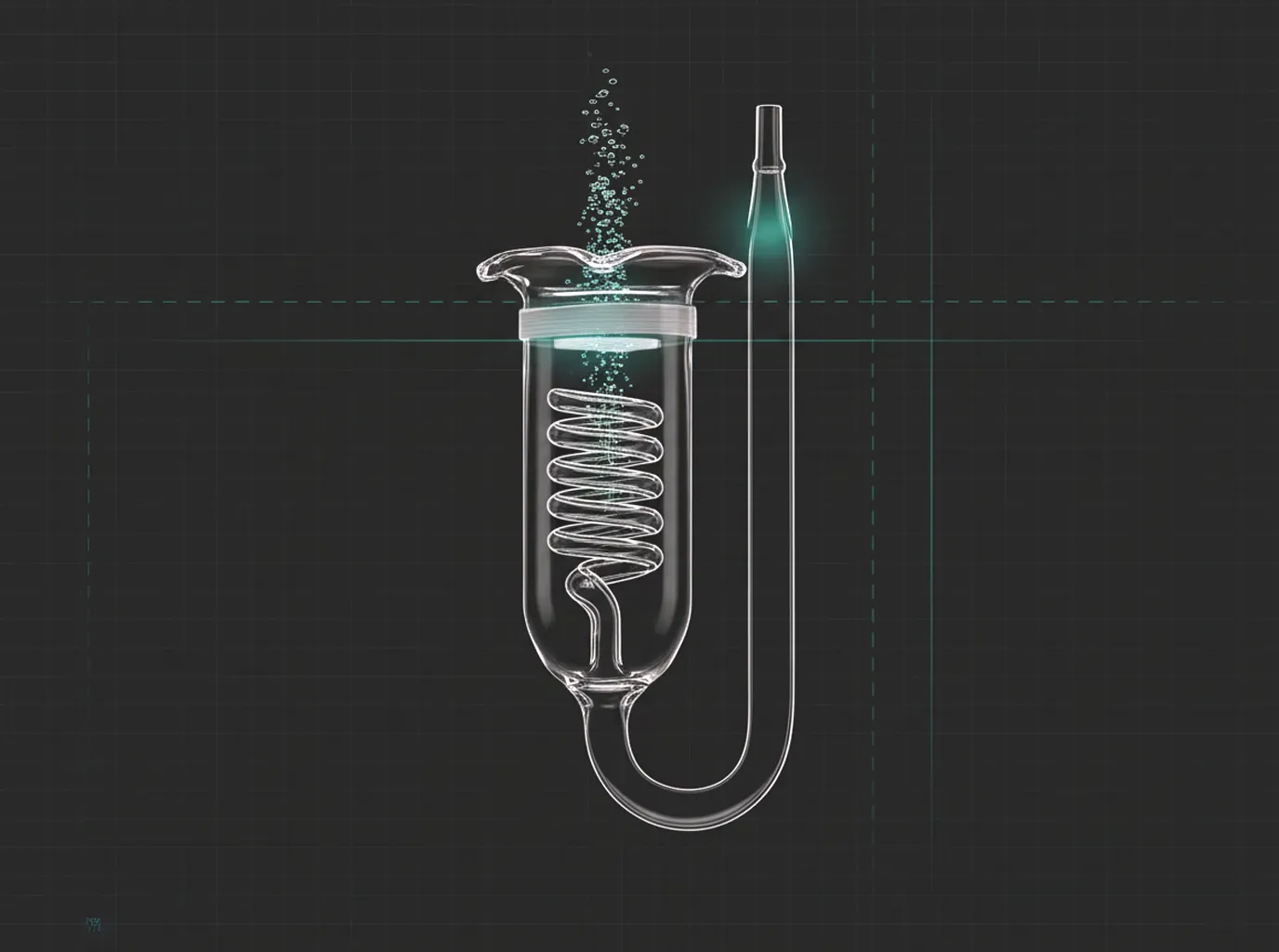
The single unifying system model governing this problem
Your planted aquarium is a carbon throughput system. Plant growth is limited by how much dissolved CO2 is available across the entire tank during the photoperiod. The bottleneck is not how many bubbles enter the water. The bottleneck is how much carbon actually dissolves and remains stable within livestock tolerance.
When aquarists obsess over bubbles per second, they are measuring injection rate, not dissolved concentration. Injection is upstream. Plant uptake happens downstream. Between those two points sits the real constraint: dissolution efficiency and distribution stability.
Everything in this guide maps back to one thesis: bubbles per second is an input metric, but plant growth depends on dissolved carbon stability.
Quick Summary (Beginner)
Bubbles per second is simply a visual way to estimate how fast CO2 gas leaves your regulator. It does not tell you how much CO2 dissolves in the tank.
In most planted tanks, two systems running the same bubble rate can have completely different dissolved CO2 levels. Diffuser efficiency, reactor design, tank size, surface agitation, and flow pattern all change the outcome.
This explains why copying someone else's bubble rate rarely works.
Instead of chasing a specific bubble count, focus on dissolved CO2 indicators such as pH drop, drop checker stability, plant response, and fish behavior. The goal is stable carbon availability, not a specific bubble number.
What Bubbles Per Second Actually Measures
If you have ever stared at a bubble counter counting one bubble, two bubbles, three bubbles, it feels precise.
But that counter measures gas passing through a small chamber filled with water or oil. It does not measure bubble size inside the aquarium. It does not measure how much dissolves. It does not measure distribution.
In practice, bubbles per second is simply a regulator setting reference. It tells you how open your needle valve is.
This is why two different regulators can show the same bubble rate but deliver different actual gas volumes. Bubble size inside the counter varies.
Reconnect to the model: injection rate is only the first stage in the carbon throughput chain.
Why Bubble Count Fails as a CO2 Target
When this starts appearing, many aquarists ask how many bubbles per second they should run in a 60 liter tank or a 120 liter tank.
In most tanks, that question assumes a direct relationship between bubble rate and dissolved concentration. That relationship does not exist in isolation.
Several variables interrupt the chain between injection and uptake.
First, diffuser efficiency determines how much gas dissolves before reaching the surface. Second, flow determines how evenly dissolved CO2 spreads. Third, surface agitation determines how much CO2 escapes. Fourth, plant mass determines how quickly carbon is consumed.
You will often notice that increasing bubble rate in a poorly diffused tank produces more visible mist but not better plant growth.
This explains why bubble count is not the bottleneck. Dissolved stability is.
Reconnect again: carbon must dissolve and distribute before plants can use it.
The Carbon Throughput Chain
To understand how much CO2 you really need, you must visualize the entire path.
Gas leaves the regulator. It travels through tubing. It enters a diffuser or reactor. It dissolves into water. It circulates through the tank. Plants absorb it. Fish tolerate it.
At each step, loss or instability can occur.
In most tanks, inefficiency occurs at dissolution and distribution stages. Large bubbles rise too quickly. Poor flow leaves dead zones. Surface agitation strips CO2 prematurely.
This is why two tanks of equal volume can require dramatically different bubble rates.
Reconnect again: bubble count sits at the beginning of the system, not at the growth bottleneck.
What Actually Determines CO2 Requirement
When you ask how much CO2 you need, you are really asking how much dissolved carbon is required to remove carbon as a growth limitation under your specific conditions.
In most planted tanks, light intensity sets demand. Higher light increases photosynthesis rate, which increases carbon uptake rate.
You will often notice algae appearing when light is increased without adjusting CO2. That is carbon limitation becoming visible.
Plant density also matters. A sparsely planted tank consumes less carbon than a dense stem jungle.
This explains why carbon demand scales with energy input and biomass, not just tank size.
Reconnect again: demand defines required dissolved concentration, not bubble rate.
Why Two Tanks With the Same Bubble Count Behave Differently
If you have ever compared your setup with another aquarist running the same bubbles per second, you may have seen different results.
One tank may show strong pearling and deep color. The other struggles with algae.
In practice, diffuser quality, reactor design, filter turnover, and aquascape layout all influence dissolution and distribution.
Almost always, when outcomes differ, the bottleneck lies downstream of injection.
This is usually the point when experienced aquarists stop discussing bubbles and start discussing pH drop and flow pattern.
Reconnect to the model: carbon throughput depends on efficiency beyond injection.
Measuring Dissolved CO2 Instead of Counting Bubbles
In most high tech planted tanks, aquarists use a pH drop relative to degassed baseline as a proxy for dissolved CO2 concentration.
For example, if degassed water sits at pH 7.5 and drops to 6.5 during peak injection with stable KH, that suggests roughly 30 ppm dissolved CO2.
You will often notice that healthy growth correlates with a consistent pH drop around this range.
This explains why pH drop gives more actionable information than bubble count.
Drop checkers provide additional visual confirmation, though they respond slowly due to diffusion delay.
Reconnect again: dissolved equilibrium is the true measurement point.
When Bubble Count Does Matter
Bubble count is not useless. It is a tuning reference.
Once you establish a stable dissolved CO2 level, the bubble rate that produces it becomes your baseline.
In practice, if you clean a diffuser and dissolution efficiency improves, you may need fewer bubbles per second to achieve the same pH drop.
This is why experienced aquarists treat bubble count as a reproducibility metric, not a target.
Reconnect again: injection rate supports the stability envelope but does not define it.
Signs You Are Chasing Bubbles Instead of Stability
In most tanks, instability appears as fluctuating algae outbreaks, fish stress in the morning, or inconsistent plant growth despite constant bubble rate.
You will often notice that adjusting bubble count daily produces oscillation rather than improvement.
Almost always, inconsistency in injection timing, diffuser cleanliness, or flow pattern is the real cause.
This explains why stabilizing injection schedule and cleaning equipment often resolves issues without increasing bubbles.
Reconnect again: stable carbon supply matters more than injection magnitude.
Balancing Plant Growth and Livestock Safety
Carbon throughput must sit between two limits.
On one side is plant limitation. On the other is fish tolerance.
In most planted tanks, livestock tolerate stable CO2 levels around 30 ppm if oxygenation is adequate. They struggle with rapid increases or uneven distribution.
You will often notice fish stress appearing shortly after lights on if CO2 ramps too aggressively.
This is why gradual ramp up and consistent timing widen the safety margin.
Reconnect again: the goal is not maximum CO2. The goal is stable carbon inside the tolerance envelope.
System Interactions
Bubble count interacts indirectly with every subsystem in the tank.
Light
Higher light increases carbon demand. Bubble rate must support dissolved concentration that matches light intensity.
Flow
Strong circulation improves distribution efficiency. Weak flow requires higher injection to compensate.
Surface Agitation
Increased agitation improves oxygen but removes CO2. This alters how many bubbles are needed to maintain equilibrium.
KH and Buffering
KH determines how much pH shifts per unit CO2. Stable KH makes dissolved estimation predictable.
Plant Mass
Dense plant growth increases uptake rate, altering required injection baseline over time.
Reconnect once more: injection rate must adapt to system demand and efficiency.
Advanced: Gas Physics and Dissolution
CO2 dissolves according to Henry's Law. Dissolution efficiency depends on contact time, pressure, and surface area.
Microbubbles increase surface area. Reactors increase contact time. Inline systems increase pressure.
Larger bubbles escape rapidly. High surface agitation increases gas exchange and CO2 loss.
This explains why improving dissolution can reduce required bubble count while increasing dissolved concentration.
Advanced: Stability Analysis
Think of CO2 control in three layers.
Layer 1: Efficient dissolution through clean diffusers or reactors.
Layer 2: Even distribution across the entire tank volume.
Layer 3: Stable injection timing aligned with photoperiod.
If any layer fails, bubble rate must increase to compensate, narrowing safety margin.
In most tanks, algae issues trace back to inconsistent carbon rather than insufficient injection capacity.
This explains why long term success correlates with stable equilibrium rather than high bubble numbers.
Bubbles per second is a knob. Stability is the outcome.
Common Myths
More bubbles always mean more plant growth. Growth depends on dissolved concentration and stability.
There is a universal bubbles per second rule per liter. Tank design and efficiency vary too much for that to hold.
Fish gasping always means too many bubbles. It may mean poor distribution or low oxygen.
Matching someone else's bubble rate guarantees similar results. Each system has unique throughput constraints.
FAQ
How many bubbles per second for a 60 liter tank. There is no fixed number. Adjust until you achieve stable target pH drop with safe livestock behavior.
Why does my bubble rate change slightly day to day. Regulator pressure and temperature can influence needle valve behavior.
Should I increase bubbles if plants are not pearling. Only after confirming distribution, light intensity, and nutrient balance.
Is bubble count useful at all. Yes, as a repeatable baseline once dissolved levels are verified.
What matters more than bubbles per second. Stable dissolved CO2 concentration across the entire tank.
Related Guides
How Much CO2 Do I Need
CO2 Diffusers Guide
CO2 Drop Checker Guide
How To Lower pH Safely
High Light vs Low Light Systems
Clean URL suggestion: /co2/bubbles-per-second