
Complete Beginner's Guide to Planted Aquariums (2026)
Quick Summary
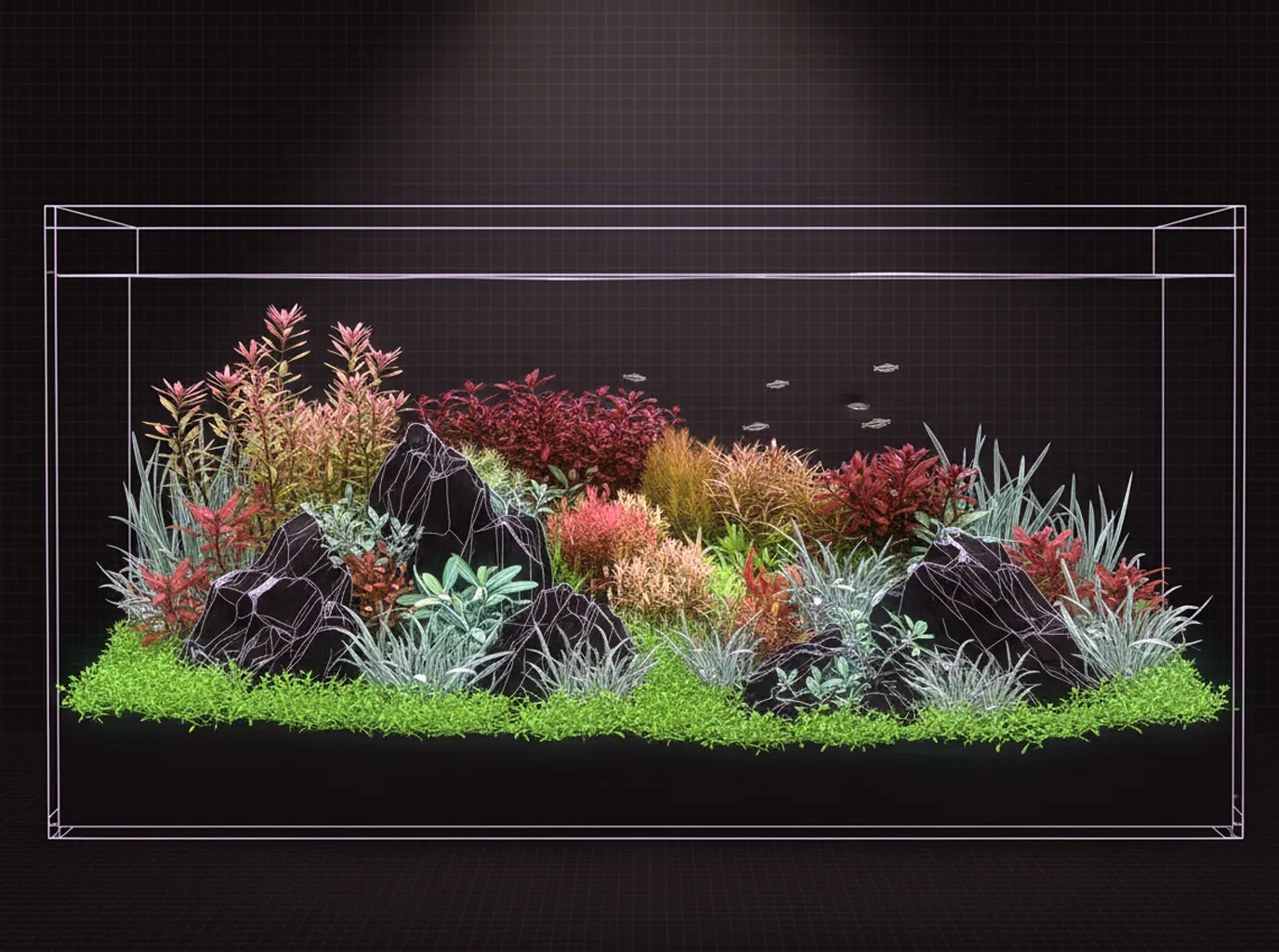
Starting a planted aquarium can feel overwhelming, but it doesn't have to be. A planted tank is simply an aquarium ecosystem where live plants, fish, and beneficial bacteria work together to create a stable, beautiful environment.
What you need to know right now:
- Plants need three things: light, nutrients, and CO₂ (though CO₂ isn't always required)
- Your first tank should focus on stability over perfection
- Low-tech setups (no pressurized CO₂) are easier to manage and just as rewarding
- Start with easy plants like Anubias, Java Fern, or Amazon Sword
- Most beginner problems come from imbalance, not lack of equipment
When not to panic: Slight algae growth is normal. Plants may "melt" when first added (they're adapting). Water cloudiness in the first few weeks is part of the cycling process. These are not failures—they're part of the system finding balance.
This guide will walk you through the core concepts, equipment decisions, and practical steps to set up and maintain your first planted aquarium with clarity and confidence.
What Is a Planted Aquarium?
A planted aquarium is a closed ecosystem where live aquatic plants perform the same functions they do in nature: they consume nutrients (including fish waste), produce oxygen, absorb carbon dioxide, and compete with algae for resources.
Unlike artificial decorations, live plants actively participate in your tank's biological system. They:
- Filter the water by consuming ammonia, nitrate, and phosphate
- Oxygenate the water during the day (through photosynthesis)
- Provide habitat and security for fish and invertebrates
- Compete with algae when the system is balanced
- Create natural, living beauty that changes and grows over time
A well-balanced planted tank requires less maintenance than a fish-only tank because the plants handle much of the biological workload.
Why Start a Planted Tank?
Planted tanks offer several advantages over traditional aquariums:
Biological stability: Plants consume harmful nitrogen compounds (ammonia, nitrite, nitrate) that would otherwise stress or harm fish. A heavily planted tank is more forgiving of feeding mistakes and bioload increases.
Algae control: When plants are healthy and growing, they outcompete algae for nutrients and light. A balanced planted tank has minimal algae problems.
Natural environment for fish: Many tropical fish species evolved in densely planted waters. Live plants reduce stress, provide shelter, and encourage natural behaviors.
Aesthetic depth: Planted tanks offer endless design possibilities—Dutch aquascaping, nature aquarium style, jungle tanks, iwagumi hardscape layouts. Plants grow, spread, and evolve over time, creating a dynamic living artwork.
Educational and rewarding: Watching an ecosystem mature—from the initial setup to a thriving, self-regulating system—is deeply satisfying. You're not just maintaining a tank; you're cultivating a living environment.
The Core Principles: Light, CO₂, and Nutrients
Every planted tank depends on three fundamental resources, and understanding how they interact is the foundation of success.
Light
Light is the energy source for photosynthesis. Without adequate light, plants cannot grow, no matter how much CO₂ or fertilizer you add.
What you need to know:
- Light intensity determines which plants you can grow. Low light suits beginner plants (Anubias, Java Fern, Cryptocoryne); high light supports demanding species (carpet plants, red plants).
- Duration matters more than intensity for algae control. Most planted tanks do well with 6–8 hours of light per day.
- Too much light without adequate CO₂ and nutrients causes algae, not faster plant growth.
Learn more: How Much Light Do I Need?
CO₂
Carbon dioxide is the building block of plant matter. Plants pull CO₂ from the water and combine it with light energy to create sugars and structural tissue.
What you need to know:
- Fish respiration and organic decay provide some CO₂, but it's often not enough for fast-growing or demanding plants.
- Pressurized CO₂ injection (with a regulator, tank, and diffuser) dramatically increases plant growth and allows you to grow difficult species.
- You do not need CO₂ to start. Many beautiful planted tanks run successfully without it (called "low-tech" setups).
The decision to add CO₂ depends on your plant choices, light level, and how much maintenance you want to manage. Low-tech is simpler. High-tech (with CO₂) is faster and more flexible, but requires more attention to balance.
Nutrients
Plants need both macronutrients (nitrogen, phosphorus, potassium) and micronutrients (iron, magnesium, trace elements).
What you need to know:
- Fish waste and food provide nitrogen and phosphorus, but often not enough for heavy plant growth.
- Liquid fertilizers (like Seachem Flourish or NilocG Thrive) supplement these nutrients.
- Root-feeding plants (like swords and crypts) also benefit from root tabs placed in the substrate.
- Nutrient deficiency looks like: pale leaves, stunted growth, yellowing, holes in leaves.
- Excess nutrients (without plant uptake) lead to algae.
Nutrient balance is about matching supply to plant demand. If your plants are growing and healthy, your nutrient levels are working. If you have persistent algae, your plants may not be consuming nutrients fast enough—often due to inadequate light or CO₂, not too much fertilizer.
The Three Pillars: Balance Over Perfection
A stable planted tank is built on balanced interaction between light, CO₂, and nutrients. This is sometimes called the "three pillars" model.
- High light + high CO₂ + high nutrients = fast growth, but requires precise management
- Low light + no added CO₂ + moderate nutrients = slow, steady growth with minimal maintenance
- Mismatched levels (e.g., high light + no CO₂ + low nutrients) = algae, poor plant health, instability
Your goal as a beginner is not to maximize growth—it's to match your inputs so your plants can use what you give them. Start with low-tech (low light, no CO₂, simple fertilization) and increase intensity only when you understand how the system responds.
Learn more: The 3 Pillars of Planted Tanks
What Equipment Do You Need?
You don't need a large budget to start a planted tank. Here's what's essential versus what's optional.
Essential
Tank: Any aquarium works. Start with 10–20 gallons for easier maintenance.
Filter: A simple hang-on-back (HOB) or sponge filter is fine for beginners. The goal is gentle water movement and biological filtration, not strong current.
Light: An LED light designed for planted tanks. Look for adjustable intensity or dimmability. Avoid generic fish-only lights—they're often too weak for plants.
Learn more: How Much Light Do I Need?
Substrate: Inert gravel works for water-column feeders (like stem plants), but nutrient-rich aquasoil or capped soil improves success for root feeders. Root tabs can supplement inert substrates.
Learn more: Best Substrate for Beginners
Heater (for tropical fish): Maintains stable temperature. Most planted tank species prefer 72–78°F (22–26°C).
Water conditioner: Removes chlorine/chloramine from tap water (e.g., Seachem Prime).
Helpful Additions
Liquid fertilizer: Provides micro and macronutrients. Dose weekly or as directed.
Root tabs: Nutrient capsules for substrate-rooted plants.
Timer: Keeps your light schedule consistent (critical for algae control).
Test kit: Measures pH, ammonia, nitrite, nitrate. Useful during cycling and troubleshooting.
Optional (Not Required for Beginners)
CO₂ system: Pressurized CO₂ setup with regulator, diffuser, drop checker, and bubble counter. Expensive, but transformative if you want fast growth and demanding plants.
Canister filter: Stronger filtration and more media capacity, but overkill for small tanks.
PAR meter: Measures light intensity precisely. Only needed if you're experimenting with high-light setups.
Choosing Your First Plants
Start with species that tolerate a wide range of conditions, grow slowly enough to stay manageable, and don't require CO₂.
Easy, No-CO₂ Plants
Anubias (Anubias nana, Anubias barteri): Slow-growing, attach to rocks or wood (don't bury the rhizome). Tolerates low light.
Java Fern (Microsorum pteropus): Attaches to hardscape. Extremely hardy. Grows in almost any conditions.
Amazon Sword (Echinodorus species): Classic beginner plant. Grows large, feeds from roots. Benefits from root tabs.
Cryptocoryne (various species): Slow-growing, root-feeding, adapts to low or moderate light. May "melt" initially but usually grows back.
Java Moss (Taxiphyllum barbieri): Carpeting moss that grows on anything. Great for shrimp tanks and hiding fry.
Water Sprite (Ceratopteris thalictroides): Fast-growing floating or rooted plant. Excellent for absorbing excess nutrients.
These plants will thrive in a low-tech setup (low light, no CO₂, occasional fertilization). Avoid demanding species like carpet plants (Monte Carlo, Dwarf Baby Tears), red stem plants, or Rotala until you've gained experience.
Learn more: Easy Plants for Beginners
Setting Up Your First Planted Tank (Step-by-Step)
1. Plan Your Layout
Decide on hardscape placement (rocks, driftwood) before adding substrate. Taller plants go in the back, shorter ones in the front. Leave open swimming areas for fish.
2. Add Substrate
Rinse inert substrates (gravel, sand) to remove dust. If using aquasoil, do not rinse—just place it gently. Aim for 2–3 inches depth, sloping higher toward the back for depth perspective.
Insert root tabs if using inert substrate and planting root feeders.
3. Position Hardscape
Place driftwood and rocks. If attaching Anubias or Java Fern, secure them now with thread or superglue gel (cyanoacrylate is aquarium-safe).
4. Fill the Tank Slowly
Place a plate or bowl on the substrate and pour water onto it to avoid disturbing the substrate. Fill halfway.
5. Plant
Plant rooted species by burying roots but not crowns or rhizomes. For stem plants, remove lower leaves and plant stems in small groups. Space plants to allow growth.
If adding floating plants, place them on the surface after filling completely.
6. Fill Completely and Add Equipment
Finish filling the tank, install your filter and heater, add water conditioner, and turn on your light.
Set your light to a timer: 6–8 hours per day. Do not run it 24/7.
7. Cycle the Tank
Your tank must develop beneficial bacteria that convert ammonia (toxic) → nitrite (toxic) → nitrate (less harmful). This process is called "cycling."
Fishless cycling (recommended): Add a source of ammonia (pure ammonia solution, fish food, or a few hardy plants). Test water regularly. When ammonia and nitrite both read 0 ppm, and nitrate is present, the cycle is complete (usually 3–6 weeks).
Fish-in cycling (slower, more stressful for fish): Add a very small number of hardy fish and perform frequent water changes to keep ammonia/nitrite low.
Plants speed up the cycle by consuming ammonia directly.
8. Add Fish Gradually
After the cycle completes, add fish slowly—only a few at a time. This prevents bioload spikes that overwhelm your bacterial colony.
9. Maintain Consistency
- Perform 20–30% water changes weekly (or biweekly if heavily planted).
- Dose liquid fertilizer after water changes.
- Trim dead or dying leaves.
- Monitor for algae—address imbalances early.
Understanding Water Parameters
Water chemistry affects both plant growth and fish health. You don't need to obsess over numbers, but understanding the basics helps you troubleshoot.
pH
Measures acidity or alkalinity (scale of 0–14; 7 is neutral). Most tropical plants and fish prefer pH 6.5–7.5.
- CO₂ injection lowers pH slightly.
- Aquasoils tend to lower pH over time.
- High KH buffers pH, preventing swings.
Stability matters more than hitting a specific number. Avoid drastic pH changes—they stress fish.
KH (Carbonate Hardness)
Measures buffering capacity. Higher KH = more stable pH.
- If your pH fluctuates wildly, your KH may be too low.
- CO₂ users prefer moderate KH (3–6 dKH) for better control.
GH (General Hardness)
Measures calcium and magnesium. Important for fish health and plant growth.
- Soft water (low GH) suits some fish (e.g., tetras, discus) but may require supplementation for plants.
- Hard water (high GH) suits livebearers and some African species.
TDS (Total Dissolved Solids)
A rough measure of all dissolved substances. Useful for tracking remineralization in RO water or monitoring buildup over time.
Learn more: Water Parameters Explained
Algae in Planted Tanks (And Why It's Normal)
Algae is not a failure—it's a natural part of every aquatic ecosystem. The goal is not to eliminate algae entirely but to keep it at background levels where it doesn't overwhelm plants or glass.
Why Algae Grows
Algae thrives when:
- Light is too strong or too long relative to plant growth
- Nutrients are available but plants aren't consuming them (due to low CO₂, poor health, or insufficient plant mass)
- The tank is unstable (new setup, large water changes with parameter swings, irregular maintenance)
Algae is often the first responder in a new tank because it grows faster than higher plants. As your plants establish and fill in, they outcompete algae for resources.
Common Beginner Algae Types
Green Dust Algae (GDA): Fine green film on glass. Common in new tanks. Usually resolves on its own after a few weeks. Wipe glass but don't stress.
Diatoms (Brown Algae): Brown dusty coating on surfaces. Very common in new setups. Clears once the tank matures. Clean manually or let algae-eating snails (nerites) handle it.
Hair Algae / Fuzz Algae: Long, stringy green algae. Often indicates excess nutrients or light. Reduce light duration, improve CO₂, or add more fast-growing plants to compete.
Green Spot Algae (GSA): Hard green spots on glass and leaves. Often linked to low phosphate. Dose more complete fertilizer and scrape glass with a blade.
Learn more: Algae in Planted Tanks
Common Beginner Mistakes (and How to Avoid Them)
Mistake 1: Too Much Light, Too Soon
High light without adequate CO₂ and nutrients triggers algae explosions. Start with low-to-moderate light (6–8 hours/day). Only increase intensity once plants are growing well.
Mistake 2: Chasing Perfect Parameters
You do not need RO water, pH controllers, or CO₂ to succeed. Many beginners over-complicate their setup and create instability. Start simple. Adjust only when you see consistent problems.
Mistake 3: Overfeeding Fish
Excess fish food decays into ammonia and phosphate, fueling algae. Feed sparingly—only what fish can consume in 2–3 minutes.
Mistake 4: Frequent, Large Water Changes in a New Tank
Stability matters more than purity. In a newly planted tank, large water changes disrupt the bacterial colony and shift parameters. Stick to 20–30% weekly changes unless you're addressing a specific toxicity issue (ammonia spike, etc.).
Mistake 5: Burying Rhizomes
Anubias and Java Fern grow from a horizontal stem called a rhizome. If you bury it, the plant rots. Attach these plants to wood or rock instead—never plant them in substrate.
Mistake 6: Giving Up Too Early
Planted tanks take time to stabilize. The first 4–8 weeks are awkward—plants may melt, algae may spike, water may cloud. This is normal. Stay consistent with your light schedule, maintenance, and fertilization. The system will balance.
Advanced: The Stability Model
Once you understand the basics, you can think about planted tanks through the lens of system stability rather than individual parameters.
A stable planted tank is one where:
- Light, CO₂, and nutrients are matched to each other
- Plant growth is consistent and outpaces algae
- Biological filtration (beneficial bacteria) handles waste efficiently
- Parameters (pH, temperature, nutrient levels) remain consistent over time
Instability comes from mismatched inputs (e.g., high light + low CO₂), irregular maintenance (skipping water changes or dosing), or sudden changes (adding too many fish, replacing all filter media, drastic rescaping).
Your job as the aquarist is to minimize disruption and maintain consistency. This is more important than hitting ideal numbers or adding expensive equipment.
Key insight: The most successful planted tanks are often the simplest. They have a consistent light schedule, regular maintenance, and plants that match the tank's resource availability. Complexity (high light, CO₂, heavy fertilization) increases potential but also increases the precision required to maintain balance.
Learn more: The Stability Model of Planted Tanks
Advanced: Dry Start Method (DSM)
For carpet plants or complex hardscape layouts, some aquascapers use the Dry Start Method:
- Set up substrate and hardscape.
- Plant carpet species (e.g., Monte Carlo) in moist substrate.
- Cover the tank with plastic wrap to maintain humidity.
- Mist daily, keep the substrate damp but not flooded.
- Let plants root and spread for 4–6 weeks.
- Flood the tank slowly.
This method allows plants to establish stronger root systems before dealing with submersion and algae. It's optional but useful for difficult carpets.
Advanced: Choosing Between Low-Tech and High-Tech
Low-tech:
- No CO₂ injection
- Low-to-moderate light
- Slower plant growth
- Easier to balance
- Lower maintenance
- Fewer equipment costs
Best for: Beginners, smaller tanks, low-maintenance setups, classic plant species
High-tech:
- Pressurized CO₂
- Higher light
- Faster growth, more trimming
- Greater plant variety (reds, carpets, rare species)
- Requires more precision
- Higher cost and complexity
Best for: Experienced aquascapers, those who enjoy active maintenance, competition-level aquascaping
Both approaches are valid. Many hobbyists run low-tech tanks for years and find them just as rewarding as high-tech systems. Start low-tech and decide later if you want to add CO₂.
Learn more: High-Tech vs Low-Tech Explained
Troubleshooting Guide
Plants Aren't Growing
Possible causes:
- Insufficient light
- Nutrient deficiency (try dosing liquid fertilizer or adding root tabs)
- Plants are still adjusting (wait 2–4 weeks after planting)
Algae Outbreak
Possible causes:
- Light too intense or too long (reduce to 6 hours/day temporarily)
- Imbalance: nutrients available but plants not consuming them
- New tank syndrome (common in first 6 weeks)
Solutions:
- Reduce light duration or intensity
- Increase plant mass (add fast-growing stems or floaters)
- Improve CO₂ if applicable
- Maintain consistent water change schedule
Yellowing Leaves
Possible causes:
- Nitrogen deficiency (older leaves yellow first)
- Iron or micronutrient deficiency (new growth pale or yellow)
- Root rot (if substrate is anaerobic)
Solutions:
- Dose complete liquid fertilizer
- Add root tabs for root-feeding plants
- Gently stir substrate to prevent dead zones
Plants Melting
Possible causes:
- Transition shock (emersed-grown plants adjusting to submersion)
- Parameter shift (pH, temperature change)
- Low CO₂ or nutrient stress
Solutions:
- Be patient—new growth usually adapts
- Trim dead leaves to prevent decay
- Maintain stable conditions
Cloudy Water
Possible causes:
- Bacterial bloom (common in new tanks during cycling)
- Disturbed substrate
- Overfeeding
Solutions:
- Wait it out (bacterial blooms clear on their own in 3–7 days)
- Reduce feeding
- Avoid over-cleaning the filter (beneficial bacteria live there)
Maintenance Routine
Once established, a planted tank requires minimal weekly maintenance.
Weekly:
- 20–30% water change (siphon debris from substrate if needed)
- Dose liquid fertilizer
- Wipe algae from glass
- Trim fast-growing plants if needed
- Check equipment (filter flow, heater temperature, CO₂ if applicable)
Monthly:
- Clean filter media (rinse in old tank water, never tap water—chlorine kills beneficial bacteria)
- Replace any worn equipment (air stones, tubing)
- Trim and replant stem plants to prevent legginess
As Needed:
- Remove dead or dying leaves
- Thin out overgrown plants
- Replace substrate root tabs (every 3–4 months)
Consistency is more important than intensity. A regular maintenance schedule prevents problems before they start.
FAQ
Do I need CO₂ to grow plants?
No. Many plant species thrive without added CO₂ in low-tech setups. Anubias, Java Fern, Crypts, and Amazon Swords all grow well with just light and occasional fertilization. CO₂ allows faster growth and access to more demanding species, but it's not required for a beautiful planted tank.
How much light do I need?
For low-tech beginners, aim for low-to-moderate light: 20–40 PAR at substrate level, or about 1–2 watts per gallon for older lighting standards. Start with 6–8 hours per day on a timer. High light (50+ PAR) requires CO₂ and nutrient dosing to prevent algae.
Learn more: How Much Light Do I Need?
What substrate is best for beginners?
Nutrient-rich aquasoil (like Fluval Stratum or ADA Amazonia) is easiest because it feeds root-feeding plants and lowers pH slightly. If using inert gravel or sand, add root tabs for swords, crypts, and other root feeders. Avoid play sand alone—it compacts and suffocates roots.
Learn more: Best Substrate for Beginners
Why are my plants melting?
"Melting" (leaves turning transparent, mushy, or disintegrating) is common when plants transition from emersed (above water) to submersed (underwater) growth. Most commercially grown plants are grown emersed in greenhouses. Once submerged, they shed old leaves and grow new submersed forms. This is normal—trim dead leaves and wait for new growth.
How do I prevent algae?
Algae thrives on imbalance: excess light, nutrients available but unused by plants, or instability. To prevent algae:
- Use a consistent light schedule (6–8 hours/day, on a timer)
- Match light intensity to CO₂ and nutrient availability
- Plant heavily from the start so plants consume nutrients
- Perform regular water changes
- Avoid overfeeding fish
Learn more: Algae in Planted Tanks
Can I use tap water?
Yes, in most cases. Treat tap water with a dechlorinator (like Seachem Prime) to remove chlorine and chloramine. Test your tap water's pH, GH, and KH to understand your baseline. If your water is extremely hard or soft, you may need to adjust for specific fish species, but most plants tolerate a wide range.
How long does it take for a planted tank to "mature"?
The nitrogen cycle completes in 3–6 weeks (when beneficial bacteria are established). Plant establishment takes another 4–8 weeks—plants adjust to submersion, root systems develop, and growth accelerates. System stability (minimal algae, consistent plant growth, balanced parameters) typically arrives around 3–4 months after setup. Be patient. The first few months are the hardest.
What fish are best for planted tanks?
Most peaceful community fish thrive in planted tanks: tetras, rasboras, corydoras, dwarf gouramis, bettas, shrimp, and snails. Avoid large cichlids (they dig and uproot plants), goldfish (they eat plants), and aggressive species that stress other tank inhabitants.
Do I need to remove algae-eating fish or snails?
Algae eaters (like otocinclus, Siamese algae eaters, nerite snails, amano shrimp) can help control algae, but they won't solve the root cause of an imbalance. They're helpful additions, not replacements for proper tank management.
Should I use RO water?
Not unless your tap water is unsuitable (extremely high TDS, heavy metals, or chloramine that won't neutralize). RO water removes all minerals—you'll need to remineralize it for both fish and plants. For most beginners, treated tap water works perfectly.
Related Guides
Beginner Topics:
- Algae in Planted Tanks — Identify common algae types and learn how to control them without chemicals.
- Do I Need CO₂? — Understand when CO₂ injection helps and when it's optional.
- How Much Light Do I Need? — Choose the right light intensity and duration for your tank.
- Water Parameters Explained — Learn about pH, KH, GH, and why they matter.
- Choosing a Filter — Compare filter types and find what's right for beginners.
- Best Substrate for Beginners — Decide between aquasoil, gravel, and sand.
- Easy Plants for Beginners — Start with hardy, low-maintenance species.
Deeper Guides:
- Planted Aquarium Guide — Comprehensive deep dive into all aspects of planted tanks.
- Algae Control Guide — Systematic approach to diagnosing and preventing algae.
- The 3 Pillars of Planted Tanks — Master the balance between light, CO₂, and nutrients.
- The Stability Model of Planted Tanks — Understand why consistency beats perfection.
- High-Tech vs Low-Tech Explained — Decide which approach fits your goals and experience.
Ready to get started? Choose a topic from the related guides above, or dive deeper into the complete planted aquarium guide.