
Complete Algae Control Guide for Planted Aquariums
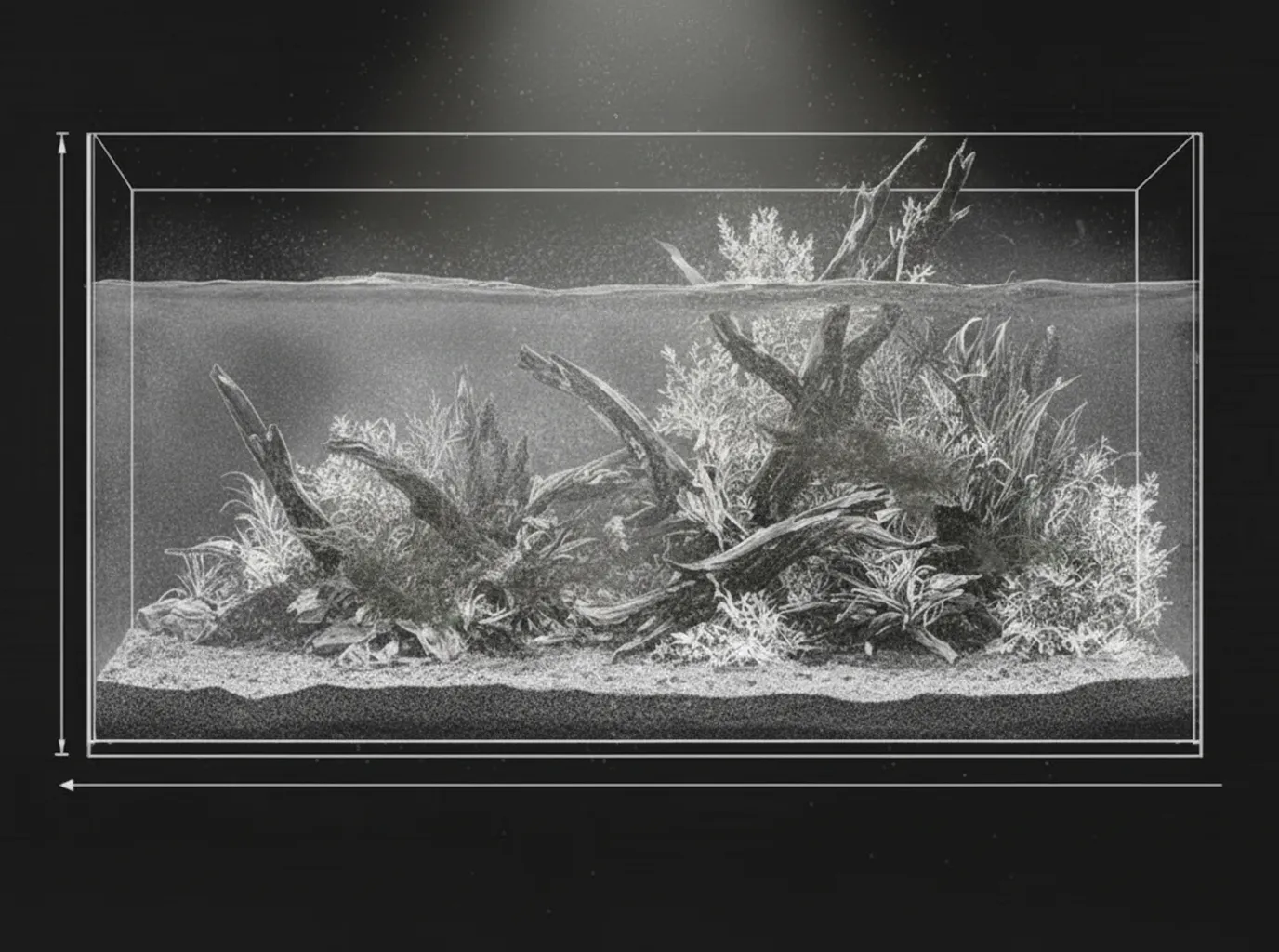
Algae is the most common challenge in planted aquariums. This comprehensive guide covers identification, root cause analysis, prevention strategies, and treatment protocols for every major algae type.
What you'll learn:
- Complete algae identification (12+ types with photos descriptions)
- Root cause analysis framework
- System-based prevention strategies
- Treatment protocols by algae type
- Chemical interventions (when and how to use safely)
- Long-term algae management
- The algae-maturity relationship
Core philosophy: Algae is a symptom, not the disease. Treat the underlying system imbalance, not just the visible algae.
Understanding Algae: The System Perspective
Why Algae Appears
Algae grows when three conditions align:
- Light is available (energy source)
- Nutrients are present (nitrogen, phosphorus, etc.)
- Plants can't use resources efficiently (bottleneck in photosynthesis)
The key insight: Algae doesn't grow because of "too much" of something. It grows because plants can't outcompete it.
The Competitive Balance
In a balanced system:
- Plants photosynthesize efficiently
- Plants consume nutrients rapidly
- Plants dominate surfaces and water column
- Algae can't establish
In an imbalanced system:
- Plants are limited (CO₂, nutrients, or mismatched light)
- Unused resources accumulate
- Algae exploit the gap
- Algae establish and spread
Your goal: Create conditions where plants outcompete algae naturally, not eliminate algae's food sources.
Complete Algae Identification Guide
Green Dust Algae (GDA)
Appearance:
- Fine, powdery green coating on glass
- Looks like dust
- Builds up over days to weeks
- Usually appears evenly distributed
Common locations:
- Glass surfaces (especially facing light)
- Smooth hardscape
What it indicates:
- Common in new tanks (weeks 2-8)
- Settling nutrient levels
- Often appears after major changes
- Can indicate low/inconsistent CO₂ in high-light setups
Severity: Low (cosmetic, doesn't harm plants)
Treatment priority: Low urgency
Green Spot Algae (GSA)
Appearance:
- Hard, circular green spots
- Very difficult to scrape off
- 1-3mm diameter
- Each spot has defined edges
Common locations:
- Glass
- Slow-growing plant leaves (Anubias)
- Equipment surfaces
What it indicates:
- Low phosphate (most common cause)
- Inconsistent CO₂ (in high-light setups)
- Very high light relative to nutrients
- Slow water circulation
Severity: Moderate (cosmetic on glass, damages plant leaves long-term)
Treatment priority: Moderate
See: Green Spot Algae Deep Dive
Hair Algae / Thread Algae
Appearance:
- Long, thin green strands (2-10cm)
- Grows from single attachment point
- Waves in water current
- Light to medium green color
Common locations:
- Attached to plants (especially leaf tips)
- Growing on hardscape
- Anchored in substrate surface
What it indicates:
- Excess organics (overfeeding, poor circulation)
- Inconsistent CO₂
- New tank imbalance (weeks 3-8 common)
- Poor flow (dead zones)
Severity: Moderate to high (tangles in plants, spreads quickly)
Treatment priority: High
See: Hair Algae Guide
Black Beard Algae (BBA) / Red Algae
Appearance:
- Black or dark red-purple tufts
- Fuzzy, beard-like patches
- 3-10mm length
- Often on leaf edges and equipment
Common locations:
- Slow-growing leaf edges (Anubias, ferns)
- Filter outputs
- CO₂ diffusers
- Areas with high flow
What it indicates:
- Low or unstable CO₂ (strongest correlation)
- Poor circulation in specific areas
- High organic load
- Low CO₂ relative to light intensity
Severity: High (very difficult to remove, damages plant leaves)
Treatment priority: High
Staghorn Algae
Appearance:
- Branching structure (like deer antlers)
- Gray-green to dark green color
- 5-15mm length
- Branches split into multiple points
Common locations:
- Plant leaf edges
- Filter equipment
- Fast-growing plant leaves (ironically)
What it indicates:
- Similar to BBA (unstable CO₂, poor flow)
- Often appears alongside BBA
- Low phosphate can contribute
Severity: High (spreads quickly, hard to remove)
Treatment priority: High
See: Staghorn Algae Guide
Blue-Green Algae (Cyanobacteria)
Appearance:
- Slimy, blue-green or brown-green film
- Grows in sheets
- Can lift off in clumps
- Distinctive musty/earthy smell
- Covers substrate and plants
Important: Not true algae — it's bacteria.
Common locations:
- Substrate surface
- Covering plants in sheets
- Any surface with low flow
What it indicates:
- Very low nitrate (<5 ppm) — most common cause
- Poor circulation
- Low oxygen
- Excess organics
- Sometimes high phosphate relative to nitrate
Severity: High (can suffocate plants, spreads rapidly)
Treatment priority: Very high
See: Cyanobacteria Guide
Brown Algae (Diatoms)
Appearance:
- Brown, dusty coating on all surfaces
- Easily wiped away
- Reappears quickly in new tanks
- Looks like fine brown powder
Important: Not true algae — diatoms are single-celled organisms.
Common locations:
- All surfaces equally (glass, plants, hardscape, substrate)
What it indicates:
- New tank (weeks 1-6) — extremely common
- High silicates (from tap water, new substrate)
- Will self-resolve as silicates deplete
Severity: Low (temporary, cosmetic, self-resolving)
Treatment priority: Low (patience, not intervention)
Green Water (Free-Floating Algae)
Appearance:
- Water turns green (pea soup)
- Can't see through tank
- Green tint to entire water column
- Microscopic algae suspended throughout
Common locations:
- Throughout water column (suspended)
What it indicates:
- Excess nutrients + light
- Often triggered by major water change
- Direct sunlight exposure
- Overfertilization
Severity: High (blocks light to plants)
Treatment priority: High
See: Green Water Guide
String Algae
Appearance:
- Similar to hair algae but longer (10-30cm strands)
- Lighter green color
- Cottony, tangled masses
- Easy to pull out in clumps
Common locations:
- Tangled in plant masses
- Free-floating in water
What it indicates:
- Similar causes to hair algae
- Often in ponds, less common in aquariums
- High nutrients + adequate light
Severity: Moderate (easier to remove than hair algae)
Treatment priority: Moderate
Clado (Cladophora)
Appearance:
- Bright green, fluffy tufts
- Branching, bushy structure
- Feels rough to touch
- 5-20mm size
Common locations:
- Attached to plants and hardscape
What it indicates:
- Similar to hair algae causes
- Excess nutrients + light
Severity: High (spreads quickly, hard to fully eradicate)
Treatment priority: High
Spirogyra
Appearance:
- Similar to hair algae
- Forms loose, slimy mats
- Can look like spiderwebs
- Green to yellow-green
Common locations:
- Draped over plants
- Substrate surface
What it indicates:
- Excess light relative to nutrients or CO₂
- New tank imbalance
Severity: Moderate
Treatment priority: Moderate
Fuzz Algae / Fuzz
Appearance:
- Short, fuzzy coating on surfaces
- Light green
- 1-2mm length
- Gives plants "fuzzy" appearance
Common locations:
- Fast-growing plant leaves
- Glass edges
What it indicates:
- Mild imbalance
- Common even in healthy tanks
- Usually not problematic in small amounts
Severity: Low (minor cosmetic issue)
Treatment priority: Low
Rhizoclonium
Appearance:
- Very similar to hair algae
- Thin, stringy
- Often confused with hair algae
Common locations:
- Throughout tank
What it indicates:
- Similar to hair algae
Severity: Moderate
Treatment priority: Moderate
Root Cause Analysis Framework
When algae appears, use this systematic approach:
Step 1: Identify the Algae Type
Use descriptions above. Different algae indicate different problems.
Take photos if needed for comparison.
Step 2: Determine Tank Age and Phase
New tank (weeks 0-8):
- Algae is normal during this phase
- Bacterial colonization incomplete
- Parameters fluctuating
- Plants still adapting
Established tank (month 3+):
- Algae indicates change or imbalance
- Something shifted recently
- More urgent to address
Step 3: Check Core Parameters
Essential tests:
- Ammonia (should be 0)
- Nitrite (should be 0)
- Nitrate (should be 10-20 ppm for planted tanks)
- Phosphate (should be 1-2 ppm)
If using CO₂:
- Drop checker color (should be light green)
- Bubble rate (should be consistent)
Step 4: Review Recent Changes
Ask:
- Did I change lighting (intensity or duration)?
- Did I change fertilization (dose or frequency)?
- Did I change CO₂ settings?
- Did I change water change schedule?
- Did I add new fish (increased bioload)?
- Did I miss maintenance recently?
Algae often appears 1-2 weeks after a change.
Step 5: Evaluate Plant Health
Healthy plants = good system:
- Plants growing actively
- Bright, vibrant coloration
- New leaves appearing regularly
- Minimal deficiency symptoms
Struggling plants = system problem:
- Slow/no growth
- Yellow leaves, holes, stunted
- Plants pale or discolored
- This is root cause — fix plant health, algae resolves
Step 6: Check Flow and Circulation
Look for:
- Dead zones (no water movement)
- Debris accumulation in corners
- Areas where algae is localized
Poor flow often causes BBA, staghorn, and cyano.
Step 7: Assess Lighting
Too much light for CO₂/nutrients:
- Algae throughout tank
- Plants struggling despite fertilization
- Fix: Reduce intensity or duration
Lighting too long:
- Algae in later hours of photoperiod
- Fix: Reduce to 7-8 hours max
Step 8: Evaluate CO₂ (If Using)
Inconsistent CO₂:
- BBA, staghorn, hair algae common
- Drop checker changing colors throughout day
- Bubble rate fluctuating
Fix: Stabilize CO₂ delivery, check for leaks, verify solenoid function
Prevention Strategies (System-Based)
1. Match Light to CO₂ Availability
Low-tech (no CO₂):
- Use low to moderate light only (20-40 PAR)
- Never use high-intensity lighting without CO₂
- 6-8 hour photoperiod
High-tech (with CO₂):
- Match intensity to CO₂ level
- If CO₂ is 20-30 ppm, moderate to high light acceptable
- Still limit to 7-8 hours
This is the #1 prevention strategy.
2. Maintain Adequate Nutrients
Target levels:
- Nitrate: 10-20 ppm
- Phosphate: 1-2 ppm
- All micronutrients present (use all-in-one fertilizer)
Don't starve plants of nutrients to "prevent algae." This weakens plants and makes algae worse.
3. Prioritize Plant Health
Healthy, fast-growing plants are your best algae defense.
- Choose appropriate plants for your setup
- Provide adequate nutrients
- Ensure proper lighting
- Maintain stable conditions
4. Maintain Consistency
Routine matters:
- Same lighting schedule daily
- Same fertilization schedule weekly
- Same water change schedule weekly
- Avoid drastic changes
Inconsistency = algae.
5. Optimize Circulation
Goals:
- No dead zones (all areas have gentle flow)
- Debris doesn't accumulate in corners
- CO₂ distributes evenly (if injecting)
Solutions:
- Position filter output strategically
- Use spray bar or lily pipes
- Add supplemental circulation if needed
6. Control Organic Load
Minimize excess organics:
- Don't overfeed fish
- Remove dead plant matter weekly
- Vacuum substrate during water changes (if using inert substrate)
- Clean filter media monthly
Excess organics fuel algae.
7. Use Algae-Eating Crew
Prevention helpers (not cures):
- Nerite snails (excellent for most algae)
- Amano shrimp (hair algae, detritus)
- Otocinclus catfish (diatoms, soft algae)
- Siamese algae eaters (BBA, hair algae — needs large tank)
They manage minor algae but won't fix system imbalance.
8. Water Changes
Benefits:
- Export excess organics
- Reset nutrient ratios
- Remove algae spores
- Maintain stability
Frequency:
- 30-50% weekly for most tanks
- More frequent if fighting algae outbreak (2x weekly)
Treatment Protocols by Algae Type
Green Dust Algae (GDA)
Physical removal:
- Scrape glass with razor blade or mag-float
- Wipe weekly during water changes
System adjustment:
- Usually self-resolves over time
- If persistent: check phosphate (dose to 1-2 ppm)
- Reduce lighting duration slightly if severe
Chemical treatment: Usually unnecessary
Timeline: Improves within 2-4 weeks with consistent maintenance
Green Spot Algae (GSA)
Physical removal:
- Scrape glass with razor blade (requires pressure)
- Remove heavily affected plant leaves
System adjustment:
- Increase phosphate to 1-2 ppm (most common fix)
- Verify CO₂ consistency if using injection
- Reduce lighting intensity if very high (>80 PAR)
Chemical treatment:
- Spot treat with hydrogen peroxide (see below)
Prevention: Maintain 1-2 ppm phosphate consistently
Timeline: New spots stop appearing in 1-2 weeks; existing spots remain until scraped
Hair Algae / Thread Algae
Physical removal:
- Remove manually during water changes
- Twist onto toothbrush or tweezers
- Remove as much as possible by hand
System adjustment:
- Improve water circulation (position filter output, add powerhead)
- Ensure CO₂ consistency (if using)
- Increase water change frequency temporarily (2x per week)
- Reduce feeding (limit organics)
Biological control:
- Add Amano shrimp (excellent for hair algae)
Chemical treatment:
- Liquid carbon (glutaraldehyde) daily dosing
- Spot treatment with hydrogen peroxide
Timeline: Visible improvement in 2-3 weeks, full control in 4-8 weeks
Black Beard Algae (BBA)
Physical removal:
- Remove heavily affected leaves
- Scrub hardscape outside tank (if possible)
System adjustment:
- Critical: Stabilize CO₂ (most important factor)
- Improve circulation to affected areas
- Increase phosphate to 1-2 ppm
- Reduce lighting intensity if very high
Biological control:
- Siamese algae eaters (if tank is large enough)
Chemical treatment:
- Liquid carbon spot treatment (very effective)
- Hydrogen peroxide spot treatment
- Full tank treatment with liquid carbon
Timeline: Existing BBA turns red/white (dying) in 1-2 weeks, falls off in 2-4 weeks. New BBA stops appearing in 2-3 weeks if CO₂ stabilized.
Staghorn Algae
Treatment: Same as BBA (they respond to identical interventions)
Key: Fix CO₂ consistency and circulation
Blue-Green Algae (Cyanobacteria)
Physical removal:
- Siphon out as much as possible
- Lift sheets off substrate and plants carefully
System adjustment:
- Critical: Increase nitrate to 10-20 ppm (most important factor)
- Improve circulation dramatically (especially substrate surface)
- Increase aeration (add air stone temporarily)
- Reduce lighting duration to 6 hours temporarily
- Increase water change frequency (2x per week, 50%)
Chemical treatment:
- Erythromycin (antibiotic, last resort — kills beneficial bacteria too)
- Hydrogen peroxide treatment
Timeline: Visible improvement in 3-7 days, full control in 2-4 weeks
Critical: Cyano often indicates low nitrate. Test and dose accordingly.
Brown Algae (Diatoms)
Treatment:
- Wait (self-resolves as silicates deplete)
- Wipe glass during water changes
- Otocinclus catfish eat diatoms readily
System adjustment:
- Ensure adequate nutrients for plants
- Maintain routine
Chemical treatment: Unnecessary
Timeline: Disappears naturally in 2-6 weeks (new tank phase)
Green Water
Physical removal:
- Large water changes (50-75%) temporarily help but algae returns
- UV sterilizer (very effective — kills free-floating algae)
System adjustment:
- Reduce light duration to 6 hours
- Increase water changes (2x weekly)
- Ensure adequate nutrients for plants (not excess)
- Avoid direct sunlight
Blackout method:
- Cover tank completely for 3-5 days
- Algae dies from lack of light
- Fish and plants survive (plants are stressed but recover)
- Resume normal light after blackout
Chemical treatment:
- Flocculent (clarifier) — clumps algae for filter removal
Timeline: UV sterilizer clears water in 3-7 days. Blackout clears in 3-5 days. Without intervention, can persist indefinitely.
Chemical Treatment Guide
When to Use Chemical Treatments
Appropriate situations:
- Severe infestations that resist system adjustments
- Spot treatment of localized algae (BBA, staghorn)
- Temporary boost while system adjusts
- Green water (UV sterilizer or blackout)
Not appropriate as primary strategy: Chemical treatments don't fix root cause. Use alongside system adjustments.
Liquid Carbon (Glutaraldehyde)
Products: Seachem Excel, Easy Carbo, etc.
How it works:
- Mild algaecide
- Provides some carbon (not true CO₂ replacement)
Dosing:
- Daily: Follow bottle instructions (typically 1 ml per 10 gallons)
- Spot treatment: Use syringe to apply directly to algae (turn off filter for 10 minutes)
Effective against: BBA, staghorn, hair algae
Cautions:
- Toxic to Vallisneria, some mosses, and sensitive plants
- Overdosing harms fish
- Don't exceed recommended dose
Duration: 4-8 weeks daily dosing, or spot treat 2-3x per week
Hydrogen Peroxide (H₂O₂)
Concentration: 3% solution (standard drugstore)
Dosing:
- Spot treatment: Apply directly to affected area using syringe (1-2 ml per spot)
- Turn off filter for 5-10 minutes
- Full tank treatment: 1 ml per gallon maximum (risky — can harm beneficial bacteria)
How to spot treat:
- Use syringe without needle
- Draw up hydrogen peroxide
- Turn off filter
- Apply directly onto algae
- Wait 10 minutes
- Turn filter back on
Effective against: BBA, staghorn, GSA, hair algae
Cautions:
- Can harm sensitive plants if overdosed
- Can harm beneficial bacteria if overused
- Always spot treat rather than full tank dose if possible
Timeline: Algae turns red/white within 24 hours, dies within 2-3 days
Erythromycin (Antibiotic)
Use for: Cyanobacteria only (not true algae)
Dosing: Follow package instructions (typically available as "Maracyn")
How it works: Kills bacteria (including beneficial bacteria)
Cautions:
- Kills beneficial bacteria in filter
- Tank may need to re-cycle after treatment
- Last resort only
After treatment:
- Large water changes
- Monitor ammonia/nitrite (may spike)
- Add beneficial bacteria supplement
Bleach Dip (For Hardscape/Decor)
Concentration: 1 part bleach : 19 parts water
Process:
- Remove hardscape/decor from tank
- Soak in bleach solution for 5-10 minutes
- Scrub with brush
- Rinse thoroughly
- Soak in dechlorinator solution for 30 minutes
- Air dry
- Return to tank
Effective against: All algae on removed items
Cautions:
- Never add bleach directly to tank
- Must dechlorinate thoroughly before returning items
Long-Term Algae Management
Accepting Minor Algae
Reality check: Perfect algae-free tanks don't exist long-term.
Minor algae is normal:
- Light dusting on glass (weekly cleaning)
- Occasional spot on slow-growing leaf
- Minimal hair algae in high-flow areas
This is not failure — it's a balanced ecosystem.
Maintenance Prevents Outbreaks
Consistent routine prevents 90% of algae issues:
- Weekly water changes (non-negotiable)
- Weekly glass cleaning
- Consistent fertilization schedule
- Stable lighting schedule
- Regular filter maintenance
Consistency > perfection.
Responding to Early Signs
Catch algae early:
- Remove first appearance immediately (manual removal)
- Evaluate what changed recently
- Make small adjustments (don't overreact)
Small algae patch today = outbreak in 2 weeks if ignored.
Seasonal Considerations
Summer:
- Higher room temperatures
- More sunlight (if near windows)
- May need to adjust photoperiod or intensity
Winter:
- Lower temperatures (less biological activity)
- Less ambient light
- May need slight adjustments
Plant Density and Maturity
Heavily planted, mature tanks:
- Less algae (plants outcompete efficiently)
- More stable (established biofilm, nutrient cycling)
- More forgiving
Lightly planted or new tanks:
- More algae susceptibility
- Less stability
- Requires more attention
Strategy: Increase planting density if struggling with recurring algae.
The Algae-Maturity Relationship
Why New Tanks Get More Algae
Weeks 0-2:
- Minimal algae (no nutrients yet)
- System initializing
Weeks 2-8:
- Peak algae phase (most common: diatoms, hair algae, GDA)
- Plants still adapting
- Bacterial colonization incomplete
- Parameters fluctuating
Weeks 8-16:
- Algae declining naturally
- Plants growing actively
- System stabilizing
Month 4+:
- Minimal algae (with good practices)
- Mature, balanced ecosystem
- Stable nutrient cycling
Key insight: The "ugly phase" (weeks 3-8) is temporary. Stay consistent, don't tear down and restart.
Why Mature Tanks Still Get Algae Sometimes
Triggers:
- Equipment failure (CO₂ runs out, light timer breaks)
- Missed maintenance (vacation, busy period)
- Major changes (new fish, rescape, new equipment)
Even mature tanks can experience algae after disruption.
Response: Return to routine, address imbalance, manually remove algae.
Common Mistakes in Algae Control
Mistake 1: Treating Symptoms, Not Causes
Problem: Removing algae manually without fixing system = algae returns
Solution: Identify and fix root cause (imbalance) alongside manual removal
Mistake 2: Starving Nutrients to "Prevent Algae"
Problem: Low nutrients weaken plants, making algae worse
Solution: Maintain adequate nutrients (NO₃: 10-20 ppm, PO₄: 1-2 ppm)
Mistake 3: Overreacting and Changing Everything
Problem: Drastic changes cause instability, triggering more algae
Solution: Make small, targeted adjustments. Wait 2-3 weeks to evaluate.
Mistake 4: Giving Up During "Ugly Phase"
Problem: Tearing down tank during weeks 3-8 restarts the cycle
Solution: Be patient. Stay consistent. Algae peaks then declines naturally.
Mistake 5: Relying Only on Chemical Treatments
Problem: Chemicals address algae but not root cause — algae returns
Solution: Use chemicals as temporary boost while fixing system balance
Mistake 6: Ignoring Plant Health
Problem: Focusing on algae instead of plant growth = losing battle
Solution: Prioritize plant health. Healthy plants = minimal algae automatically.
Mistake 7: Inconsistent Maintenance
Problem: Irregular water changes, fertilization, or lighting = instability = algae
Solution: Establish routine and stick to it. Consistency is key.
Advanced Troubleshooting
Persistent Algae Despite Correct Parameters
Possible causes:
-
Testing inaccuracy
- Some test kits are unreliable
- Solution: Use quality test kits (API Master Kit minimum)
-
Hidden CO₂ issues
- Drop checker lags 2-3 hours behind actual levels
- CO₂ may be fluctuating during photoperiod
- Solution: Monitor bubble rate multiple times daily
-
Localized flow problems
- Algae appears only in specific areas
- Solution: Adjust filter output or add circulation
-
Contaminated equipment
- Filter harboring algae spores
- Solution: Clean all equipment thoroughly
-
Light too intense for plant mass
- PAR may be appropriate for full tank, but sparse planting can't use it
- Solution: Reduce intensity or increase plant density
Recurring Algae After Treatment
Diagnosis:
- Root cause not fully addressed
- System still has underlying imbalance
Action:
- Re-evaluate all parameters systematically
- Check for hidden issues (CO₂ leaks, inconsistent fertilization, etc.)
- Consider increasing plant mass (more competition for algae)
Multiple Algae Types Simultaneously
Indicates:
- Severe system imbalance
- Multiple limiting factors
Action:
- Address most obvious issue first (usually CO₂ or nutrients)
- Increase water change frequency temporarily
- Manual removal of all types
- Be patient — takes 6-8 weeks to fully resolve
FAQ
Will a UV sterilizer prevent all algae?
No. UV sterilizers only kill free-floating algae (green water). They don't affect algae attached to surfaces (BBA, hair algae, GSA, etc.). Useful tool but not a complete solution.
Should I do a blackout to kill algae?
Blackouts (3-5 days, tank completely covered) can kill free-floating algae (green water) and weaken some attached algae. However, it stresses plants and doesn't fix root cause. Use only for severe green water or as last resort for stubborn algae.
Can I use algaecides from the pet store?
Generally not recommended for planted tanks. Most algaecides harm plants and beneficial bacteria. They also don't address root cause. Use targeted treatments (liquid carbon, hydrogen peroxide) instead.
Why do I have algae if my parameters are "perfect"?
Parameters on paper don't tell the full story. CO₂ may fluctuate during photoperiod (drop checker lags). Circulation may be poor in specific areas. Light may be too intense for current plant mass. System stability matters more than snapshot parameters.
How long does it take to eliminate algae completely?
Minor algae: 2-4 weeks with consistent approach
Moderate outbreak: 4-8 weeks
Severe multi-type infestation: 8-12 weeks
Realistic expectation: Controlled to minor cosmetic level, not zero algae forever.
Do I need to remove all affected plants?
No. Remove heavily covered leaves (they won't recover). Keep plants with minor algae — as system balances, new growth will be algae-free and existing algae will die off.
Related Guides
Foundation:
Core Systems:
Specific Algae Types:
Final Principles
1. Algae is feedback, not failure. It tells you where your system needs adjustment. Listen to it.
2. Prevention > treatment. System balance prevents algae more effectively than any chemical treatment.
3. Patience wins. The "ugly phase" passes. Mature systems are naturally algae-resistant.
4. Plant health is algae defense. Focus on growing healthy plants. Algae control follows automatically.
5. Consistency is everything. Stable routines create stable systems. Stable systems resist algae.
6. Accept minor algae. Zero algae is unrealistic. Controlled, minor algae is success.
Algae control isn't about warfare against an enemy. It's about creating an ecosystem where plants thrive naturally. When you get the system right, algae becomes background noise, not a constant battle.