
Black Beard Algae (BBA) Complete Guide:
Quick Summary (Beginner)
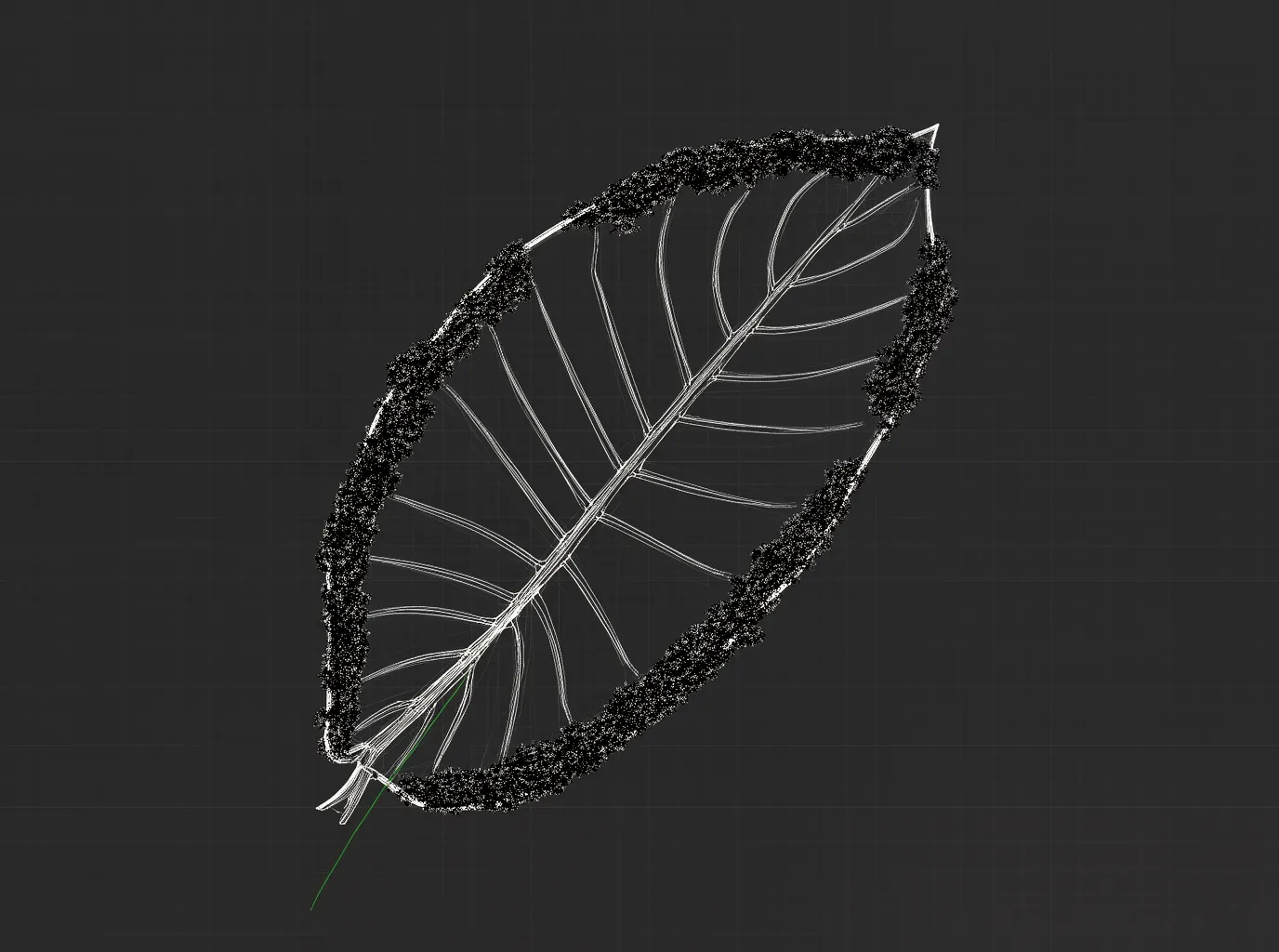
Black Beard Algae (BBA) appears as dark brown to black tufts on plant leaves, hardscape, and equipment in planted aquariums. Despite its dark color, BBA belongs to red algae family (Rhodophyta), which becomes evident when treated. In most tanks, BBA indicates two specific problems: unstable CO₂ levels and poor water circulation creating dead zones.
The condition spreads slowly but persistently, firmly adhering to surfaces where it establishes. Unlike green algae that responds to nutrient reduction, BBA requires addressing flow patterns and CO₂ consistency. This is usually the point when aquarists realize their CO₂ system needs optimization or circulation improvement, not just more water changes.
BBA thrives in areas of poor flow combined with fluctuating CO₂ availability. You'll often notice it first on slow-growing plant leaf edges like Anubias or Java fern, then spreading to equipment and hardscape in low-circulation zones. The algae itself isn't harmful to fish but steadily smothers slow-growing plants if left unchecked.
Immediate actions to take:
- Spot treat existing BBA with Excel or glutaraldehyde (apply directly to patches using syringe)
- Stabilize CO₂ injection to consistent 25 to 30 ppm throughout entire photoperiod
- Improve flow distribution eliminating dead zones (aim for 5 to 10 times turnover rate)
- Remove heavily infested leaves rather than attempting to clean them
- Clean filter equipment monthly preventing BBA colonization on pipes and intakes
When not to panic:
- Small isolated BBA patches on single rock or driftwood piece (easily spot treated)
- Minor BBA on leaf edges of slow-growing plants during tank maturation
- BBA appearance during first 8 weeks of cycling (often resolves as system stabilizes)
When to take action:
- BBA spreading to multiple plants and hardscape surfaces weekly
- BBA colonizing filter equipment and glass indicating severe system issues
- BBA appearing alongside other algae types suggesting multiple imbalances
- BBA returning after treatment revealing unaddressed root causes
What Is Black Beard Algae?
If you look closely at the dark tufts on your Anubias leaves or driftwood, you'll notice they sway gently in the current like tiny black beards. This distinctive appearance gives BBA its name.
Visual Identification
Most aquarists first spot BBA as small dark dots on leaf edges, easily mistaken for substrate particles or dirt.
Appearance characteristics:
- Color ranges from dark brown to true black (occasionally dark green in very early stages)
- Texture consists of fuzzy hair-like tufts resembling short beard or brush
- Length typically 2 to 10 millimeters per tuft (much shorter than hair algae)
- Growth pattern forms clusters expanding outward from attachment point
- Distinctive sway in current confirms presence (rigid spots indicate different algae)
Growth progression over time:
Early on, BBA appears as tiny dark dots barely visible on leaf edges or hardscape. These initial spots develop over 1 to 2 weeks, easily dismissed as harmless debris. Best intervention happens at this stage.
Mid-stage growth (weeks 3 to 6) produces visible fuzzy tufts 2 to 5 millimeters long with unmistakable dark brown to black coloration. The algae becomes firmly adhered and clearly identifiable as BBA requiring treatment.
Advanced infestations (2 to 3 months) create dense clusters 5 to 10 millimeters long covering large portions of leaves and hardscape. Severe cases may smother slow-growing plants entirely, though removal remains possible with aggressive treatment.
Confirmation tests:
Run your finger across suspected BBA. It feels slightly slimy and fuzzy while remaining firmly adhered to the surface (unlike hair algae that rubs off easily). This firm attachment makes mechanical removal difficult.
Apply 3 percent hydrogen peroxide to a small patch and wait 30 seconds. If the dark material turns red or pink, confirmed BBA. The red pigment (phycoerythrin) reveals its true red algae classification. Other algae types turn white or clear when bleached.
Common BBA Locations in Planted Tanks
In planted tanks, BBA shows strong preference for specific locations revealing underlying flow and CO₂ distribution patterns.
Slow-growing plant leaves:
Anubias leaves host BBA most frequently due to extremely slow growth providing stable colonization surface. Leaf edges and tips develop tufts first where flow typically stagnates. Java fern and Bolbitis show similar vulnerability with BBA favoring older mature leaves over new growth.
Cryptocoryne and Bucephalandra also experience BBA on older leaves, particularly in low-flow tank areas. Fast-growing stem plants rarely develop BBA except on oldest lower leaves approaching natural die-off.
Hardscape surfaces:
Driftwood attracts BBA heavily due to organic porous surface combined with frequent placement in low-flow areas. Porous rocks like lava rock and dragon stone provide excellent BBA attachment points. Even smooth stones develop BBA in dead zones though less commonly than textured surfaces.
Equipment and surfaces:
Filter intake pipes show BBA prominently when maintenance lapses, indicating organic buildup. Outflow nozzles develop BBA where insufficient cleaning allows biofilm accumulation. Heaters, thermometers, and even CO₂ diffusers can host BBA despite their algae-fighting purpose. Glass colonization remains rare but indicates severe systemic issues.
You'll often notice BBA concentrates behind hardscape, in tank corners opposite filter output, and under overhangs where flow patterns create stagnant zones. These locations reveal the algae's preference for poor circulation combined with organic accumulation.
Why Black Beard Algae Happens
When BBA appears in planted tanks, it signals specific environmental conditions rather than general poor maintenance. Once you identify these patterns, correction becomes straightforward.
Primary Cause 1: Fluctuating or Inadequate CO₂
In most tanks with CO₂ injection, BBA indicates inconsistent CO₂ levels rather than simple deficiency.
Plants require stable CO₂ at 25 to 30 ppm throughout the entire photoperiod for optimal photosynthesis. When CO₂ drops below 20 ppm or fluctuates wildly between days, plants experience cellular stress. Photosynthesis slows, oxygen production decreases, and weakened plants lose competitive advantage against algae including BBA.
CO₂ system failures triggering BBA:
Several common scenarios create the fluctuation pattern favoring BBA establishment.
CO₂ bottles running low experience gradual pressure drop. Early photoperiod receives adequate 30 ppm while late photoperiod drops to 10 ppm as bottle depletes. This daily fluctuation within single photoperiod particularly favors BBA over other algae types. Plants cannot adapt to such rapid swings.
Inadequate timing creates similar stress when CO₂ turns on simultaneously with lights. CO₂ requires 1 to 2 hours reaching optimal 30 ppm throughout tank volume. First 2 hours of photoperiod occur under low CO₂ conditions stressing plants daily in predictable pattern.
Poor diffuser placement in low-flow corners prevents even CO₂ distribution. Some plants receive 35 ppm while others struggle with 15 ppm. This spatial variation creates low-CO₂ zones particularly vulnerable to BBA colonization.
Early CO₂ shutdown (2 hours before lights out to conserve gas) creates problematic last hours of photoperiod. Plants experience declining CO₂ during final photosynthesis period, daily stress enabling BBA opportunity.
This is why BBA appears even in tanks with "adequate" CO₂. The issue is consistency and distribution, not absolute level. Stable 20 ppm performs better than fluctuating 30 ppm for BBA prevention.
Primary Cause 2: Poor Water Circulation and Dead Zones
Most aquarists notice BBA appears first in specific tank areas rather than uniformly. This pattern reveals the critical role of water flow.
Good circulation distributes CO₂ evenly to all plant surfaces, prevents organic debris accumulation, ensures uniform nutrient availability, and eliminates localized microenvironments favoring algae. Inadequate flow creates dead spots with under 10 percent of main flow velocity.
Dead spot formation and BBA colonization:
These stagnant zones develop behind large hardscape blocking filter output, in tank corners opposite circulation source, under overhangs or cave structures, behind dense plant clusters, and inside hollow decorations. CO₂ distribution fails in these areas despite adequate tank-wide levels.
Organic particles settle and accumulate where flow cannot sweep them into filtration. BBA particularly thrives on organic-rich surfaces where bacterial decomposition creates localized nutrient spikes. The combination of poor CO₂ distribution and organic accumulation creates ideal BBA conditions.
Early warning signs appear when crushed food particles settle persistently in specific areas. These locations predict future BBA colonization within 2 to 4 weeks if circulation remains unchanged. Equipment surfaces near filter outputs paradoxically develop BBA where turbulence exists without true circulation (flow shadow zones).
This explains why identical CO₂ levels produce different BBA outcomes. Distribution patterns matter more than bulk measurements. Improved circulation often eliminates BBA without other intervention simply by delivering CO₂ effectively and preventing organic accumulation.
Secondary Contributing Factors
While CO₂ and flow dominate BBA causation, several factors create vulnerability conditions enabling establishment.
Organic accumulation:
In practice, organic matter settles in low-flow areas providing nutrient base for BBA colonization. Fish waste, decaying plant material, uneaten food, and biofilm all contribute. Bacteria decompose organics creating localized nutrient spikes. BBA demonstrates heterotrophic capability (can consume organic compounds directly) explaining preference for organic-rich surfaces like driftwood and filter equipment.
Dissolved Organics & Driftwood Decomposition (Often Overlooked)
While organic accumulation is commonly mentioned, one specific source is frequently underestimated in planted aquariums: slowly decomposing driftwood and dissolved organic compounds (DOCs).
Even well-aged driftwood continues to break down gradually over time. As it does, it releases:
- Humic acids
- Tannins
- Phenolic compounds
- Dissolved organic carbon compounds
These compounds are not visible like debris, but they alter the chemical and microbial environment of the tank.
In low-flow areas around wood, bacterial communities break down these organics. This creates localized microenvironments that can have:
- Elevated dissolved organic concentration
- Reduced oxygen levels
- Uneven CO₂ availability
- Thick biofilm development
Black Beard Algae is particularly well adapted to colonize these surfaces.
Unlike many green algae, red algae (Rhodophyta) demonstrate partial heterotrophic capability — meaning they can utilize organic carbon compounds in addition to photosynthesis. This gives BBA a competitive advantage in areas where dissolved organics accumulate.
This is why BBA often:
- Appears first on driftwood rather than plants
- Forms around branch joints and crevices
- Persists on older wood despite “good CO₂ levels”
- Returns repeatedly in tanks with heavy hardscape
In these cases, the issue is not simply nutrient excess or lighting — it is the interaction between organic breakdown, flow shadows, and CO₂ distribution.
If BBA continues returning despite stable CO₂ and adequate turnover, evaluate:
- Wood age and softness
- Biofilm thickness on hardscape
- Flow behind and beneath driftwood
- Water change frequency
- Surface film accumulation
Addressing dissolved organic buildup — through increased water changes, improved circulation around wood, temporary activated carbon use, or in extreme cases replacing degraded driftwood — can significantly reduce persistent BBA recurrence.
Maintenance lapses:
Skipping water changes for 3 plus weeks allows organic accumulation and parameter drift. Filter equipment uncleaned for months develops biofilm and flow reduction. Substrate vacuuming neglect in fish-heavy tanks creates organic reservoir. Decaying leaves left in place release nutrients while losing competitive capacity. Overfeeding creates excess food settling on hardscape in low-flow zones.
Plant stress and vulnerability:
Healthy vigorous plants resist BBA colonization through active defenses. Stressed plants with weakened cellular integrity allow easier algae attachment. Slow-growing species like Anubias maintain old leaves longer, providing extended vulnerability window. Fast-growing stems constantly shed old potentially colonized leaves before visible BBA develops.
How to Diagnose Black Beard Algae
When dark fuzzy growth appears in your tank, confirming BBA identity ensures proper treatment selection. Once diagnosis is complete, appropriate intervention becomes clear.
Visual Confirmation and Testing
Most aquarists can identify BBA through simple observation and physical tests without specialized equipment.
Examine the dark material closely under good lighting. BBA appears as distinct fuzzy tufts 2 to 10 millimeters long with hair-like texture. The growth sways gently in current confirming flexible structure rather than rigid deposits.
Touch the suspected algae with your finger. BBA feels slightly slimy and fuzzy while remaining firmly adhered. Rubbing does not remove it easily unlike loose detritus or some other algae types. This firm attachment distinguishes BBA from hair algae.
The definitive test uses 3 percent hydrogen peroxide. Apply small amount to suspect patch and observe for 30 seconds. Confirmed BBA turns red or pink as chlorophyll breaks down revealing phycoerythrin pigment. Green algae turn white or clear. Brown algae turn pale. Only red algae family shows pink response.
Check BBA-prone locations throughout tank. Slow-growing plant leaf edges, particularly Anubias and Java fern, show BBA first. Examine hardscape in low-flow areas, especially behind rocks and on driftwood. Inspect filter equipment including intake pipes and outflow nozzles. Equipment BBA indicates maintenance issues.
Distinguishing BBA from Similar Algae
Several algae types appear dark or form tufts requiring careful distinction.
| Algae Type | Color | Texture | Length | Growth Speed | Typical Location |
|---|---|---|---|---|---|
| Black Beard Algae | Dark brown to black | Fuzzy tufts | 2 to 10 mm | Slow (weeks) | Leaf edges, hardscape, equipment |
| Staghorn Algae | Gray to green | Branching structure | 10 to 20 mm | Moderate (weeks) | Plant stems, hardscape |
| Hair Algae | Bright green | Long strands | 20 to 100 mm plus | Fast (days) | Widespread, free-floating |
| Green Spot Algae | Bright green spots | Hard circular spots | 1 to 3 mm diameter | Slow (weeks) | Glass, leaf surfaces |
The combination of dark coloration, short fuzzy tufts, leaf edge preference, and slow growth confirms BBA. Hair algae grows much longer and greener. Staghorn shows gray color and antler-like branching. Green spot creates hard round dots rather than fuzzy tufts.
System Analysis for Root Causes
In planted tanks, BBA appearance prompts investigation of CO₂ and flow patterns revealing system weaknesses.
Evaluating CO₂ system performance:
If injecting CO₂, check drop checker color at photoperiod start, middle, and end. Green color (25 to 30 ppm) should remain constant throughout. Yellow morning to blue afternoon indicates fluctuation. Blue all day suggests insufficient injection or poor distribution.
Verify CO₂ timing using controller or timer. CO₂ should activate 1 to 2 hours before lights creating optimal levels at photoperiod start. Shutdown should occur with lights (or 1 hour after) maintaining consistency until final photosynthesis ends.
Count bubble rate at same time daily confirming consistency. Variation over 10 percent suggests system instability. Check cylinder pressure staying above 500 PSI. Lower pressure indicates imminent depletion causing gradual delivery reduction.
Observe diffuser performance producing fine mist rather than large bubbles. Diffuser placement in high-flow area ensures distribution. Plants showing pearl formation (oxygen bubbles on leaves) throughout tank indicate good CO₂ availability. Isolated pearling with some plants struggling reveals distribution problems and dead zones.
Assessing circulation patterns:
Drop crushed food particles at various tank locations observing settlement patterns. Particles accumulating persistently indicate dead zones requiring circulation improvement. Areas where particles remain stationary after 1 minute show inadequate flow.
Calculate total flow from all sources (filter plus powerheads) dividing by tank volume. Target 5 to 10 times turnover per hour for planted tanks. Lower values suggest insufficient circulation. Higher values risk damaging delicate plants but prevent dead zones effectively.
Examine BBA distribution revealing flow weaknesses. Concentrated BBA behind hardscape indicates flow shadow. Corner accumulation suggests poor output positioning. Widespread BBA across surfaces indicates systemic circulation failure.
Reviewing maintenance practices:
Consider last water change timing. Changes over 2 weeks ago risk organic accumulation. Filter equipment cleaning over 3 months prior allows biofilm and flow reduction. Equipment surfaces showing BBA confirm maintenance lapses.
Assess feeding practices. Daily overfeeding or food settling uneaten creates organic reservoir. Fish heavy stocking increases waste requiring enhanced circulation and filtration. Plant debris removal frequency affects organic load in low-flow areas.
How to Remove Black Beard Algae
Multiple approaches exist for BBA elimination with dramatically different speed and effectiveness. In practice, combination treatment produces fastest results.
Method 1: Excel or Glutaraldehyde Spot Treatment
In most tanks, Excel spot treatment provides fastest most reliable BBA elimination without requiring equipment removal.
Glutaraldehyde acts as algaecide with BBA showing particular sensitivity. Direct application delivers concentrated dose overwhelming algae defenses while plants tolerate brief exposure. Treated BBA turns red within days as phycoerythrin becomes visible, then white as cells die, finally detaching or decomposing over 1 to 2 weeks.
Application protocol:
Turn off filter and CO₂ for 10 minutes preventing immediate dilution. Use 5 to 10 milliliter syringe drawing Excel or generic glutaraldehyde solution. Target individual BBA patches applying 0.5 to 1 milliliter per small patch (2 to 3 milliliters for larger areas). Be generous with application as Excel safety margin allows substantial local concentration.
Wait 5 to 10 minutes allowing Excel contact time with BBA. Algae begins absorbing glutaraldehyde during this period. Resume filter and CO₂ returning to normal operation. Repeat treatment every 2 to 3 days until BBA shows red coloration (typically 3 to 7 days total).
For plant leaves, hold syringe 1 to 2 centimeters from surface applying slowly to coat BBA without excessive dripping. Equipment surfaces tolerate more aggressive application. Hardscape requires liberal application ensuring thorough coverage of porous surfaces.
Safety and plant sensitivity:
Excel remains safe for fish and most plants at recommended concentrations. Shrimp including cherry shrimp tolerate normal dosing. Certain plants show sensitivity requiring careful application. Vallisneria melts readily with high Excel exposure. Some mosses (Riccia, Fissidens) and delicate red plants may brown. Start conservatively with sensitive species observing response before increasing dose.
Tank-wide dosing follows manufacturer instructions at 5 milliliters per 10 gallons daily. This provides prevention and mild treatment though spot treatment proves more effective for established BBA. Whole-tank approach suits widespread light BBA while spot treatment handles concentrated heavy infestations.
Expected timeline and results:
Day 1 shows no visible change as glutaraldehyde penetrates BBA cells. Days 3 to 5 reveal reddish or pink coloration as chlorophyll degrades exposing phycoerythrin. Days 5 to 7 show white or clear appearance indicating complete cell death. Days 7 to 14 see dead BBA detaching naturally or consumed by shrimp and snails. Stubborn patches may require repeat treatment.
Method 2: Hydrogen Peroxide Spot Treatment
Most aquarists keep hydrogen peroxide readily available as alternative to Excel for BBA treatment.
Hydrogen peroxide oxidizes organic material through free radical generation. BBA cells lyse rapidly when exposed to concentrated peroxide. The dramatic color change to red then white occurs within minutes rather than days. However, higher plant damage risk requires more careful application compared to Excel.
Application technique:
Turn off circulation for 5 minutes. Use syringe applying 3 percent hydrogen peroxide at 0.5 to 1 milliliter per small BBA patch (1 to 2 milliliters maximum per area). Contact time should not exceed 5 minutes before resuming circulation. Peroxide breakdown into water and oxygen occurs within hours creating safety margin.
For plant leaves, use minimal peroxide (0.5 milliliters) watching for immediate color change. BBA turns red within 30 seconds to 2 minutes with proper contact. Equipment and hardscape tolerate more generous application. Repeat every 3 to 5 days if needed though single treatment often suffices for light infestations.
Tank-wide peroxide dosing at 1 milliliter per gallon provides very conservative treatment. Maximum safe dose reaches 2 milliliters per gallon though this risks sensitive plants. Reserve whole-tank dosing for severe widespread BBA only.
Peroxide poses greater plant risk than Excel. Delicate mosses, fine-leaved stems, and sensitive species bleach with overdosing. However, peroxide complete breakdown within 24 hours means temporary exposure risk rather than persistent effect.
Method 3: Physical Removal and Deep Cleaning
When BBA heavily colonizes hardscape or equipment, physical removal proves necessary.
Hardscape treatment options:
Light BBA coating responds to vigorous scrubbing with old toothbrush. Remove hardscape from tank, scrub under running water, return after thorough cleaning. This approach suits minor colonization but fails against established dense BBA due to firm attachment.
Severe BBA requires bleach dip for complete elimination. Prepare 10 percent bleach solution (1 part bleach to 9 parts water). Soak affected hardscape for 5 to 10 minutes killing all organic material including BBA. Rinse thoroughly under running water for 5 minutes. Soak in double-dose dechlorinator solution for 30 minutes. Air dry 24 hours before tank return.
Bleach treatment effectively sterilizes hardscape though driftwood color lightens noticeably. Beneficial bacteria dies requiring recolonization. Reserve this aggressive approach for severe BBA resistant to chemical spot treatment.
Small driftwood pieces accept boiling treatment (10 to 15 minutes) as bleach alternative. Complete cooling before tank return prevents thermal shock. Boiling sterilizes while preserving more color than bleach.
Plant leaf management:
You'll often notice Anubias and Java fern leaves with heavy BBA (over 50 percent coverage) recover poorly from treatment. Trim these heavily infested leaves at base near rhizome. Plants produce new clean leaves within 4 to 6 weeks replacing removed growth. Remove maximum 20 to 30 percent of leaves per session maintaining adequate photosynthetic capacity.
Light to moderate BBA (under 30 percent leaf coverage) responds better to Excel spot treatment than removal. Preserve leaves while treating algae. Removed plant material should be discarded not composted to prevent BBA spread.
Filter equipment cleaning:
Filter intake and outflow pipes accumulate BBA indicating maintenance lapses. Remove equipment soaking in 10 percent bleach solution for 10 minutes. Scrub with pipe brush removing all organic buildup. Rinse thoroughly before tank return. Establish monthly equipment cleaning preventing future BBA colonization.
Method 4: Algae-Eating Crew
In planted tanks, few organisms consume BBA effectively though some provide supplemental control.
True Siamese Algae Eaters (Crossocheilus oblongus) occasionally eat BBA, particularly when young (2 to 3 inches). Older mature SAE (4 plus inches) become lazy preferring prepared foods. Even active SAE struggle with established thick BBA consuming only small patches or edges.
SAE effectiveness works better for prevention than cure. They graze small emerging BBA before colonies establish. Once BBA creates dense 5 to 10 millimeter tufts, SAE ignore it. Stocking 1 SAE per 20 to 30 gallons provides modest benefit but cannot replace proper CO₂ and flow optimization.
Store misidentification remains common with flying fox (Epalzeorhynchos kalopterus) and Chinese algae eater (Gyrinocheilus aymonieri) sold as SAE. True SAE shows black horizontal stripe extending into tail fin. Flying fox displays red-tinted fins. Chinese algae eater has sucker mouth and aggressive territorial behavior. Neither alternative species eats BBA effectively.
This is why relying on SAE for BBA control consistently disappoints. Fix CO₂ and flow issues first. Consider SAE as supplemental prevention, not primary treatment.
Prevention Strategy: Permanent BBA Control
Once BBA clears from treated tank, maintaining stable conditions prevents recurrence. In practice, prevention requires less effort than repeated treatment.
Stabilize CO₂ Delivery and Distribution
In most tanks with CO₂ injection, BBA prevention centers on consistency rather than absolute levels.
Set CO₂ timing activating 1 to 2 hours before photoperiod start. This allows full system saturation before photosynthesis begins. Shutdown should occur with lights or 1 hour after, never earlier. Early shutdown creates problematic declining CO₂ during final photosynthesis hours.
Monitor drop checker at photoperiod start, middle, and end verifying consistent green color (25 to 30 ppm). Yellow to green to blue progression across day indicates fluctuation requiring bubble rate adjustment. Blue throughout day suggests insufficient injection or distribution problems.
Verify bubble rate consistency counting at same time daily. Variation over 10 percent indicates system instability. Check connections for leaks using soapy water showing bubbles at leak points. Tighten fittings or replace failing components. Replace CO₂ cylinder before depletion (when pressure drops below 500 PSI) preventing gradual delivery decline.
Optimize diffuser placement in high-flow area near filter intake or output. Fine mist generation proves more effective than large bubbles for dissolution. Inline diffusers or reactors provide superior distribution compared to in-tank ceramic diffusers. Lily pipes improve surface CO₂ distribution from standard diffusers.
Confirm plants throughout tank show healthy growth and occasional pearling. Isolated pearling with some plants struggling reveals poor CO₂ distribution. All plants should access adequate CO₂ preventing localized deficiency zones where BBA establishes.
Improve Circulation and Eliminate Dead Zones
Most aquarists underestimate circulation requirements for BBA prevention until flow optimization proves effectiveness.
Calculate total flow rate from all sources (filter gallons per hour plus any powerheads). Divide by tank volume targeting minimum 5 times turnover (10 times ideal for planted tanks). Example: 40 gallon tank needs 200 to 400 gallons per hour total flow. Lower values suggest circulation inadequacy.
Identify dead zones using particle test. Drop crushed food particles throughout tank observing settlement. Areas where particles accumulate persistently require improved circulation. Common dead zones appear behind hardscape, in corners opposite filter output, and under overhangs.
Position filter outputs strategically aiming at identified dead zones. Adjust nozzles directing flow into corners or behind large hardscape. Lily pipes and spray bars provide wider distribution than standard nozzles. Add supplemental powerhead or wavemaker in low-flow corner creating circular flow pattern with main filter.
Rearrange hardscape if necessary opening flow paths. Avoid creating extensive caves or overhangs blocking circulation. Leave gaps between hardscape pieces for water movement. Dense plant growth requires periodic thinning maintaining circulation paths.
Re-test particle distribution after flow improvements. Particles should circulate throughout tank without persistent accumulation. Monitor previous BBA locations. If BBA returns within 8 weeks, circulation remains inadequate requiring further enhancement.
Maintain Consistent Tank Hygiene
In planted tanks, regular maintenance prevents organic accumulation supporting BBA establishment.
Perform weekly 25 to 50 percent water changes removing dissolved organics and refreshing minerals. Vacuum substrate lightly in open areas avoiding disturbance of rooted plants. Remove decaying plant leaves promptly trimming yellowing or melting foliage before decomposition begins.
Clean filter equipment monthly wiping intakes and outputs removing biofilm. Scrub equipment with brush before significant organic buildup occurs. BBA colonizes equipment when biofilm accumulation goes unchecked. Monthly cleaning prevents establishment.
Trim plant growth maintaining open circulation paths. Dense overgrown areas create flow shadows and dead zones. Thin clusters periodically ensuring adequate water movement throughout plantings. Remove excess stems rather than cramming growth into limited space.
Feed fish conservatively providing only amounts consumed within 2 to 3 minutes. Overfeeding creates excess organic waste settling in low-flow areas. Fast fish 1 to 2 days weekly allowing tank to process accumulated organics. Reduce feeding during vacations or use automatic feeders with conservative settings.
Clean filter media when flow noticeably decreases. Rinse mechanical media in old tank water preserving beneficial bacteria. Replace chemical media (carbon, phosphate removers) per manufacturer schedules. Maintain biological media undisturbed except when flow severely compromised.
Optimize Light and Nutrient Balance
While CO₂ and flow dominate BBA prevention, light and nutrients play supporting roles.
If BBA appears chronically despite CO₂ and flow optimization, reduce light intensity to 30 to 40 PAR from higher levels (50 plus PAR). Lower light reduces plant CO₂ demand creating larger margin for error. Decreased photoperiod from 8 to 10 hours down to 6 to 8 hours provides similar benefit during BBA-prone periods.
Maintain adequate nutrients preventing plant stress and weakened defenses. Target nitrate 10 to 20 ppm and phosphate 1 to 2 ppm supporting healthy plant growth. Nutrient deficiency weakens plants allowing easier BBA colonization. BBA itself doesn't result from excess nutrients but stressed plants prove vulnerable.
After BBA elimination, gradually increase light over 2 to 4 weeks returning to desired levels. Monitor closely for BBA reappearance. If BBA returns, light exceeded current CO₂ and flow capacity requiring permanent reduction or system enhancement.
System Interactions
In planted tanks, BBA appearance results from multiple system components interacting rather than single isolated cause. Understanding these relationships enables targeted intervention.
Light
Light intensity determines plant energy availability and CO₂ demand levels.
Higher light (over 50 PAR) increases plant photosynthesis rate demanding proportionally higher CO₂ availability. If CO₂ cannot meet demand, plants become stressed creating BBA opportunity. Lower light (30 to 40 PAR) reduces CO₂ requirements allowing stable system with less precise CO₂ management.
Duration matters less than consistency for BBA control. Variable photoperiod (changing daily or weekly) creates instability favoring algae. Consistent 6 to 8 hour photoperiod proves more stable than fluctuating 8 to 10 hours.
This explains why BBA appears in both high and low light tanks. The issue is light-CO₂ balance rather than absolute light level. High light with excellent CO₂ resists BBA. Low light with poor CO₂ develops BBA. Match light to CO₂ delivery capability.
CO₂
CO₂ availability represents most critical factor for BBA prevention in injected tanks.
Stable 25 to 30 ppm throughout photoperiod prevents BBA regardless of other conditions. Fluctuating CO₂ (20 to 35 ppm varying daily) triggers BBA despite adequate average levels. No CO₂ systems (atmospheric equilibrium at 3 to 5 ppm) show less BBA than unstable injection systems.
This is why adding CO₂ injection sometimes increases algae problems. Unstable delivery proves worse than no injection. The consistency matters more than absolute concentration. Tanks transitioning to CO₂ injection experience BBA during adjustment period until system stabilizes.
Interestingly, very high stable CO₂ (35 to 40 ppm consistently maintained) prevents BBA as effectively as moderate stable levels. However, fish safety considerations limit practical maximum to 30 to 35 ppm.
Nutrients
Nutrient levels affect BBA less directly than CO₂ or flow patterns.
Excess nutrients (nitrate over 40 ppm, phosphate over 3 ppm) do not cause BBA specifically. BBA appears equally in low and high nutrient tanks when CO₂ and flow issues exist. However, nutrient deficiency weakens plants reducing competitive ability against algae. Deficient plants show slower growth and reduced defenses allowing BBA easier establishment.
Optimal range (nitrate 10 to 20 ppm, phosphate 1 to 2 ppm) supports plant health without excess availability. In practice, focus CO₂ and flow corrections before adjusting nutrients for BBA control. Nutrient manipulation provides minimal BBA impact compared to primary causes.
Substrate
Substrate influences BBA primarily through organic content and flow interaction.
Aquasoil substrates with high organic content release nutrients potentially supporting algae if plants cannot utilize them effectively. However, this proves secondary to CO₂ and flow issues. Inert substrates like sand or gravel minimize organic contribution but don't prevent BBA when primary causes exist.
Deep substrate beds (over 6 centimeters) can create anaerobic zones if circulation poor. These zones potentially release compounds during disturbance. More importantly, thick substrate can obstruct lower tank flow creating dead zones near bottom where BBA establishes on lower plant parts and hardscape bases.
Filtration
Filtration affects BBA through circulation provision, organic removal, and CO₂ distribution.
Adequate filter turnover (5 to 10 times per hour) ensures good circulation when properly positioned. Filters remove organic particles before they settle and accumulate in dead zones. However, filter placement and output direction matter more than capacity. Oversized filter with poor positioning underperforms properly aimed smaller filter.
Filter maintenance consistency prevents gradual flow reduction from clogging. Decreasing flow over weeks creates expanding dead zones allowing BBA establishment. Monthly cleaning maintains design flow rate preventing circulation degradation.
Biological filtration develops in all filters supporting beneficial bacteria. These bacteria compete with algae for nutrients though this effect remains minor compared to CO₂ and flow impacts on BBA.
Stability
System stability determines BBA resistance beyond matching individual parameters.
Stable mature tanks resist BBA despite minor CO₂ fluctuations or flow limitations. Established plant communities, mature bacterial populations, and consistent conditions create resistance to opportunistic algae. Unstable tanks with recent changes, parameter swings, or maintenance lapses show high BBA vulnerability despite temporarily matching target parameters.
This explains why identical measured values produce different BBA outcomes. Underlying system maturity and stability matter more than snapshot readings. Building stability through consistent practices provides lasting BBA prevention exceeding individual parameter optimization.
Advanced: Mechanism & Biology
In planted tanks, understanding BBA cellular characteristics and ecological relationships reveals why specific treatments succeed while others fail.
Red Algae Classification and Characteristics
BBA belongs to Rhodophyta (red algae) phylum despite dark appearance in aquariums.
Red algae evolved distinct photosynthetic pigments including chlorophyll a and phycoerythrin (red pigment). Phycoerythrin absorbs green and blue light allowing photosynthesis in different light spectra compared to green algae. This pigment adaptation enables red algae success in various lighting conditions.
In aquarium conditions, chlorophyll content masks phycoerythrin creating dark brown to black appearance. High chlorophyll concentration absorbs most visible light preventing red color visibility. Only when chlorophyll breaks down (Excel or peroxide treatment) does underlying red pigment become visible.
Cell walls contain complex polysaccharides creating tough structure. This explains BBA firm attachment exceeding green algae adhesion. Removal difficulty stems from robust cell wall chemistry rather than simple mechanical grip strength.
Growth Patterns and Colonization
BBA establishes through specific sequential stages revealing intervention opportunities.
Microscopic spores exist in all aquariums floating in water column. These spores constantly attempt surface attachment and germination. Most attempts fail on healthy vigorous plant surfaces due to plant defenses including chemical compounds, surface renewal, and competitive growth.
Successful attachment occurs on stressed plant surfaces, slow-growing species with extended leaf life, organic-rich hardscape, and equipment with biofilm accumulation. Initial colonization remains invisible for 3 to 7 days while cells multiply and establish.
Visible tufts appear after 1 to 2 weeks as cell colonies reach sufficient size (2 to 3 millimeters). Growth continues through cell division at tuft edges creating outward expansion. Mature colonies release new spores continuing cycle.
This is why early intervention proves most effective. Microscopic colonies respond better to treatment than established dense tufts. Once visible BBA appears, treating immediately prevents maturation and spore release.
Chemical Treatment Mechanisms
Excel and peroxide succeed against BBA through different cellular damage pathways.
Glutaraldehyde (Excel active ingredient) acts as aldehyde fixative cross-linking proteins. In algae cells, this disrupts membrane integrity and metabolic enzymes. BBA shows particular sensitivity compared to most plants due to cell wall permeability differences. Protein cross-linking accumulates with repeated exposure explaining effectiveness of multiple applications over single large dose.
Hydrogen peroxide generates hydroxyl radicals (highly reactive oxygen species) that oxidize lipids, proteins, and nucleic acids. Oxidative damage occurs rapidly (seconds to minutes) versus glutaraldehyde (hours to days). However, peroxide poses greater plant risk due to less selective targeting. Both plants and algae experience oxidative stress though algae succumb at lower concentrations.
Phycoerythrin exposure during treatment creates diagnostic color change. As chlorophyll degrades from chemical damage, underlying red pigment becomes visible. This red-to-white progression indicates treatment success before physical BBA detachment.
Ecological Niche and Competition
BBA occupies specific ecological niche within aquarium algae community.
Most algae types require high nutrients or specific light conditions for establishment. BBA uniquely exploits poor flow and unstable CO₂ rather than simple excess resources. This explains why nutrient reduction strategies fail against BBA while succeeding against green algae.
In low-flow zones, BBA outcompetes green algae lacking adaptations for stagnant conditions. The organic matter accumulation in dead zones provides additional advantage. BBA heterotrophic capabilities (consuming organic compounds directly) supplement photosynthesis in these zones.
Healthy plant biofilms on surfaces prevent BBA attachment through competitive exclusion. Plants constantly renew surface cells, produce allelopathic compounds, and maintain high-oxygen microenvironments unfavorable for BBA. Weakened plants lose these defenses allowing BBA opportunity.
Advanced: System Stability Analysis
In planted tanks, examining why some tanks resist BBA while others experience persistent outbreaks reveals stability principles beyond simple parameter matching.
The CO₂ Consistency Threshold
BBA shows sharp response threshold around CO₂ variation magnitude.
Tanks maintaining CO₂ within 5 ppm daily variation (25 to 30 ppm consistently) rarely develop BBA. Variation of 10 to 15 ppm creates moderate risk with occasional small outbreaks. Fluctuation over 20 ppm daily produces high BBA susceptibility with persistent blooms.
The threshold reflects plant stress accumulation versus recovery capacity. Minor fluctuations allow daily recovery maintaining plant defenses. Large swings exceed recovery capacity creating cumulative stress. Weakened plants lose competitive advantage allowing BBA establishment during vulnerable periods.
In most tanks, you'll often notice BBA appears 2 to 4 weeks after CO₂ destabilization begins. Plants initially tolerate inconsistency through stored resources. After 2 weeks of chronic stress, cellular defenses degrade creating BBA opportunity. This lag time explains why aquarists struggle connecting BBA to CO₂ changes (outbreak occurs weeks after causal event).
Flow Pattern Evolution and Dead Zone Development
Tank circulation patterns change over time affecting BBA susceptibility trajectory.
New tanks with sparse planting show excellent circulation initially. As plants grow and spread, dense areas create expanding flow shadows. After 3 to 6 months without pruning, mature growth can reduce effective circulation by 30 to 50 percent. BBA appears in newly created low-flow zones rather than changing water chemistry.
Hardscape positioning interacts with plant growth. Initially adequate flow paths become blocked as plants fill gaps. Areas behind rocks receiving good flow when planted develop dead zones as surrounding plants mature. This explains sudden BBA appearance in previously clean areas.
Filter media clogging gradually reduces turnover rate over months. Clean filter provides design flow (for example 200 gallons per hour). After 3 months without cleaning, flow may drop to 150 gallons per hour. This 25 percent reduction creates marginal areas with newly inadequate circulation. BBA colonizes these borderline zones first.
This is usually where established tanks develop unexpected BBA. Initial circulation proved adequate but gradual changes (plant growth, filter clogging) degraded performance below threshold. Regular maintenance and periodic replanting maintain flow effectiveness preventing degradation.
Treatment Response and System Health Indicators
Tank response to BBA treatment reveals underlying system health and stability.
Rapid clearance after spot treatment with no recurrence indicates fundamentally stable system requiring only visible algae reset. System possessed adequate CO₂ and flow but temporary disturbance allowed BBA establishment. Treatment eliminates outbreak and stability prevents return.
Clearance followed by slow recurrence over 4 to 8 weeks suggests minor persisting instability. System nearly adequate but marginal conditions allow gradual BBA return. Further CO₂ or flow optimization needed though system closer to stability than severe cases.
Rapid recurrence within 2 weeks indicates significant unresolved issues. Treatment eliminated visible BBA but causal conditions remain unchanged. CO₂, flow, or both require substantial improvement. Continued treatment without system correction produces endless cycle.
BBA limited to equipment surfaces after correction indicates flow issue isolated to turbulent zones rather than general circulation problem. Equipment requires cleaning and biofilm prevention but tank circulation adequate. Plant-focused BBA after correction suggests CO₂ distribution problems persisting despite adequate bulk levels.
Common Myths About Black Beard Algae
Myth 1: "BBA results from excess nutrients"
Reality: BBA appears in both high and low nutrient tanks with equal frequency. The determining factors are CO₂ consistency and flow adequacy, not nutrient levels. Tanks with 40 ppm nitrate and 3 ppm phosphate show zero BBA when CO₂ and flow optimize. Conversely, tanks with 5 ppm nitrate and 0.5 ppm phosphate develop BBA under poor CO₂ or flow conditions.
Myth 2: "BBA cannot be removed once established"
Reality: BBA responds well to Excel or peroxide spot treatment dying within 5 to 7 days. The stubborn reputation stems from recurrence when root causes remain unaddressed. Treatment eliminates visible BBA quickly. Prevention requires system optimization but removal itself proves straightforward.
Myth 3: "Reduce lighting to eliminate BBA"
Partial truth: Light reduction helps by decreasing plant CO₂ demand creating larger margin for CO₂ fluctuation tolerance. However, this treats symptom rather than cause. Low light tanks still develop BBA when CO₂ unstable or flow inadequate. Fix CO₂ and circulation rather than relying solely on light reduction.
Myth 4: "BBA indicates dirty poorly maintained tank"
Partial truth: Organic accumulation contributes to BBA establishment but remains secondary to CO₂ and flow issues. Pristine tanks with poor CO₂ consistency develop BBA. Moderately maintained tanks with excellent CO₂ and flow resist BBA. Maintenance quality affects vulnerability but cannot overcome fundamental CO₂ or circulation problems.
Myth 5: "Siamese Algae Eaters will eliminate BBA outbreak"
Reality: SAE consume small amounts of BBA but cannot eliminate established outbreak. They work better for prevention than cure. Mature SAE often ignore BBA preferring prepared foods. Additionally, store mislabeling means many "SAE" are different species with no BBA consumption. Never rely on SAE as primary BBA control. Fix CO₂ and flow first.
Myth 6: "BBA is a type of black algae"
Reality: BBA belongs to red algae family (Rhodophyta) despite dark coloration. The classification becomes evident when treated (turns red) or examined under microscope (shows red pigments). "Black" refers to appearance rather than biological classification. This matters because red algae respond differently to treatments compared to true black or green algae.
FAQ
Q: What eliminates BBA fastest?
A: Excel or glutaraldehyde spot treatment kills BBA in 5 to 7 days when applied directly to patches. Use syringe delivering 1 to 2 milliliters per patch, wait 5 minutes, resume circulation. Repeat every 2 to 3 days until BBA turns red then white. However, fix CO₂ stability and circulation simultaneously or BBA returns within weeks.
Q: Does tank-wide Excel dosing work or must I spot treat?
A: Spot treatment proves more effective delivering higher local concentration directly to BBA. Tank-wide dosing at 5 milliliters per 10 gallons daily works but requires 2 to 3 weeks versus 5 to 7 days for spot treatment. Spot treatment also uses less product. Use tank-wide approach for widespread light BBA, spot treatment for concentrated heavy infestations.
Q: Is hydrogen peroxide safer than Excel for plants?
A: Excel shows better plant safety overall. Hydrogen peroxide produces stronger oxidation potentially bleaching delicate plants if overdosed. However, peroxide breaks down into water and oxygen within hours while Excel persists longer. Both remain safe at proper doses. Excel preferred for routine treatment, peroxide acceptable when Excel unavailable.
Q: My drop checker shows green but BBA still appears. Why?
A: Three possibilities explain this pattern. First, poor CO₂ distribution means drop checker location receives adequate CO₂ while dead spots show deficiency. Second, CO₂ fluctuates but drop checker lag time (2 to 4 hours) misses brief drops. Third, BBA results from flow issue rather than CO₂ problem in your specific case. Move drop checker to BBA-prone areas, verify bubble count consistency, and improve circulation.
Q: Should I remove Anubias leaves showing BBA or treat them?
A: Severity determines approach. Minor BBA (few small spots) responds well to Excel spot treatment leaving leaves intact. Moderate BBA (covering 30 to 50 percent) can go either way. Severe BBA (over 50 percent coverage) warrants leaf removal as treatment proves difficult and leaf may not fully recover. Plants produce new leaves within 4 to 6 weeks. Remove maximum 20 to 30 percent of leaves per session.
Q: Can BBA spread between separate tanks?
A: Yes, BBA transfers via contaminated equipment or plants. If maintaining multiple tanks, avoid sharing equipment between BBA-positive and BBA-negative tanks. Disinfect shared equipment with bleach solution between uses. Quarantine new plants inspecting for BBA before adding to clean tank. Check leaf edges carefully as early BBA appears as tiny dark dots easily missed.
Q: Will BBA disappear naturally without treatment?
A: Unlikely without intervention. If you optimize CO₂ and flow stopping new BBA growth, existing BBA persists for months attached to surfaces. Treatment (Excel, peroxide, or physical removal) dramatically accelerates clearance from months to weeks. System correction prevents new growth but doesn't eliminate existing colonies quickly.
Q: How do I identify true Siamese Algae Eater versus similar fish?
A: True SAE (Crossocheilus oblongus) shows black horizontal stripe extending through tail fin. Body appears streamlined with no red fin coloration. Flying fox (Epalzeorhynchos kalopterus) displays red-tinted fins with stripe stopping before tail. Chinese algae eater (Gyrinocheilus aymonieri) has sucker mouth structure and spotted pattern. Only true SAE consumes BBA and even then ineffectively against established growth.
Q: Does UV sterilizer help eliminate BBA?
A: No, UV sterilizers kill only free-floating organisms passing through chamber. BBA grows firmly attached to surfaces never entering water column in vulnerable free-floating stage. UV proves completely ineffective against BBA though it works well for green water (free-floating algae). Focus on CO₂, flow, and spot treatment instead.
Q: My plants don't pearl despite CO₂ injection. Does this cause BBA?
A: Possibly. Lack of pearling (oxygen bubbles on leaves during photoperiod) suggests insufficient CO₂ despite injection, inadequate light intensity for current CO₂, or nutrient deficiency limiting photosynthesis. Non-pearling plants indicate suboptimal conditions. Weak plants prove vulnerable to BBA colonization. Optimize all three factors (CO₂, light, nutrients) until vigorous growth and occasional pearling occur.
Q: How do I prevent BBA when rescaping tank?
A: During rescaping, move hardscape incrementally rather than complete overhaul. Maintain CO₂ injection throughout process. Verify flow patterns after new hardscape placement checking for created dead zones. Dose Excel preventively at 5 milliliters per 10 gallons daily for 1 to 2 weeks after rescaping. Monitor closely for 4 weeks as BBA requires time to appear. Early detection allows immediate spot treatment before establishment.
Q: Can I use bleach in tank to kill BBA?
A: Never add bleach to inhabited tank (extremely toxic to all life). Bleach dip works only for removed hardscape or equipment. Remove item, soak in 10 percent bleach solution for 5 to 10 minutes, rinse thoroughly for 5 minutes, soak in double-dose dechlorinator for 30 minutes, air dry 24 hours, then return. Use Excel or peroxide for in-tank treatment instead.
Related Guides
- Algae Control Guide: Complete algae identification and treatment framework
- CO₂ in Planted Tanks: Optimizing CO₂ consistency preventing BBA
- Aquarium Filter Guide: Flow optimization and dead spot elimination
- Staghorn Algae Guide: Related red algae with similar causes and treatment
- Green Spot Algae Guide: Different algae type with phosphate-related cause
- Planted Aquarium Guide: Overall system balance and stability
- Aquarium Lighting Guide: Matching light to CO₂ availability
Key takeaway: Black Beard Algae signals poor CO₂ consistency combined with inadequate flow creating dead zones. Eliminate BBA by stabilizing CO₂ to 25 to 30 ppm throughout entire photoperiod (turn on 1 to 2 hours before lights), improving circulation to 5 to 10 times turnover rate eliminating all dead spots, spot treating existing BBA with Excel or hydrogen peroxide (1 to 2 milliliters directly on patches), and maintaining excellent tank hygiene through weekly water changes and monthly equipment cleaning. BBA proves stubborn but completely preventable and removable through proper system management focusing on consistency rather than absolute parameter levels.