
Best LED Lights for Planted Tanks
Quick Summary (Beginner)
If you have ever upgraded to a powerful LED light expecting dramatic plant growth, then watched algae appear instead, you have already met the real constraint. The best LED light for a planted tank is not the brightest one. It is the one that delivers controllable, stable, well distributed energy that your tank can actually process.
In most tanks, light is not the limiting factor. Carbon stability is. When LED output exceeds the system’s ability to supply CO2 consistently, imbalance appears quickly.
This explains why the right LED is the one that matches your tank’s processing capacity, not the one with the highest PAR rating.
What Is It?
When aquarists search for the best LED lights for planted aquariums, they usually begin after seeing weak growth, poor colour, or algae outbreaks under existing lighting.
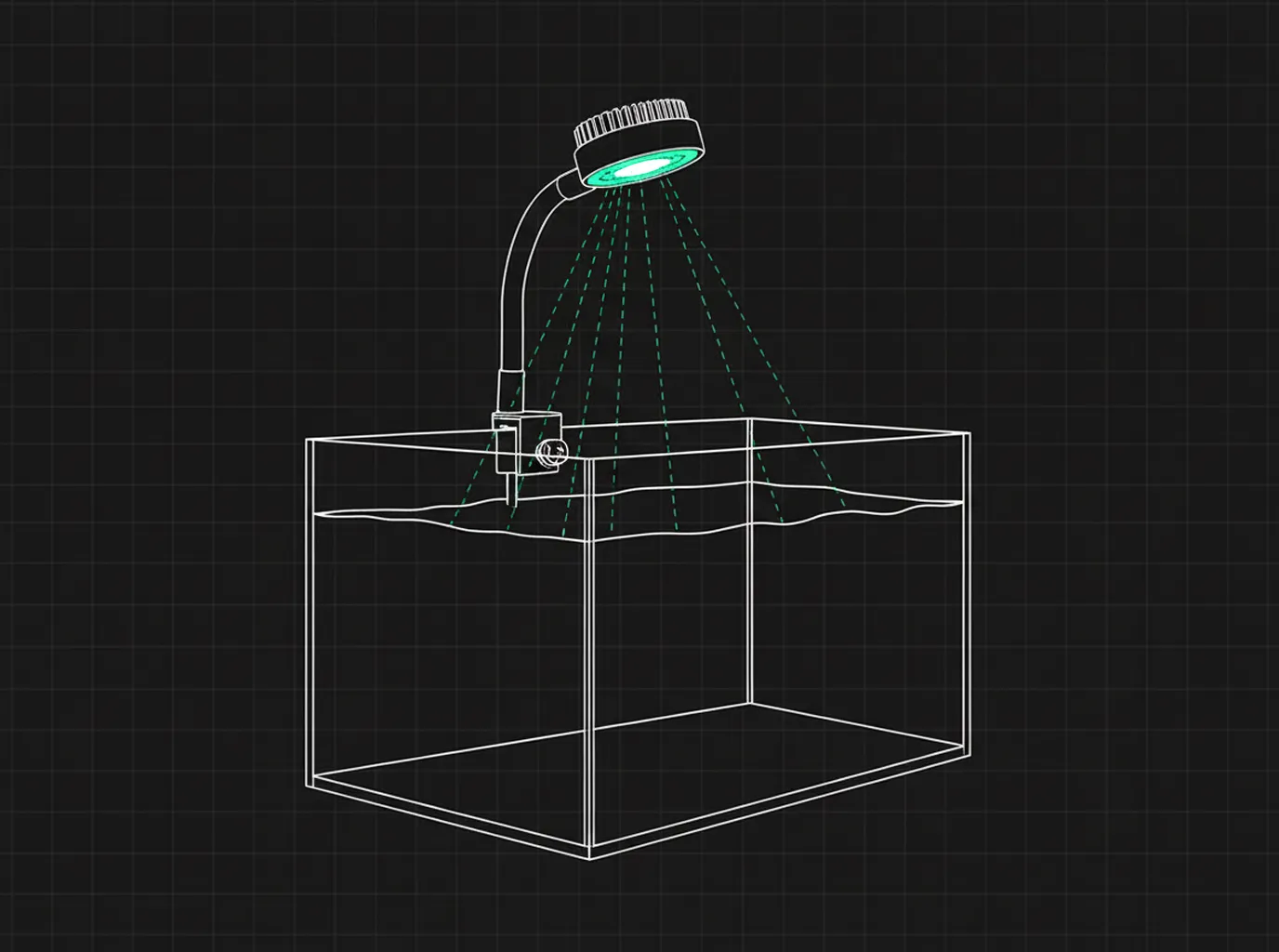
LED lighting determines intensity, spectrum distribution, and spread across the tank. But plants do not respond to lumens or marketing claims. They respond to usable PAR at leaf level in combination with stable CO2 and nutrients.
If you look closely at tanks running premium fixtures, you will often notice they also run disciplined CO2 systems and stable fertilization routines.
This is usually the point when the lighting debate shifts from brand comparison to system balance.
Why It Happens
In planted tanks, light is energy input. That energy must be converted into biomass through photosynthesis. The rate of that conversion depends primarily on carbon availability.
When this starts appearing, algae spreads along hardscape or glass after upgrading to a stronger LED. Plants may initially grow faster, then stall.
Biologically, higher intensity increases photosynthetic demand. If dissolved CO2 cannot match that demand consistently, plants enter carbon limitation. Excess light energy creates metabolic stress and organic leakage.
This is what algae exploit.
This explains why upgrading lighting without stabilizing CO2 often worsens results.
How To Diagnose It
When evaluating LED performance, observe plant response rather than relying on advertised specifications.
In most tanks, compact growth and deep coloration indicate sufficient intensity. Leggy stems reaching toward the surface often indicate low PAR at substrate level.
If you look closely at algae distribution, heavy growth directly under peak light zones suggests intensity exceeding carbon capacity.
Measure PAR at substrate depth if possible. Surface readings alone can mislead. You will often notice large drop offs in deep tanks even with strong fixtures.
This is where measurement clarifies expectations.
How To Fix It (Beginner-Friendly)
Choosing the best LED begins with understanding what your tank can process safely.
Match Intensity to CO2 Stability
In most high tech planted tanks, moderate to high PAR works well only if CO2 remains stable across the photoperiod. If CO2 fluctuates, reduce intensity slightly before increasing injection.
In practice, moderate consistent intensity produces more predictable growth than extreme peaks.
Prioritize Spread Over Peak Output
If you have ever seen bright hotspots with shadowed corners, you have seen distribution imbalance. Fixtures with wider spread reduce localised high energy zones.
This is why mounting height and lens angle matter as much as wattage.
Look for Dimming Control
LEDs with programmable intensity allow gradual calibration. Sudden jumps in intensity often destabilize tanks.
Almost always, incremental adjustments produce safer results than large increases.
Evaluate Spectrum Realistically
Full spectrum LED fixtures provide balanced output across plant usable wavelengths. Red heavy marketing claims do not replace carbon stability.
In most tanks, spectrum differences are secondary to intensity and stability.
This explains why premium fixtures still fail under unstable CO2.
Prevention Strategy
In planted systems that remain stable long term, lighting intensity sits slightly below maximum carbon processing capacity.
Avoid chasing maximum brightness. Instead, aim for controlled, measurable energy delivery.
Use timers to maintain consistent photoperiod. Adjust intensity gradually when plant mass increases.
This is usually where stability becomes visible in steady growth without explosive algae cycles.
Reconnect to the core model: the best LED is the one that fits inside your tank’s energy balance envelope.
System Interactions
Light
LED intensity and spread determine energy distribution across depth and layout.
Higher intensity reduces margin for CO2 instability.
CO2
Carbon supply determines how much light energy plants can utilize. Strong lighting without stable carbon narrows stability rapidly.
In most tanks, stable CO2 allows moderate increases in intensity safely.
Nutrients
As intensity rises, nutrient uptake increases. Deficiency appears faster under high output LEDs.
Substrate
Hardscape and dense plantings create shadows. Good spread mitigates uneven PAR zones.
Filtration
Flow ensures dissolved CO2 reaches high light zones. Poor circulation magnifies imbalance under strong LEDs.
Stability
Daily consistency in light output prevents metabolic shock. Inconsistent programming can destabilize otherwise balanced systems.
Reconnect again: LED selection influences energy input, but balance determines outcome.
Advanced: Mechanism & Biology
Photosynthesis scales with photon flux until carbon becomes limiting. Beyond that point, additional light does not increase carbon fixation unless CO2 rises proportionally.
When PAR exceeds carbon supply, excess excitation energy accumulates in chloroplasts. Plants activate protective mechanisms and growth efficiency declines.
Algae often tolerate fluctuating carbon better than vascular plants.
This explains why moderate intensity with stable CO2 often outperforms extreme intensity with unstable carbon.
Advanced: System Stability Analysis
Think of LED choice in three layers.
Layer one is raw intensity potential. Layer two is distribution uniformity. Layer three is compatibility with your carbon delivery system.
If intensity potential is high but carbon stability is weak, the energy bottleneck tightens.
In most tanks, optimal performance occurs when intensity remains slightly below maximum carbon processing capacity.
This is usually where balance appears in compact, consistent growth.
Brightness alone does not create success. Stability does.
Common Myths
The most expensive LED guarantees better plant growth. Stability determines success more than price.
Higher wattage always means higher PAR at substrate. Depth and spread influence usable intensity.
Red heavy spectrum alone creates vibrant plants. Carbon stability drives coloration more reliably.
More light fixes slow growth. Carbon limitation is often the real constraint.
FAQ
What is the best LED light for planted tanks? The best fixture delivers controllable, evenly distributed PAR that matches your CO2 stability.
How much PAR should I aim for? Most stable systems run 40 to 80 micromoles at substrate depending on plant type and carbon delivery.
Are budget LEDs sufficient? Many budget fixtures work well if intensity is calibrated to system balance.
Should I run lights at full power? Rarely. Most fixtures perform best when dimmed to match tank capacity.
Do high tech tanks require premium lights? High tech tanks require stable balance more than premium branding.
Related Guides
PAR for Planted Tanks
How Long To Run Lights
CO2 Problems and Fixes
How Much CO2 Do I Need
High Light vs Low Light Systems
Clean URL suggestion: /freshwater/lighting/best-led-lights