
Why Is Ammonia Spiking in Your Aquarium? Fix the
The single unifying system model governing this problem
Your aquarium is a throughput system: ammonia input (waste and decay) must stay below ammonia processing capacity (the nitrifying biofilm, oxygen, and flow across filter and surfaces).
An ammonia spike happens when input briefly exceeds capacity or when capacity suddenly drops. That is the whole model.
Most aquarists stare at the test result like it is the problem. It is not. The number is the alarm. The problem is the bottleneck.
Quick Summary (Beginner)
When ammonia spikes, the tank is telling you something simple: the biofilter is not keeping up right now.
In most tanks, this happens for one of two reasons:
First, more ammonia was produced than usual, often from rotting organics, overfeeding, a dead fish or snail, disturbed substrate, or a sudden increase in stocking.
Second, your processing capacity dropped, usually after a filter clean, media swap, loss of flow, low oxygen, medication, chlorine exposure, or a bacterial mini crash.
This is why spikes feel sudden. The system can look stable, then a single event pushes input above throughput.
Your priority is to reduce ammonia input and reopen capacity so conversion per hour catches up again. Once the throughput bottleneck widens, the spike stops being a recurring event.
This explains why two tanks can read the same ammonia but behave differently. One tank has enough processing capacity. The other does not.
What Is It?
In planted tanks and community aquariums, ammonia is always being produced. You just do not usually see it.
Fish excrete ammonia through their gills. Food becomes waste. Biofilms break down organics. Dead plant tissue and mulm decompose. All of that produces ammonia continuously, even in a “clean” looking tank.
Most aquarists notice the spike in one of three ways:
- Fish breathe faster or hang near the surface.
- Water looks hazy after a disturbance or a big clean.
- A test kit that was always at zero suddenly shows a positive reading.
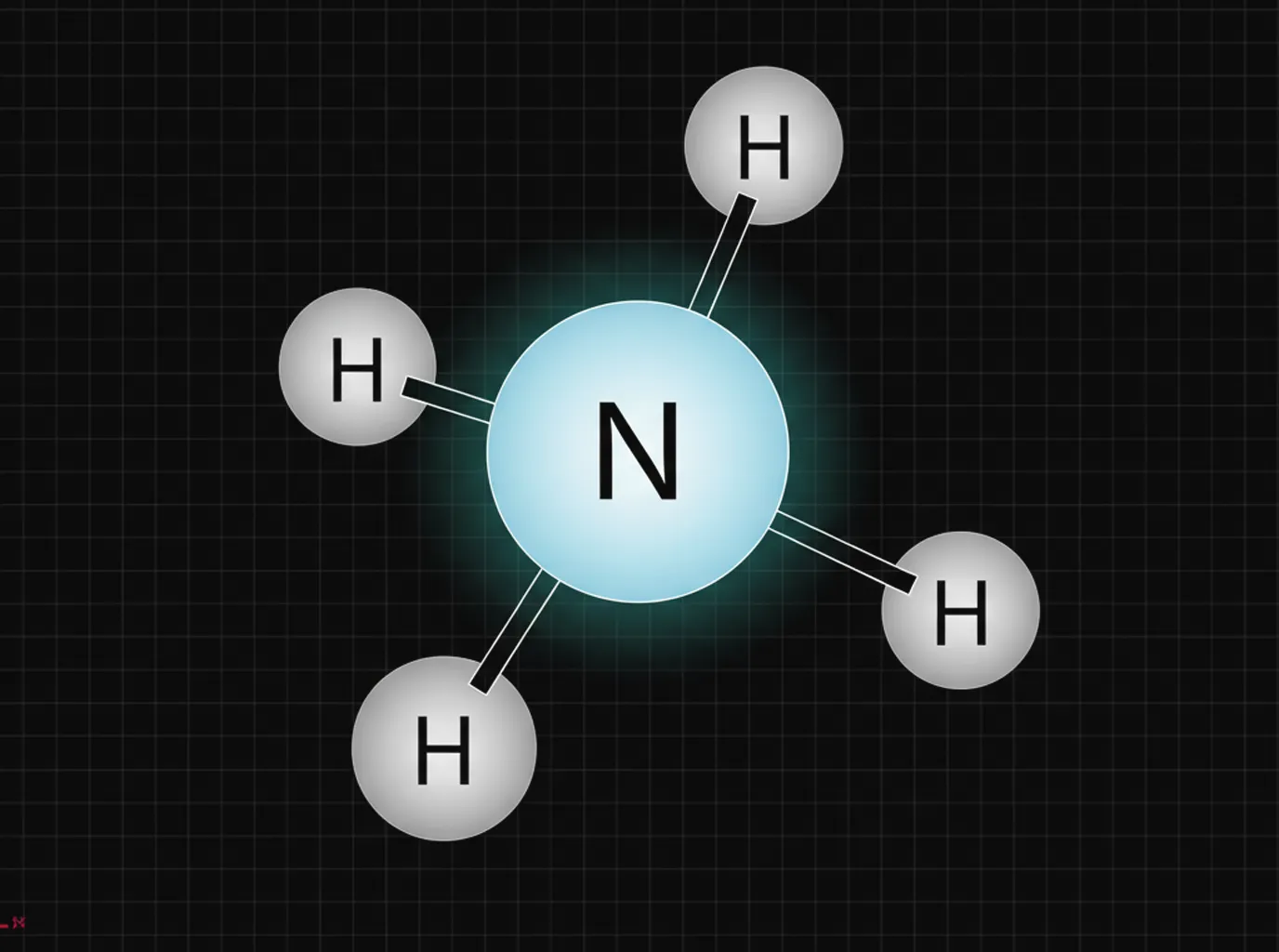
Ammonia exists in two forms:
- NH3 (unionised ammonia): more toxic
- NH4+ (ammonium): less toxic
Most hobby tests read total ammonia (NH3 + NH4+). The toxic portion (NH3) increases as pH and temperature rise. That is why a “small” reading can still matter in warm, higher pH tanks.
Still, the core story does not change: ammonia spikes are not a chemistry mystery. They are a throughput failure.
The tank is producing ammonia faster than it can convert it.
Why It Happens
When this starts appearing, it usually feels personal. You did a water change. You cleaned the filter. You added fish. You did what you always do, and then the test goes sideways.
That is exactly how throughput bottlenecks behave. They tolerate normal input, then buckle under a sudden load or capacity drop.
Every cause of an ammonia spike fits into one of these two buckets:
- Input increased
- Processing capacity decreased
You can map any real-world event back to the model by asking two questions:
- What changed that could increase ammonia production today?
- What changed that could reduce conversion capacity today?
In practice, most spikes are a combination. A small capacity drop plus a small input rise can produce a spike that looks dramatic on a test.
This is why chasing one “cause” can fail. The system is constrained, so multiple small stresses add up.
How To Diagnose It
In most tanks, the fastest diagnosis comes from looking at the timeline, not the test strip.
If you have ever seen ammonia spike the day after a filter clean, you already know the pattern: the test result is late. The event that caused it happened first.
Start by anchoring the moment you first saw the spike, then work backward.
Step 1: Pin down what changed in the last 72 hours
You do not need a perfect memory. You need one clear “something changed” signal.
Common timeline triggers include:
- A deeper-than-usual filter clean
- Media swap or “upgraded” filter
- A missed dechlorinator dose or questionable tap water
- Medication or algaecide use
- A dead fish, snail, or shrimp you did not find immediately
- Heavy feeding, new food, or vacation feeder blocks
- Large pruning, plant melt, or substrate disturbance
- A sudden stock increase
This explains why spikes often happen right after “maintenance.” Maintenance can reduce capacity if it removes biofilm or reduces oxygen flow.
Step 2: Read the rest of the nitrogen story
Ammonia does not exist alone. The rest of your readings help you locate where the throughput broke.
In practice, these patterns show up a lot:
- Ammonia up, nitrite up: the ammonia-to-nitrite step is overloaded or damaged.
- Ammonia up, nitrite zero, nitrate stable: the system is overwhelmed by a sudden input event, but nitrite conversion is still keeping pace or the test timing is early.
- Ammonia up, nitrate low in an established tank: capacity may have dropped more broadly, or the tank is under-filtered for current bio load.
Do not treat this like a puzzle box. Use it to decide whether you are dealing with an input spike or a capacity crash.
Step 3: Look at oxygen and flow, not just chemistry
This is usually the point when people miss the real culprit.
Nitrifying bacteria are oxygen hungry. They live on surfaces where oxygenated water flows. If flow drops, oxygen drops, and throughput collapses. You can get an ammonia spike even if the bacteria are still present, simply because they cannot do the work fast enough in low oxygen conditions.
Check for:
- Filter output reduced compared to normal
- Sponge or floss clogged and slowing turnover
- Surface agitation reduced
- CO2 running higher than usual and suppressing oxygen
- Dead spots where mulm accumulates
This reconnects straight back to the model: throughput capacity depends on oxygenated contact time across biofilm surfaces.
How To Fix It (Beginner-Friendly)
When your tank is showing ammonia, your job is to stabilise fish first, then widen the throughput bottleneck.
You will often notice that fish stop looking stressed before the test reads perfect againF. That is normal. Behaviour changes faster than bacterial populations.
1) Stop feeding for 24 to 48 hours
In most tanks, fish can easily handle a short fast. Food is one of the fastest controllable ammonia inputs.
This is why fasting works so well. It immediately reduces input while capacity catches up.
2) Find and remove the ammonia source
If you look closely, many spikes have a physical cause that can be removed.
Common hidden sources include:
- A dead fish wedged behind hardscape
- A dead snail inside a shell you did not notice
- A clump of rotting plant leaves trapped in a corner
- A dirty prefilter sponge stuffed with mulm
- A forgotten filter pad decomposing food and waste
Remove the source first, then you can meaningfully treat the water.
3) Restore flow and oxygen
This is where most quick fixes either work or fail.
Open the filter and inspect it like you are checking a clogged airway. If your media is packed with sludge, water will bypass or slow down. That reduces oxygen delivery to nitrifying surfaces.
Do the minimum cleaning needed to restore flow:
- Rinse sponges or mechanical pads in old tank water
- Remove the worst sludge, but do not sterilise
- Make sure impeller and intake are clear
- Increase surface agitation temporarily
Almost always, the tank improves once oxygenated flow returns. That is the throughput model in action: capacity rises when oxygen and contact time return.
4) Use water changes to dilute, not to reset
Water changes are a stabiliser. They reduce ammonia concentration while bacteria do the work.
In practice, you get better results from controlled, repeated changes than one massive panic change that disturbs the substrate again.
A sensible approach in many community tanks is:
- 30 to 50 percent change, then re-test after a few hours
- Repeat daily if ammonia remains measurable
If ammonia is high and fish are distressed, larger or more frequent changes can be justified. The goal remains the same: reduce toxicity while throughput catches up.
5) Consider an ammonia binder as a temporary bridge
If your fish are in danger and ammonia is not dropping fast enough, a binder can help.
Use this as a bridge, not as a strategy. Binding does not expand throughput capacity. It buys time while your biofilter regains processing speed.
This explains why binders sometimes “do nothing” on a test. Some tests still read bound ammonia as total ammonia. Watch fish and watch trend lines.
6) Do not replace filter media during a spike
It is tempting to “clean the problem away.” That is the opposite of what you need.
If you remove media, you reduce the surface area where nitrifiers live, which tightens the throughput bottleneck further.
Keep bio-media stable until the tank is reading consistently safe again.
Prevention Strategy
Most aquarists prevent ammonia spikes by accident. They build stable habits that protect throughput capacity without realising that is what they are doing.
If you want prevention to be predictable, design your routine around the throughput model.
Keep the biofilter’s surface area and oxygen stable
Nitrifiers are slow growing. They do not rebound instantly after disruption.
In practice, prevention looks like:
- Avoid replacing all media at once
- Clean mechanical stages more often, bio stages less aggressively
- Maintain stable filter flow and surface agitation
- Keep a prefilter sponge so the main media stays cleaner
- Treat tap water properly so chlorine and chloramine do not hit your biofilm
This is why mature tanks feel forgiving. They have built-in spare capacity.
Avoid sudden organic dumps
A large ammonia input event is usually an organic decomposition event.
Prevention habits include:
- Remove dead leaves during heavy plant melt
- Do not let mulm build into anaerobic pockets
- Be cautious with large uprooting and deep substrate stirring
- Feed based on fish appetite, not habit
Almost always, the spike is not “random.” It is the system reacting to a sudden input that exceeded capacity.
Quarantine and treat carefully
Some medications and algaecides can impact biofilm directly, or they reduce oxygen which indirectly cuts capacity.
If you need treatment, increase aeration and avoid disrupting the filter at the same time. Stack one stress at a time.
This is what causes so many “mystery spikes.” The aquarist adds medication, oxygen falls, throughput drops, and ammonia rises.
System Interactions
Ammonia spikes rarely live in isolation. They interact with the rest of the tank, and those interactions often explain why one tank crashes while another shrugs it off.
Light
In planted tanks, strong light increases plant demand and can drive fast growth, but light itself does not create ammonia.
The interaction is indirect: more light often comes with more feeding and more fertilisation. More biomass also means more trimming and more plant melt when something goes wrong.
If you recently increased light and then saw ammonia, it is usually because the tank’s organic cycle sped up and the throughput system did not scale with it.
CO2
CO2 can be a silent amplifier of ammonia risk.
High CO2 reduces available oxygen for fish and biofilm, especially at night. If surface agitation is low and CO2 is high, your nitrifiers can become throughput limited even if the media is intact.
You will often notice this pattern as “morning distress.” Fish look worse early in the day, then improve as CO2 and oxygen balance changes.
Nutrients
Fertiliser does not create ammonia directly in most setups, but nutrient imbalances can cause plant stress and melt.
Plant melt becomes organic decay. Organic decay becomes ammonia input.
This explains why a tank can “randomly” spike after a nutrient change. The change did not add ammonia. It destabilised plants, which increased input.
Substrate
Substrate is both a nutrient store and an organic trap.
Deep stirring can release trapped mulm and anaerobic byproducts. Uprooting plants can expose decomposing roots and pockets of waste. That can create a sudden ammonia input event.
In practice, you want targeted disturbance, not wholesale churning. If you need to deep clean a substrate, do it in sections across weeks so throughput capacity has time to handle the added load.
Filtration
Filtration is where throughput capacity lives.
Bio-media surface area, flow rate, oxygenation, and mechanical prefiltration determine how much ammonia your system can process per hour.
If you upgraded a filter and swapped media, you may have accidentally reduced capacity in the short term, even if the new filter is “better” long term. The bacteria live on the old surfaces, not on the marketing label.
This is usually where spikes originate: a small change to filtration that removed living biofilm or reduced oxygenated contact.
Stability
Stability is not a vibe. It is the buffer between input and capacity.
A stable tank has spare throughput. That spare throughput is why it can handle a missed feeding routine or a small dead leaf without a measurable spike.
An unstable tank lives at the limit. Any disturbance pushes input above capacity.
That is the stability limitation framing: ammonia spikes are a stability ceiling being hit.
Advanced: Mechanism and Biology
If you watch a mature filter media under a microscope, it is not “clean.” It is alive.
Nitrifying bacteria and archaea form biofilms on surfaces. They convert ammonia into nitrite, then nitrate. This process is aerobic, meaning it requires oxygen. It also produces acid over time, which can impact pH and bacterial efficiency in soft, low KH systems.
Two properties matter most:
- Surface area: more habitat for biofilm
- Oxygenated flow: more usable throughput per hour
Nitrifiers are slow compared to heterotrophic bacteria. Heterotrophs explode in population when organic waste is high. Nitrifiers ramp up more gradually. That is why a sudden organic event can outpace the system.
This explains why cloudy water sometimes appears with an ammonia spike. Heterotrophs bloom on organics while nitrifiers are still trying to catch up on conversion.
The NH3 vs NH4 split matters because toxicity is not only “how much total ammonia.” It is how much is present in the toxic NH3 form. Higher pH and higher temperature shift more total ammonia into NH3.
That is why a warm, alkaline tank needs tighter control when a spike occurs.
Advanced: System Stability Analysis
A stable aquarium is not one that never produces ammonia. It is one that maintains a reliable gap between input and processing capacity.
You can think of this as three stability layers:
Layer 1: Routine input stays below routine capacity
This is the basic mature tank. Normal feeding, normal waste, normal decay. The biofilter keeps up.
Layer 2: Shock absorption exists
This is spare capacity. The tank can handle a dead leaf, a slightly heavy feeding, or a small disturbance without measurable ammonia.
Layer 3: Recovery pathways are protected
This is the ability to bounce back after a disruption without compounding errors.
Most spikes happen when Layer 2 is missing and Layer 3 is damaged at the same time. A capacity reduction happens, then an input increase happens, and the tank has no buffer.
In practice, recovery is accelerated by protecting the filter, restoring oxygenated flow, and avoiding unnecessary resets. The fastest path to stability is almost always the path that preserves biofilm habitat.
This is why “deep cleaning everything” often makes it worse. It narrows throughput again during the exact window you need it wider.
Reconnect to the core model again: when you stop treating ammonia as a number and start treating it as a throughput bottleneck, the correct decisions become obvious.
Common Myths
Myth 1: Ammonia spikes only happen in new tanks
New tanks are common, but established tanks spike too.
Established tank spikes usually come from a capacity disruption or a sudden organic decay event. The throughput model explains both without needing a “new tank” label.
Myth 2: If nitrite is zero, ammonia is not real
Nitrite timing can lag. Or your nitrite conversion step may still be strong while ammonia conversion is currently overloaded.
Watch trends and fish behaviour. Do not argue with the tank.
Myth 3: A bigger filter instantly fixes a spike
A bigger filter body does not instantly create biofilm.
If you move old media into it and keep oxygenated flow stable, it can help. If you start fresh media, you may temporarily reduce capacity.
Myth 4: You should replace filter media to remove toxins
Replacing media removes the very thing that processes toxins.
Clean gently to restore flow. Keep the bio surfaces.
Myth 5: Plants eliminate ammonia spikes
Healthy plants can absorb some ammonia and ammonium, but they are not a guaranteed safety net.
If plants are melting or stressed, they can contribute to ammonia input. The throughput model still governs the outcome.
FAQ
How dangerous is an ammonia spike?
It depends on concentration, pH, temperature, and exposure time. Higher pH and warmer water increase NH3 toxicity. Even moderate readings can be urgent if fish show distress.
Why did ammonia spike after I cleaned my filter?
Because you likely reduced throughput capacity by removing or drying biofilm, or you reduced flow and oxygen delivery through clogged media during reassembly. A big clean can narrow the bottleneck.
Can water changes crash the cycle?
Water changes do not remove nitrifiers living on surfaces, but aggressive cleaning, chlorinated water exposure, or replacing media can. Water changes are usually stabilising if dechlorination is correct.
Should I add bottled bacteria?
It can help in some cases, especially after a known biofilter disruption. It is most effective when combined with restored oxygenated flow and reduced input.
Why does ammonia spike after stirring the substrate?
Because you can release trapped organics and waste into the water column, creating a sudden input event. In deep, mulm-heavy substrates, this can be significant.
How long until ammonia goes back to zero?
If the spike is driven by a one time input event and you restore flow, you may see improvement within 24 to 72 hours. If capacity was heavily damaged, recovery can take longer. Track trend lines, not one reading.
Related Guides
- Nitrite Spike After Ammonia: what it means and how to stabilise the second step
- How To Safely Clean Your Filter Without Crashing: keeping throughput capacity intact
- New Tank Cycling Guide: building spare capacity from day one
- Cloudy Water After Maintenance: bacterial blooms vs particulate disturbance
- Fish Gasping at Surface: oxygen, CO2, and ammonia interactions
Clean URL suggestion: /problems/why-is-ammonia-spiking