
RO Water for Planted Tanks: How to Use and
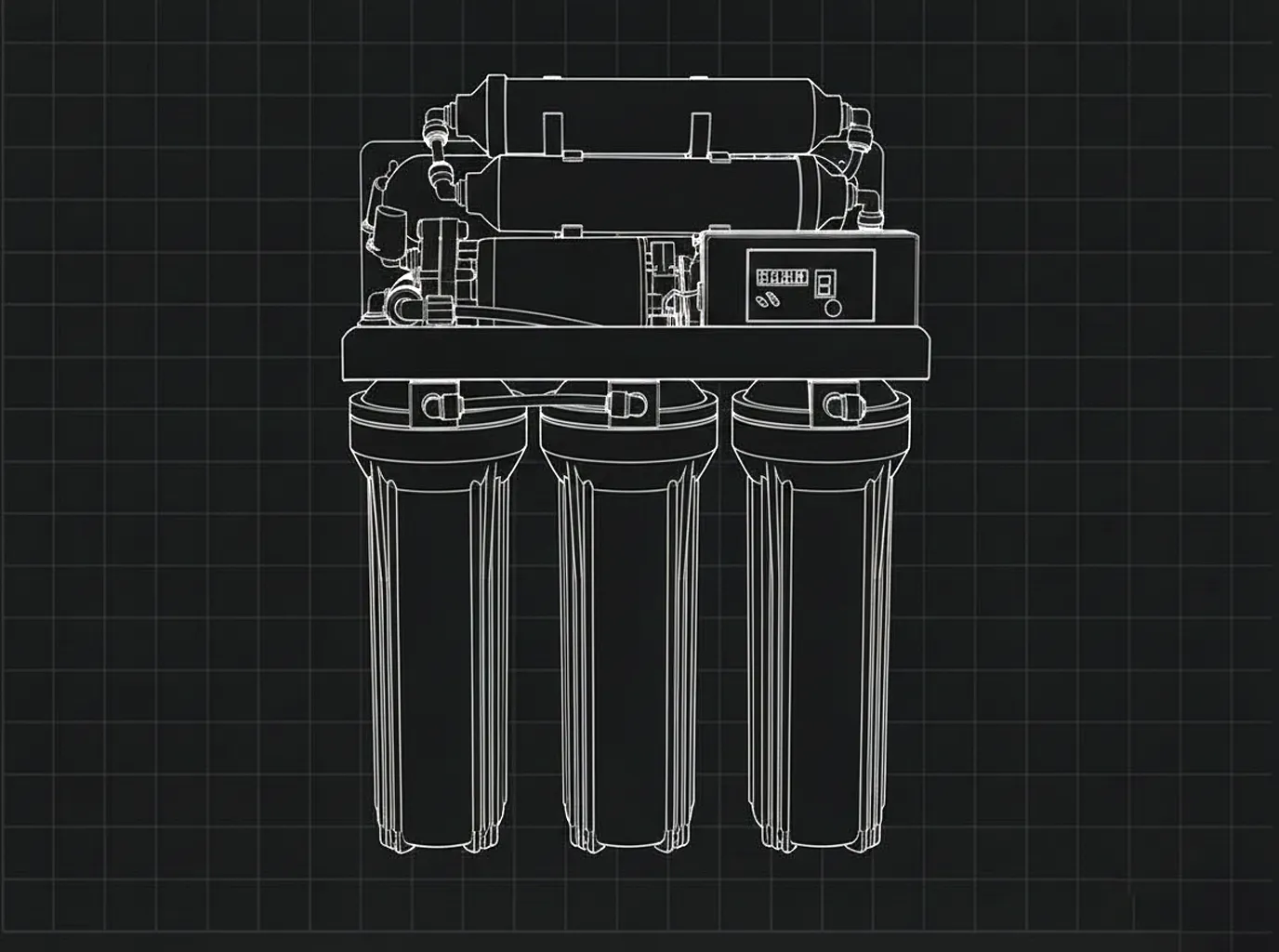
The single unifying system model governing this topic
Your planted tank is a mineral control system. Stability depends on keeping hardness, alkalinity, and dissolved solids inside a predictable operating range. When using RO water, the bottleneck is simple: mineral input must match biological and chemical demand.
Reverse osmosis removes almost all dissolved minerals. That creates precision, but it also creates risk. If remineralization does not match plant, bacterial, and fish requirements, the tank operates outside its stability envelope.
Everything in this guide maps back to that one constraint: mineral control determines system stability.
Quick Summary (Beginner)
RO water is nearly pure H2O with almost no dissolved minerals. That makes it powerful for planted tanks because you control exactly what goes in.
In most tanks, RO water works best when it is remineralized to a consistent GH and KH target. If you run pure RO without remineralizing, instability follows. Plants struggle. Bacteria slow down. Fish experience osmotic stress.
This explains why some aquarists love RO while others crash tanks with it. The difference is mineral control.
RO water is not automatically better. It is a tool. Used correctly, it widens the stability envelope. Used carelessly, it narrows it.
What Is RO Water in a Planted Tank Context?
If you have ever tested tap water and seen unpredictable GH, KH, or TDS, you already understand the appeal of RO.
Reverse osmosis water is produced by forcing water through a semi permeable membrane that removes most dissolved ions. The result is water with extremely low GH, KH, and total dissolved solids.
In planted tanks, this means you are starting from zero. No calcium, no magnesium, no carbonate buffer, no sodium or other trace contaminants from municipal supply.
That blank slate is powerful. But it also removes buffering capacity and essential minerals.
This is why RO is not the solution by itself. It is the foundation for controlled remineralization.
Reconnect to the model: mineral control is the bottleneck. RO removes variability. You must replace it with intentional stability.
Why Aquarists Use RO Water
In most tanks, the reason for switching to RO is instability from tap water.
Tap water may have high KH that limits CO2 efficiency, excess sodium, fluctuating hardness seasonally, elevated nitrates, or high TDS unsuitable for soft water species.
When this starts appearing, plant growth becomes inconsistent. CO2 becomes harder to dial in. Sensitive fish struggle.
RO removes that unpredictability. It eliminates external mineral noise.
This explains why high tech aquascapes often rely on RO. Consistency allows precision.
However, removing variability does not automatically create stability. Stability must be rebuilt deliberately.
How Mineral Imbalance Happens with RO
When aquarists first switch to RO, problems usually follow one of three paths.
They under remineralize. They over remineralize inconsistently. Or they ignore KH entirely.
All three trace back to the same mineral control bottleneck.
If you look closely at struggling RO tanks, GH is often too low. Calcium and magnesium are required for plant structure and enzyme function. They are also critical for fish osmoregulation. Without adequate GH, plants stunt and fish experience chronic stress.
In practice, very low GH reduces plant resilience, which increases melt. Melt increases organic decay. Decay increases ammonia input.
This is why under remineralization can indirectly destabilize nitrogen cycling.
Over remineralization or inconsistent mixing creates parameter swings. If GH and KH vary water change to water change, fish must constantly adjust internal osmotic pressure. That consumes energy and reduces resilience.
Almost always, fish stress in RO systems is tied to inconsistency, not the use of RO itself.
Ignoring KH removes buffering. If you run pure RO with CO2 injection and no KH, pH can swing rapidly. Rapid pH shifts stress fish and impact bacterial efficiency.
Reconnect again to the model: mineral control defines stability margins. Remove buffer and the ceiling lowers.
How To Diagnose RO Related Instability
When problems appear in an RO based planted tank, you will often notice plant issues before fish issues. Leaves may twist or stunt. Growth slows. Algae appears in patches.
Start by testing GH, KH, TDS, and pH stability across the photoperiod.
If GH is under 3 dGH in a typical planted community tank, plants may lack structural minerals. If KH is near zero with aggressive CO2, pH swings may be excessive.
You will often notice the pattern as everything feeling unstable.
This is usually the point when aquarists realize RO is not the cause. Mineral mismanagement is.
How To Use RO Water Correctly
When switching to RO, think in terms of targets, not guesswork.
First, decide on a GH and KH target appropriate for your livestock and plant goals. In most planted community tanks, aquarists aim for GH between 4 and 6 dGH and KH between 1 and 3 dKH for CO2 systems.
These are not universal numbers. They are stable starting points.
Always remineralize outside the tank before adding water. Measure the same way each time. Consistency widens the stability envelope.
Track TDS as a quick feedback tool. In practice, if TDS is swinging widely between weeks, so are dissolved minerals.
If you need to change GH or KH, do it across several water changes. Sudden swings narrow the stability margin.
Reconnect to the model once more: RO is stable only when mineral input matches biological demand predictably.
Prevention Strategy
RO water does not create stability automatically. It enables controlled stability.
Maintain consistent remineralization measurements. Keep notes on GH and KH targets. Avoid chasing perfect numbers. Aim for repeatability.
In most tanks, repeatability beats optimization.
Monitor plant health as a mineral indicator. Twisted new growth can signal calcium issues. Pale interveinal leaves may indicate magnesium imbalance.
Fish behavior also reflects mineral stress. Clamped fins, erratic swimming, or lethargy after water changes often signal osmotic shifts.
This is what causes many silent RO failures. The water looks pristine, but mineral balance is inconsistent.
System Interactions
RO water affects every subsystem indirectly through mineral control.
High light increases nutrient demand. Without adequate calcium and magnesium, plants cannot sustain accelerated growth.
Lower KH allows CO2 to drop pH more easily. That improves efficiency but narrows safety margins.
Macronutrients depend on proper ionic balance. Extremely low hardness can alter nutrient uptake ratios.
Active soils lower KH naturally. Combined with RO, KH can approach zero quickly.
Nitrifying bacteria prefer stable pH and adequate carbonate availability. Very low KH can reduce buffering against acid accumulation from nitrification.
A tap water tank has built in mineral stability. An RO tank has engineered stability. Engineered stability requires precision.
Reconnect again: mineral control is the governing bottleneck.
Advanced: Mechanism and Biology
Plants absorb calcium for cell wall formation and magnesium for chlorophyll structure.
Fish regulate internal ion concentrations through gill exchange. Extremely low external ion concentration increases osmotic stress.
Bacteria rely on stable pH and carbonate availability for optimal nitrification rates.
Each organism depends on dissolved minerals differently. RO removes those minerals entirely. Remineralization restores the biological framework.
This explains why pure water is not biologically ideal. Controlled mineral presence is.
Advanced: System Stability Analysis
A stable planted tank using RO operates within three layers.
Layer 1: Mineral targets are defined.
Layer 2: Remineralization is consistent.
Layer 3: Adjustments are gradual and measured.
When one layer fails, instability appears as plant melt, algae, fish stress, or cycling fluctuations.
RO does not cause these. Inconsistent mineral control does.
When mineral input is predictable and aligned with biological demand, RO systems become some of the most stable planted tanks possible.
Common Myths
Plants do not automatically prefer ultra soft water. Stability matters more than softness.
Zero KH is not inherently superior. Buffering provides protection against pH swings.
TDS alone does not determine quality. Composition matters.
RO is not mandatory for every planted tank.
FAQ
Do I need RO for a planted tank? Not always. If tap water is stable and suitable, RO may be unnecessary.
Can I run pure RO without remineralizing? No. Fish and plants require dissolved minerals.
What GH should I target? Most community planted tanks thrive between 4 and 6 dGH, but species specific needs vary.
Does RO prevent algae? Not directly. It prevents mineral variability. Algae control depends on overall stability.
How often should I test GH and KH? Test weekly during setup. Once stable, monthly checks may be sufficient.
Related Guides
Understanding GH and KH in Planted Tanks CO2 and pH Stability Guide Active Soil and Buffering Explained Why Is My pH Swinging Nutrient Balance in High Tech Tanks
Clean URL suggestion: /freshwater/water/ro-water-for-planted-tanks