
Plant Growth Stages: Understanding Aquarium Plant
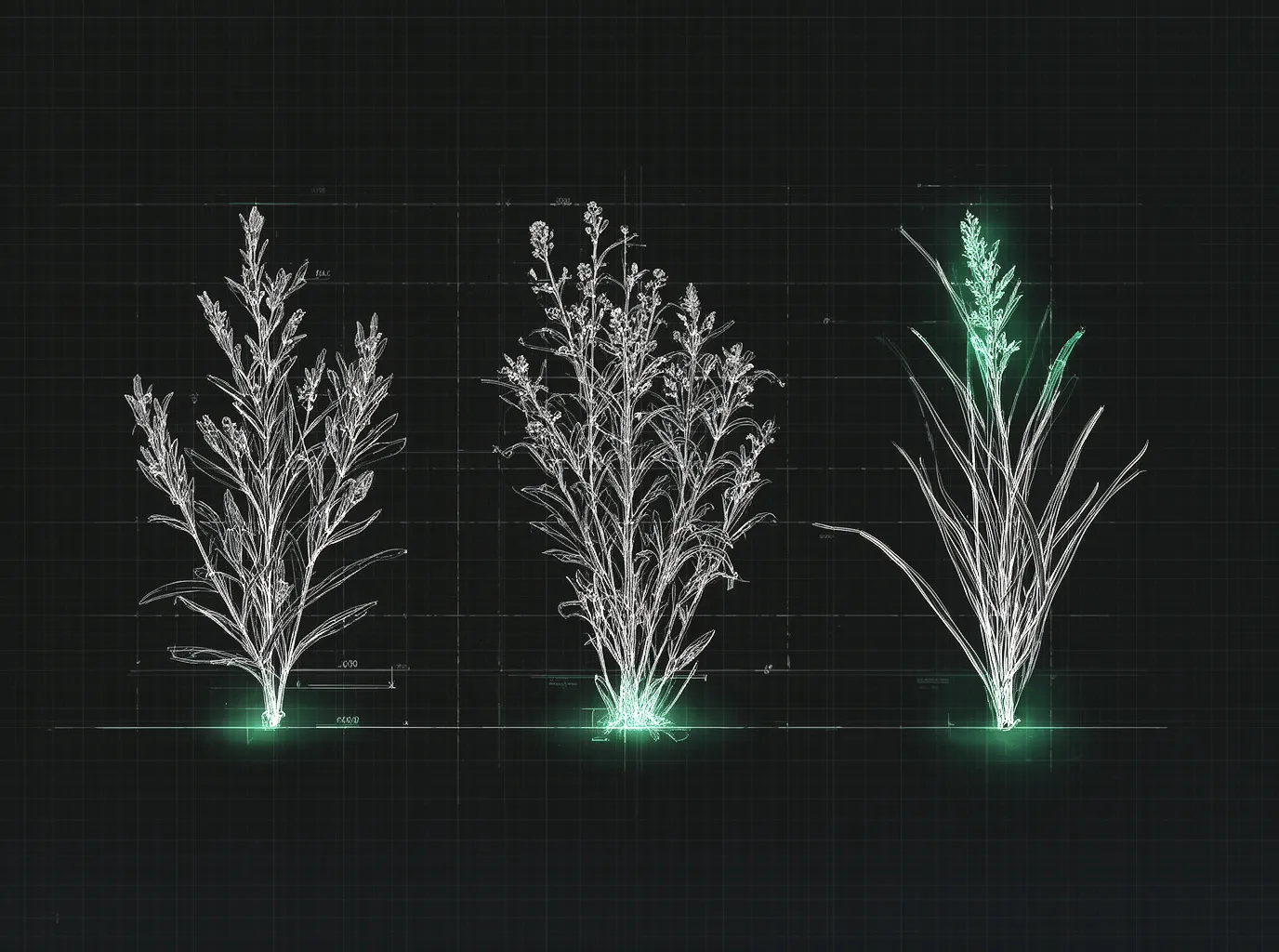
Aquarium plants progress through distinct growth stages, each with characteristic behaviors, appearance changes, and care requirements. Understanding these stages helps aquarists interpret what they see in their tanks and adjust care appropriately. A newly planted stem that sheds leaves is not dying, it is transitioning. A carpet that stops spreading after months of growth has not failed, it has reached maturity and requires different maintenance.
Most beginners expect plants to grow continuously at the same rate indefinitely. In practice, growth follows predictable patterns: initial establishment (slow or stalled growth), transition adaptation (possible melting or shedding), active growth (rapid expansion), maturity (stable maintenance), and eventual decline if conditions deteriorate. This is usually the point when aquarists realize that planted tanks are dynamic systems requiring observation and adaptation rather than static setups.
Quick Summary
Aquarium plants progress through five main growth stages: establishment, transition, active growth, maturity, and decline. During establishment (1-3 weeks), plants develop roots and adapt to new conditions with minimal visible growth. The transition phase (1-4 weeks) involves adapting from emersed (grown above water in nurseries) to submersed (underwater) form, often with temporary melting or leaf shedding. Active growth (weeks to months) is rapid expansion with new leaf production, runner development, or stem elongation. Maturity (months to years) is stable growth with consistent appearance requiring regular maintenance. Decline occurs when conditions deteriorate or plants exhaust local resources. Growth rates vary dramatically by species: fast-growers like Rotala complete cycles in weeks, while slow-growers like Anubias take months to years. Environmental factors (light intensity, CO₂ levels, nutrients, temperature) strongly affect progression through stages. Understanding these stages prevents misinterpreting normal transitions as problems and helps optimize care timing.
Emersed vs Submersed Growth
Most commercially grown aquarium plants are cultivated emersed (above water) in greenhouse conditions. This allows faster growth, easier maintenance, and lower production costs. The leaves produced in emersed conditions have different structure than submersed leaves: thicker cuticles, more stomata (breathing pores), and often different shapes.
When you plant these emersed-grown specimens in your aquarium, they must adapt to submersed (underwater) conditions. The existing emersed leaves often cannot function efficiently underwater because their structure is optimized for air, not water. This is why many newly planted aquarium plants shed or melt their initial leaves.
Some species show dramatic differences between emersed and submersed forms. Hygrophila polysperma has rounded emersed leaves and elongated submersed leaves. Rotala rotundifolia has green emersed leaves and can develop red or orange submersed leaves under high light. Ludwigia repens has green emersed leaves and red-tinted submersed leaves.
Understanding this distinction prevents panic when new plants appear to deteriorate initially. The plant is not dying, it is rebuilding itself in a form suited to underwater life. This transition is normal and expected.
Stage 1: Establishment (Week 1-3)
The establishment phase begins when you plant a specimen in your aquarium. During this period, the plant focuses energy on root development and adapting to the new environment. Visible growth is minimal or absent.
What You See
Newly planted stems, rosettes, or rhizome plants show little change for the first 1-3 weeks. Stem plants remain the same height. Rosette plants may not produce new leaves. Existing leaves might look healthy or begin showing stress (yellowing, transparency, browning).
Root development happens invisibly below substrate. White root hairs extend from stems or root masses, anchoring the plant and beginning nutrient uptake. This is the plant's priority during establishment.
Some species establish faster than others. Fast-growing stems (Rotala, Hygrophila, Limnophila) may begin active growth within 7-10 days. Slow-growing species (Anubias, Cryptocoryne, Bucephalandra) may show no visible change for 3-4 weeks.
What the Plant Needs
Stable conditions are critical during establishment. Avoid parameter changes, heavy fertilization changes, or lighting adjustments. The plant is already stressed from transplanting and needs consistency to recover.
Adequate light allows continued photosynthesis to support root development. However, excessive light stresses plants before roots can supply sufficient nutrients. Moderate light (30-50 PAR) during establishment is safer than very high intensity.
CO₂ availability (if used) should remain stable. Fluctuating CO₂ during establishment delays root development and increases melting risk.
Nutrients should be available but not excessive. Target moderate levels (10-15 ppm nitrate, 1 ppm phosphate, 0.1 ppm iron). Deficiency or excess both stress establishing plants.
Common Problems
Floating is common in the first week, especially for stem plants and carpet plants. Insufficient planting depth, disturbance by fish or shrimp, or weak root development cause this. Replant carefully using tweezers, pushing stems deeper into substrate (5-10mm depth).
Complete melting can occur if the plant was already stressed before purchase, if water parameters differ dramatically from the source, or if conditions are severely inadequate (no light, no CO₂ in high-light tanks, extreme pH).
Algae colonization on stressed leaves is common. The plant cannot outcompete algae during establishment. Manual removal and stable conditions resolve this once active growth begins.
Stage 2: Transition and Adaptation (Week 2-6)
The transition phase overlaps with late establishment. The plant begins producing new submersed growth while shedding or absorbing nutrients from old emersed leaves. This phase is visually concerning for beginners but is normal.
What You See
Emersed leaves yellow, become transparent, develop holes, or melt entirely. This happens from the outside in or bottom up, with older emersed leaves affected first. This is usually where beginners post photos asking if their plants are dying.
Simultaneously, new growth emerges from the crown, shoot tips, or nodes. New leaves look different from the original leaves: thinner, different color, different shape, or smaller initially. These new leaves are submersed-adapted.
In stem plants, the original tops may retain emersed leaves while new lateral shoots from lower nodes produce submersed leaves. In rosette plants, outer emersed leaves decay while new submersed leaves emerge from the center.
The plant may appear to shrink during transition as old leaves disappear faster than new leaves grow. This is temporary. Within 2-4 weeks, submersed growth accelerates and surpasses the original size.
What the Plant Needs
Patience is the primary requirement. Do not increase fertilization dramatically, change lighting, or remove the plant thinking it is dying. Allow the transition to complete naturally.
Remove severely melted leaves only if they are completely brown, mushy, or detaching. Partially yellowed leaves can still photosynthesize and provide energy during transition. Only remove leaves that are clearly dying.
Maintain stable conditions. Any parameter shift during transition extends the adaptation period or causes complete melting. Consistency is more important than optimization during this phase.
Light should support new growth without overwhelming the plant. If melting is severe and new growth is not appearing within 3-4 weeks, slightly reduce light intensity to decrease stress.
Common Problems
Complete melt with no new growth indicates conditions are incompatible. Common causes include extreme pH differences (source pH 7.5, tank pH 5.5 or vice versa), temperature shock (cold shipping in winter), or completely inadequate light/nutrients.
Algae coating melting leaves is common. The decaying tissue provides nutrients for algae. Remove affected leaves and maintain water changes to export organic waste. Algae problems typically resolve once active growth begins.
Extended transition (6+ weeks) suggests suboptimal conditions. The plant is struggling to produce submersed growth. Check light intensity (may be too low), CO₂ levels (may be inadequate), and nutrient availability.
Stage 3: Active Growth (Week 4-20+)
Once transition completes, plants enter active growth where expansion is rapid and visible. This is the stage most aquarists expect immediately after planting but which actually requires successful completion of establishment and transition first.
What You See
Stem plants elongate rapidly, producing new node sets every 3-7 days depending on species and conditions. Internodal spacing is compact, leaves are vibrant in color, and lateral branching may begin if the plant has been topped.
Carpet plants spread through runners extending outward from established portions. New plantlets appear at runner tips, root, and produce their own runners. Coverage increases visibly week by week.
Rosette plants produce new leaves from the central crown every 5-10 days. Each new leaf is larger and more robust than the previous. Root systems expand through substrate.
Rhizome plants (Anubias, Java Fern) produce new leaves every 2-4 weeks (Anubias) or 1-2 weeks (Java Fern). Rhizomes elongate slowly, and plantlets may form on older leaves.
Growth rate varies dramatically by species. Under high light and CO₂, Rotala rotundifolia can double its mass in 10-14 days. Anubias nana may produce one new leaf per month. Both are in active growth, they simply operate at different speeds.
What the Plant Needs
This stage has the highest nutrient demand. Plants consume nitrogen, phosphorus, potassium, and micronutrients rapidly. Increase fertilization to match consumption rates. For fast-growing setups, this may mean dosing macronutrients 3 times weekly and micronutrients 2-3 times weekly.
Light intensity should match plant requirements. High-demand species need 50-80+ PAR during active growth. Insufficient light causes etiolation (stretching toward light with long internodes and pale coloration).
CO₂ levels (if using injection) should remain stable at 25-35 ppm. Active growth consumes CO₂ rapidly, and depletion slows growth immediately.
Trimming begins during active growth for fast-growing species. Once stem plants reach desired height, trim and replant tops to maintain density and structure. This actually stimulates more vigorous growth through lateral branching.
Common Problems
Nutrient deficiencies emerge during active growth because consumption outpaces supply. Yellowing old leaves (nitrogen), pinholes (potassium), or pale new growth (iron) indicate specific deficiencies. Increase targeted fertilization.
Algae competition increases during this phase because excess nutrients feed algae as well as plants. Maintain balance by matching fertilization to plant consumption rather than dosing excessively. Healthy actively growing plants outcompete algae effectively.
Overgrowth happens when active growth is not managed with trimming. Fast-growing stems reach the surface and spread horizontally, shading lower plants. Establish regular trimming schedules (every 2-4 weeks for fast growers) to maintain aquascape structure.
Stage 4: Maturity (Month 3-24+)
Mature plants have established root systems, stable biomass, and consistent growth rates. They no longer expand exponentially but maintain steady state with regular trimming and maintenance.
What You See
Stem plants require regular trimming (every 2-4 weeks) to maintain desired height. Without trimming, they reach the surface and continue growing. Growth rate is steady and predictable.
Carpet plants achieve 80-100% coverage and require trimming to maintain desired thickness. Runners still extend but growth rate slows as the carpet fills available space. Density increases rather than area coverage.
Rosette plants reach maximum size for their position, producing new leaves at the same rate old leaves die. The plant maintains constant leaf count and appearance. Cryptocoryne may produce runners and daughter plants.
Rhizome plants continue slow growth with periodic new leaves. Anubias may begin flowering (white spathe flowers above water). Java Fern produces plantlets on older leaves, which can be separated for propagation.
Mature plants tolerate minor parameter fluctuations better than establishing plants. Root systems are extensive, allowing nutrient uptake even when water column levels vary. However, major disruptions still cause stress.
What the Plant Needs
Maintenance becomes the focus. Regular trimming, fertilization, and substrate care (removing detritus, replenishing root tabs if used) keep mature plants healthy.
Nutrient demands remain high but become predictable. Establish dosing routines that match consumption. Test periodically (nitrate, phosphate) to verify levels remain in target ranges (10-20 ppm nitrate, 1-2 ppm phosphate for high-tech setups).
Substrate nutrients deplete over time, especially in sand or gravel with root tabs. Mature root-feeding plants (Cryptocoryne, swords, Vallisneria) benefit from root tab replacement every 3-4 months.
Thinning may become necessary for very dense plant masses. Remove 20-30% of stems from packed groups to improve water circulation and light penetration. This maintains health in the remaining growth.
Common Problems
Substrate depletion causes slow decline in mature plants. Growth slows, colors fade, or leaves become smaller over months. Add root tabs, increase water column dosing, or plan substrate replacement (aquasoils deplete after 12-18 months).
Lower stem sections of mature stem plant groups become bare as upper growth shades them. Regular trimming with replanting of tops prevents this. Discard old lower stems that have lost leaves.
Mature carpets accumulate detritus in dense growth, creating anoxic zones that harm roots. Regular vacuuming during water changes removes trapped waste and maintains substrate health.
Rhizome plants (Anubias, Java Fern) can develop green dust algae or black beard algae on old leaves. Remove the oldest, most affected leaves to improve appearance. This is normal in long-established plants and not a sign of poor health.
Stage 5: Decline and Senescence
Plants eventually decline if conditions deteriorate, resources deplete, or the species reaches its natural lifespan (rare in aquariums but possible). Decline is not inevitable if proper maintenance continues, but recognizing it allows intervention.
What You See
Growth slows or stops despite previously adequate conditions. New leaves emerge smaller, paler, or deformed compared to previous growth. Older leaves yellow, develop holes, or show necrosis faster than new leaves can replace them.
Stems become thin and weak. Carpet coverage thins with bare patches appearing. Rosette plants stop producing new leaves or produce only small, pale leaves. Overall plant mass decreases rather than maintaining or increasing.
Color fades in species that were previously vibrant. Red plants turn green or brown. Green plants become pale or yellowish. This differs from specific nutrient deficiencies because multiple symptoms appear simultaneously rather than one characteristic pattern.
What the Plant Needs
Diagnosis is the first step. Identify why decline is occurring. Common causes include substrate nutrient depletion (after 12-18 months in aquasoil, sooner in sand/gravel with depleted root tabs), accumulated environmental stress (parameter instability, inconsistent CO₂), or lighting changes (aging bulbs, fixture repositioning).
Intervention depends on cause. For substrate depletion, add root tabs or increase water column fertilization. For environmental stress, stabilize parameters and maintain consistency. For aging, consider replanting with fresh cuttings or propagules.
Sometimes decline indicates the plant has reached its limit in that position. Heavily shaded locations, areas with poor flow, or substrate zones that have become compacted may no longer support that species. Relocate the plant or replace it with a more suitable species.
Common Problems
Misinterpreting decline as normal growth causes delayed intervention. If growth slows and plant appearance deteriorates over weeks, investigate causes rather than assuming this is normal. Healthy mature plants maintain consistent appearance indefinitely with proper care.
Attempting to rescue severely declined plants often fails. If more than 60-70% of the plant is damaged, it may be better to discard it and replant a fresh specimen or cutting. Severely compromised plants often die completely despite intervention.
Growth Rates by Plant Category
Fast-Growing Plants (Double biomass in 1-3 weeks)
Species like Rotala rotundifolia, Hygrophila polysperma, Limnophila sessiliflora, Cabomba caroliniana, and Elodea complete growth stages rapidly. These reach active growth within 2 weeks of planting and require weekly to bi-weekly trimming in high-tech setups.
Fast growers are excellent for new tanks because they export nutrients rapidly, competing with algae during the vulnerable establishment phase. However, they require diligent maintenance to prevent overgrowth.
Moderate-Growing Plants (Double biomass in 3-6 weeks)
Species like Ludwigia repens, Cryptocoryne wendtii, Monte Carlo, Staurogyne repens, and Pogostemon erectus grow at intermediate rates. These establish in 2-3 weeks and require trimming every 3-4 weeks in moderate to high light.
Moderate growers balance nutrient export with manageable maintenance. They suit aquarists who want healthy growth without weekly trimming demands.
Slow-Growing Plants (Double biomass in 2-6 months)
Species like Anubias varieties, Java Fern, Bucephalandra, Cryptocoryne balansae, and some moss species grow very slowly. Establishment takes 4-6 weeks, and mature size is reached after 4-8 months.
Slow growers require minimal maintenance but provide less nutrient export. They suit low-tech setups, dimly lit areas, or positions where fast growth would be problematic (edges, between hardscape).
System Interactions
Light
Light intensity is the primary driver of growth rate through all stages. High light (60-100+ PAR) accelerates progression through establishment (faster root development), transition (quicker submersed leaf production), and active growth (rapid biomass increase).
Low light (20-40 PAR) extends every stage. Establishment takes 2-4 weeks instead of 1-2 weeks. Transition extends to 4-8 weeks. Active growth is slow and indefinite, with plants never reaching the rapid expansion seen in high light.
This is why high-tech tanks (high light, CO₂, nutrients) see visible results in 4-6 weeks while low-tech tanks may take 3-4 months to achieve similar coverage. The plant species, stages, and endpoints are the same, but the timeline differs dramatically.
Photoperiod affects progression less than intensity. A consistent 8-hour photoperiod at adequate intensity produces better growth than a 12-hour photoperiod at low intensity. Plants need sufficient photon flux, not just duration.
CO₂
CO₂ availability affects how efficiently plants can utilize light for growth. With adequate CO₂ (25-35 ppm), plants photosynthesize at maximum rates, progressing through stages quickly. Without CO₂ in high light, growth is limited by carbon availability despite adequate light and nutrients.
During establishment, CO₂ supports root development by providing energy for cellular processes. Plants establish faster with CO₂ than without, even though root development itself does not require CO₂ directly. The energy from photosynthesis drives root growth.
During transition, stable CO₂ helps plants produce submersed leaves efficiently. Fluctuating CO₂ extends transition as the plant experiences alternating periods of adequate and inadequate carbon supply.
During active growth, CO₂ consumption is highest. Plants use carbon from CO₂ to build new tissue (cellulose, proteins, starches). Depletion causes immediate growth slowdown.
Nutrients
Nutrient demand varies dramatically between stages. During establishment, demand is low because the plant is not actively building new tissue. During active growth, demand spikes as rapid cell division and tissue construction consume nutrients.
Nitrogen (nitrate) is required for amino acid and protein synthesis in new growth. Plants in active growth consume 5-10 ppm nitrate per week in high-tech setups. Deficiency causes immediate growth slowdown and yellowing.
Phosphorus (phosphate) is required for ATP (energy transfer) and DNA/RNA in dividing cells. Active growth increases phosphate consumption. Deficiency stunts growth before causing visible leaf symptoms.
Potassium regulates cell water balance and enzyme activation. Plants consume potassium steadily through all stages but especially during active growth. Deficiency causes pinholes and leaf edge necrosis.
Iron and micronutrients are essential for chlorophyll and enzyme function. Demand increases during active growth as the plant produces more photosynthetic tissue. Deficiency appears as pale new leaves or interveinal chlorosis.
Substrate
Substrate quality affects establishment speed. Nutrient-rich substrates (aquasoil) support faster root development and quicker transition to active growth compared to inert substrates (sand, gravel).
Over time, substrate nutrients deplete. Plants in the maturity stage experience decline if substrate becomes depleted (typically 12-18 months in aquasoil, 3-4 months for root tabs in inert substrate). Refresh nutrients through root tab addition or increased water column dosing.
Root-feeding plants (Cryptocoryne, Vallisneria, sword plants) depend heavily on substrate conditions through all growth stages. Stem plants and mosses feed primarily from the water column and are less affected by substrate depletion.
Filtration
Filtration stability affects growth stages indirectly. Mature biological filtration prevents ammonia or nitrite spikes that stress plants during establishment and transition. New tanks with immature filtration experience longer, more difficult establishment phases.
Water circulation affects nutrient and CO₂ distribution. Poor circulation creates zones where plants receive inadequate CO₂ or nutrients, causing patchy growth rates. Some areas progress to active growth while others stall in establishment.
Stability
Parameter stability affects progression through growth stages more than absolute parameter values (within reasonable ranges). Plants adapt to consistent conditions (pH 6.5, 7.0, or 7.5) but struggle with fluctuating conditions (pH swinging 6.5 to 7.5 daily).
During establishment and transition, stability is critical. Fluctuations extend these stages or cause complete melting. Once plants reach active growth, they tolerate minor fluctuations better but still prefer consistency.
Long-term stability determines whether plants reach and maintain maturity or cycle through repeated stress, recovery, and decline. Consistent tanks support healthy mature plants for years. Unstable tanks never progress beyond active growth before problems cause setbacks.
Advanced: Manipulating Growth Stages
Understanding growth stages allows strategic timing of care activities. Plant during the establishment phase when roots anchor quickly (spring through summer for most species in nature, year-round in stable indoor tanks).
Introduce new plants during established tank maturity rather than cycling or shortly after setup. Mature tank conditions (stable filtration, consistent parameters, balanced nutrients) support faster establishment than new tank instability.
Time trimming to active growth stages. Trimming during establishment or transition stresses plants further. Wait until active growth is evident (rapid new leaf production, runner extension, stem elongation) before first trimming.
Adjust fertilization based on growth stage. Use moderate dosing during establishment and transition. Increase dosing during active growth as consumption rises. Return to moderate dosing during maturity once growth stabilizes.
For carpet plants, delay trimming until 80-90% coverage is achieved. This typically occurs late in active growth. Premature trimming during early active growth disrupts spreading and delays full coverage.
Advanced: Species-Specific Growth Patterns
Some species exhibit unique growth stage patterns worth noting for optimization.
Cryptocoryne species experience "Crypt melt" during transition. Entire plants may lose all leaves, then regrow from the root system. This is normal for Crypts adapting to new conditions. Do not discard melted Crypts. Wait 3-4 weeks, and new growth usually emerges.
Red plants show color development correlated with growth stage. During establishment and transition, coloration is often poor regardless of conditions. Once active growth begins and submersed leaves dominate, proper conditions (high light, lean nitrogen) produce vibrant reds.
Carpeting plants show logarithmic growth. Early active growth appears slow because coverage is sparse. Once coverage exceeds 40-50%, visible spreading accelerates exponentially as more plantlets produce more runners. Patience during early active growth pays off with rapid completion.
Epiphytic plants (Anubias, Java Fern, Bucephalandra) never enter rapid active growth. Their growth is always slow and steady. This is not a problem or deficiency. This is their natural growth pattern.
Common Myths About Plant Growth
Myth: Plants should grow immediately after planting Establishment and transition phases (2-6 weeks combined) precede visible growth. Expecting immediate expansion leads to unnecessary intervention and stress. Patience during early stages is essential.
Myth: Melting means the plant is dying Transition melting of emersed leaves is normal and expected. As long as new submersed growth appears within 2-4 weeks, the plant is healthy. Only melt without new growth indicates problems.
Myth: Slow growth always means something is wrong Some species grow slowly naturally (Anubias, Bucephalandra). Additionally, plants in low-tech setups grow slowly by design. Slow growth is only problematic if it represents decline from previously faster growth.
Myth: More fertilizer speeds up growth stages Excessive fertilization during establishment or transition does not accelerate these stages and may cause stress. Stages progress based on physiological adaptation, not nutrient availability (assuming baseline needs are met).
Myth: You cannot plant different species together because they have different growth rates Mixed growth rates are beneficial. Fast growers export nutrients during cycling and establishment. Slow growers provide stable structure. Aquascapers intentionally combine species with different rates for balanced, manageable tanks.
FAQ
How long does it take for plants to start growing after planting? Visible growth typically begins 2-4 weeks after planting, once establishment and initial transition complete. Fast-growing species may show growth in 7-10 days. Slow-growing species may take 4-6 weeks.
Why are my new plants losing leaves? This is usually transition from emersed to submersed form. Emersed leaves (grown in nurseries) are replaced by submersed leaves adapted to underwater conditions. This is normal and resolves in 2-4 weeks as new growth appears.
Is it normal for plants to do nothing for weeks after planting? Yes, during the establishment phase (1-3 weeks), plants prioritize root development over visible growth. No new leaves or height increase is normal during this period. Growth begins once roots anchor.
How can I speed up plant growth? Increase light intensity (40-80 PAR for most species), add CO₂ injection (25-35 ppm), dose complete fertilizers regularly (NPK + micronutrients), and maintain stable conditions. These factors work together, not individually.
Why did my plants stop growing after months of good growth? Common causes include substrate nutrient depletion (after 12-18 months), parameter drift (gradual pH change, temperature shift), or increased shading from plant mass. Diagnose by testing parameters and observing conditions, then address the specific cause.
Do plants grow faster in summer? In unheated tanks, yes, because warmer water (24-28°C) increases metabolic rates. In heated tanks with stable temperature year-round, seasonal growth differences are minimal. Light availability (longer days in summer) matters more than temperature in indoor tanks.
Can I trim plants during establishment or transition? Avoid trimming during establishment (first 1-3 weeks). Trim during transition only to remove completely melted leaves. Wait until active growth begins (rapid new leaf production) before regular trimming.
How do I know if my plant is mature? Mature plants show consistent, predictable growth that matches expected rates for that species under your conditions. They require regular maintenance (trimming every 2-4 weeks for fast growers) and maintain stable appearance between maintenance sessions.
Related Guides
- Planted Aquarium Guide – Foundation for creating conditions that support healthy growth through all stages
- Best Plants for Low Light – Slow-growing species suited to extended growth timelines
- Plant Nutrient Deficiencies – Diagnose problems that cause stunted growth or decline
- How to Trim Aquarium Plants – Maintenance techniques for plants in active growth and maturity stages
- Plants Melting Problem – Troubleshoot excessive melting during transition phase