
Coral PAR Levels: How Much Light Every Coral Type
Quick Summary
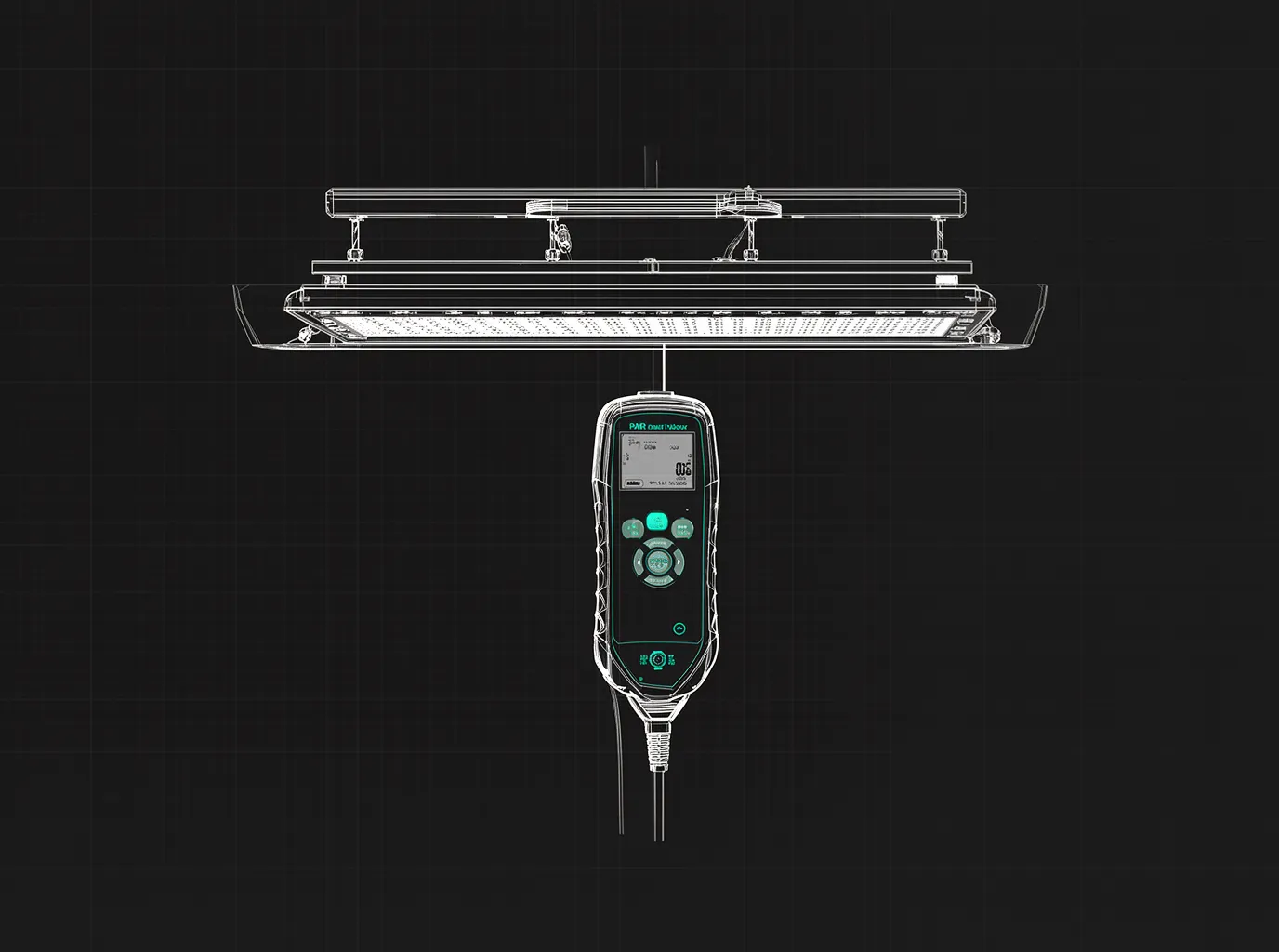
PAR (Photosynthetically Active Radiation) measures the quantity of light available for photosynthesis at a given point in your tank. It is the single most useful metric for matching corals to the right position in your reef. SPS corals generally need 200 to 450 PAR, LPS need 75 to 200 PAR, and soft corals thrive at 50 to 150 PAR. These ranges overlap, and every species has its own sweet spot within its category.
Getting PAR right prevents the two most common lighting problems in reef tanks: corals that bleach because they are receiving too much light and corals that brown out because they are not receiving enough. A PAR meter removes the guesswork, but even without one, understanding how light distributes in your tank lets you place corals with confidence.
What PAR Actually Measures
Most reef keepers hear "PAR" constantly but rarely get a clear explanation of what the number represents. If you have ever wondered why a light rated at a certain wattage still does not grow corals well, PAR is the missing piece.
PAR measures the number of photons in the 400 to 700 nanometer wavelength range (the range plants and zooxanthellae use for photosynthesis) hitting a given area per second. It is expressed in micromoles per square meter per second (µmol/m²/s). A PAR reading of 200 means 200 micromoles of usable photons are reaching that spot every second.
Wattage measures how much electricity a light consumes. Lumens measure how bright light appears to the human eye. Neither tells you how much photosynthetically useful light reaches your corals. A 100-watt light with a poor spectrum may produce less PAR than a 50-watt light with a spectrum optimized for reef use. This is why PAR is the only lighting metric that matters for coral health.
How PAR Distributes in a Reef Tank
Light does not spread evenly through your aquarium. Understanding how PAR changes with depth, distance, and tank features is essential for placing corals where they will actually receive the light levels you intend.
Depth Attenuation
PAR decreases with water depth. In clear reef tank water, PAR typically drops by 40 to 60 percent between the water surface and the bottom of a 50 cm tank. A fixture producing 500 PAR at the surface might deliver only 200 to 300 PAR at mid-height and 100 to 150 PAR at the sand bed.
The rate of attenuation depends on water clarity. Dissolved organics (yellowing compounds), suspended particles, and even microbubbles reduce light penetration. Tanks running activated carbon and a protein skimmer maintain clearer water that transmits more light to depth.
Lateral Spread
Most reef LED fixtures concentrate their output in a cone or focused beam pattern. PAR is highest directly below the center of the fixture and decreases toward the tank edges. The corners and extreme sides of the tank often receive 30 to 50 percent less PAR than the center.
Multiple fixtures or fixtures with wide spread angles reduce this lateral variation but never eliminate it completely. Side-mounted or supplemental lighting can fill edge zones where the primary fixture underperforms.
Shadows from Rockwork
The rockwork itself blocks light and creates shadowed zones. Overhangs, caves, and the undersides of arches receive dramatically less PAR than exposed surfaces at the same depth. In most tanks, the underside of a rock ledge receives 10 to 30 percent of the PAR hitting the top of that same ledge.
These shaded zones are not wasted space. They are ideal habitat for shade-loving corals (mushrooms, Blastomussa, non-photosynthetic species) that would bleach in direct light.
PAR Ranges by Coral Category
These ranges represent the zones where corals of each category grow healthiest. Individual species have narrower preferences within these ranges.
SPS Corals: 200 to 450 PAR
SPS corals are the most light-demanding category. Their small polyps and heavy reliance on zooxanthellae photosynthesis mean they need high photon delivery to meet their energy requirements.
Within the SPS range, species vary. Entry-level SPS (Montipora, Pocillopora) perform well at the lower end (150 to 300 PAR). Demanding species (Acropora, Seriatopora) need the upper range (300 to 450 PAR) for optimal growth and coloration.
PAR above 500 causes photoinhibition in most SPS species: the zooxanthellae receive more light energy than they can process, producing reactive oxygen that damages both the algae and the coral. The result is bleaching from excess light, which is counterintuitive but common in tanks with powerful fixtures and shallow water.
LPS Corals: 75 to 200 PAR
LPS corals supplement photosynthesis with direct feeding, making them less dependent on high light. Most LPS thrive in the moderate zone that naturally exists in the mid-height of the tank rockwork.
High-light-tolerant LPS (Euphyllia, Caulastrea, Duncan) handle up to 200 PAR comfortably. Moderate-light LPS (Acanthastrea, Lobophyllia, Favia) do best at 75 to 150 PAR. Low-light LPS (Blastomussa, Trachyphyllia, Scolymia, Cynarina) prefer 50 to 100 PAR and actively suffer above 150 PAR.
Placing LPS in the SPS zone (above 200 PAR) is one of the most common placement mistakes. The coral responds with persistent retraction, color loss, or gradual bleaching from photoinhibition.
Soft Corals: 50 to 150 PAR
Soft corals have the lowest light requirements and the widest tolerance range. Most species adapt to whatever light reaches their position as long as it falls within their broad acceptable window.
Moderately light-tolerant soft corals (Zoanthids, Palythoa, Toadstool Leathers) perform well across the full 50 to 175 PAR range. Low-light specialists (mushrooms, Xenia, Kenya Tree, Clove Polyps) thrive at 30 to 100 PAR.
Green Star Polyps are an exception among soft corals, tolerating PAR levels up to 200 without stress.
PAR Reference Chart by Species
This chart provides target PAR ranges for the most common reef aquarium coral species. Use it as a starting point and adjust based on your corals' behavioral feedback.
SPS Species
| Species | Minimum PAR | Optimal PAR | Maximum PAR |
|---|---|---|---|
| Acropora (most species) | 250 | 300 to 400 | 450 |
| Acropora millepora | 200 | 250 to 350 | 400 |
| Montipora (plating) | 125 | 175 to 275 | 325 |
| Montipora (encrusting/digitata) | 150 | 200 to 300 | 350 |
| Pocillopora | 150 | 200 to 300 | 400 |
| Stylophora | 200 | 250 to 350 | 400 |
| Seriatopora | 175 | 225 to 325 | 400 |
| Porites | 150 | 200 to 300 | 350 |
LPS Species
| Species | Minimum PAR | Optimal PAR | Maximum PAR |
|---|---|---|---|
| Euphyllia (Torch, Hammer, Frogspawn) | 75 | 100 to 175 | 225 |
| Acanthastrea (Acan Lords) | 50 | 75 to 125 | 175 |
| Caulastrea (Candy Cane) | 75 | 100 to 175 | 225 |
| Duncanopsammia (Duncan) | 75 | 100 to 150 | 200 |
| Lobophyllia | 50 | 75 to 125 | 175 |
| Trachyphyllia (Open Brain) | 50 | 75 to 100 | 150 |
| Blastomussa | 30 | 50 to 75 | 125 |
| Goniopora | 75 | 100 to 150 | 200 |
| Favia / Favites | 75 | 100 to 150 | 200 |
| Scolymia | 30 | 50 to 75 | 125 |
| Cynarina | 30 | 50 to 75 | 125 |
Soft Coral Species
| Species | Minimum PAR | Optimal PAR | Maximum PAR |
|---|---|---|---|
| Zoanthids / Palythoa | 50 | 75 to 150 | 200 |
| Toadstool Leather (Sarcophyton) | 50 | 75 to 125 | 175 |
| Sinularia | 50 | 75 to 125 | 150 |
| Kenya Tree (Capnella) | 30 | 50 to 100 | 150 |
| Xenia | 30 | 50 to 75 | 125 |
| Discosoma (Mushrooms) | 20 | 30 to 75 | 125 |
| Rhodactis (Mushrooms) | 20 | 40 to 80 | 125 |
| Ricordea florida | 30 | 50 to 100 | 150 |
| Ricordea yuma | 50 | 75 to 125 | 175 |
| Green Star Polyps | 50 | 75 to 150 | 225 |
| Colt Coral (Cladiella) | 50 | 75 to 100 | 150 |
Measuring PAR in Your Tank
A PAR meter gives you exact readings at any position in your tank. Without one, you can still make informed placement decisions, but a meter eliminates guesswork entirely.
PAR Meters
The Apogee MQ-510 is the standard submersible PAR meter in the reef hobby. It provides accurate readings in water and costs around $400 to $500 USD. For most reef keepers, this is a significant investment for occasional use.
Rental and borrowing options. Many local reef clubs, coral shops, and online communities offer PAR meter lending programs. Borrowing a meter for a single mapping session (1 to 2 hours) provides all the data you need to create a permanent placement map for your specific tank and fixture combination.
How to Map Your Tank
Take PAR readings at a grid of points throughout the tank:
- Surface level (directly below the fixture)
- Upper rockwork height (top third)
- Mid-rockwork height (middle third)
- Lower rockwork height (bottom third)
- Sand bed level
- Front glass, center, and back glass at each height
- Under overhangs and in shaded zones
Record each reading and its position. You will often notice that PAR varies more than expected between positions that look similarly bright to your eye. The human eye adjusts to brightness differences, making the tank look more uniformly lit than it actually is.
Without a PAR Meter
If a PAR meter is not available, use these practical guidelines:
Fixture manufacturer data. Many reef LED manufacturers publish PAR charts for their fixtures at standard mounting heights. These provide approximate readings for your specific light model.
The vertical zoning principle. In virtually every reef tank with a single fixture, the top third of the rockwork receives high PAR (suitable for SPS), the middle third receives moderate PAR (suitable for LPS), and the bottom third receives low PAR (suitable for soft corals). This gradient is reliable enough for placement decisions even without exact measurements.
Coral behavior as feedback. Corals tell you whether they are getting too much or too little light through their behavior. Bleaching, retraction, and mucus production signal excess light. Browning, slow growth, and stretching toward the light signal insufficient PAR. Adjust placement based on these signals over 1 to 2 weeks.
PAR and Spectrum: Why Both Matter
PAR measures quantity of usable photons, but the spectral composition of those photons affects coral coloration and growth differently.
Blue Spectrum (420 to 480 nm)
Blue and violet light drives fluorescent protein production in many coral species, producing the vivid blues, purples, greens, and pinks that reef keepers prize. Blue-weighted spectrums at moderate PAR produce the best coloration in most SPS and many LPS.
Blue light penetrates water more effectively than red light, which means blue-heavy spectrums deliver more PAR to deeper positions. This is one reason why reef tanks running bluer spectrums often grow corals well even at modest total PAR.
White and Full Spectrum (6500K)
Broader spectrums including white light drive photosynthesis efficiently but promote denser zooxanthellae populations that appear brown. The growth rate under full spectrum is often slightly higher than under pure blue, but coloration suffers.
The Practical Balance
Most modern reef LED fixtures blend blue and white channels, allowing you to tune the spectrum. A common approach: run a blue-heavy daytime spectrum (14K to 20K appearance) for the main photoperiod, with a brief actinic-only period at dawn and dusk to showcase fluorescence. This balances coloration with adequate photosynthetic PAR.
How PAR Needs Change Over Time
The PAR your corals need is not static. Several factors cause the effective PAR at each coral's position to change, requiring periodic reassessment.
Coral Growth
As corals grow, they shade each other. A plating Montipora that started at 250 PAR may shade the LPS below it and reduce their PAR by 30 percent or more. Fast-growing SPS colonies at the top of the rockwork progressively shade everything beneath them as they expand.
Periodically assess whether lower corals are receiving adequate light as upper colonies grow. Fragging or pruning upper corals may be necessary to maintain light access for lower specimens.
Light Degradation
LED fixtures lose output over time. Most reef LEDs degrade 10 to 20 percent over 3 to 5 years of regular use. T5 fluorescent bulbs degrade faster and should be replaced every 9 to 12 months. If your corals gradually brown or slow in growth over a year or more without other parameter changes, declining light output is a likely factor.
Remeasure PAR annually (or after 18 to 24 months for LEDs) to track degradation. Increase intensity settings or replace bulbs as needed.
Water Clarity
Dissolved organic compounds accumulate between carbon changes and water changes, yellowing the water slightly. This yellowing absorbs light (especially blue wavelengths) and reduces PAR at depth. Running fresh activated carbon consistently and maintaining a regular water change schedule maximizes light transmission.
You will often notice corals looking more vivid immediately after a carbon change. This is not your imagination. Fresh carbon removes yellowing compounds, and more PAR suddenly reaches the corals.
Advanced: PAR vs PUR
PAR measures all photons between 400 and 700 nm equally. But zooxanthellae do not use all wavelengths equally. They have absorption peaks at specific wavelengths (primarily blue around 430 to 460 nm and red around 640 to 680 nm) and use photons at those wavelengths more efficiently.
PUR (Photosynthetically Usable Radiation) attempts to weight PAR readings by the zooxanthellae absorption spectrum, giving a more accurate picture of how much useful light actually reaches the coral. Two lights producing the same PAR but different spectrums may deliver significantly different PUR.
In practice, PUR is not easily measurable with standard equipment. The Apogee MQ-510 measures PAR, not PUR. For reef keepers, PAR remains the practical standard, with spectrum selection handled separately by choosing a reef-optimized fixture.
The practical takeaway: a blue-heavy reef spectrum at 300 PAR delivers more PUR (and thus more usable energy) than a white daylight spectrum at 300 PAR. This is why reef-specific fixtures outperform generic aquarium lights even at the same PAR output.
Advanced: Photoacclimation and Dynamic PAR Needs
Corals are not locked to a single PAR requirement. They photoacclimate by adjusting their zooxanthellae density and photosynthetic pigments in response to the light they receive.
In low light, corals pack more zooxanthellae per unit of tissue, increasing photosynthetic capacity but appearing browner. In high light, they reduce zooxanthellae density (less brown pigment to mask fluorescent proteins) and increase photoprotective pigments. This process takes 2 to 4 weeks to complete.
This is why gradual light acclimation works. Moving a coral from 100 PAR to 300 PAR in 5 cm increments over 3 weeks gives the zooxanthellae time to adjust their density and pigment profile at each stage. Moving the same coral instantly from 100 to 300 PAR overwhelms the zooxanthellae before they can adjust, causing oxidative damage and potential bleaching.
It also means that a coral grown under low light for months cannot simply be pushed into high PAR and expected to look the same as an identical colony that has lived at high PAR for its entire life. The coral needs transition time, and its final coloration may differ based on its acclimation history and the specific zooxanthellae strains it hosts.
Common Myths
"More PAR is always better for coral growth." Every coral species has a saturation point above which additional PAR provides no growth benefit and eventually causes damage. Pushing PAR beyond a species' tolerance bleaches corals, not grows them. Match PAR to the species' documented range.
"You need a PAR meter to keep corals." A PAR meter is extremely useful but not essential. Thousands of successful reef keepers use the vertical zoning principle, manufacturer PAR charts, and coral behavioral feedback to place corals effectively. A meter adds precision, not a prerequisite.
"PAR at the surface tells you what corals receive." Surface PAR is nearly meaningless for coral placement. What matters is PAR at the coral's actual position, which can be 40 to 60 percent lower than the surface reading in a 50 cm tank. Always reference PAR at placement depth, not the surface.
"All corals of the same category need the same PAR." Within SPS, LPS, and soft coral categories, species requirements vary significantly. Blastomussa (LPS) needs 50 to 75 PAR while Euphyllia (also LPS) thrives at 100 to 175 PAR. The category provides a general range, but species-level research is important for optimal placement.
FAQ
What PAR do I need for a mixed reef?
A fixture producing 300 to 400 PAR at the surface of a standard-depth tank (40 to 50 cm) creates a gradient from SPS-suitable levels at the top to soft-coral-suitable levels at the bottom. This single fixture accommodates all three coral categories through vertical placement.
How do I increase PAR at the bottom of my tank?
Raise your light fixture closer to the water surface (increases overall intensity), add supplemental side or rear lighting, improve water clarity with carbon and water changes, or reduce shading from upper-level corals. Each approach increases PAR delivery to lower zones.
Can I have too much PAR for SPS?
Yes. Most SPS species show stress above 450 to 500 PAR. Acropora grown at extreme PAR (600 plus) often bleach, especially if they were not acclimated to that intensity gradually. More light does not mean more growth once the saturation point is reached.
Why do my corals look different under blue vs white light?
Blue light excites fluorescent proteins in coral tissue, producing vivid colors. White light reveals the zooxanthellae (brown) coloration that fluorescent proteins mask under blue. Both views show the real coral. The blue view highlights host pigments, the white view highlights zooxanthellae density.
How often should I check PAR levels?
Map your tank once when you set up a new fixture. Recheck annually for LED degradation, after any fixture change or tank modification that affects light (new rockwork, moving the light, adding or removing fixtures), and whenever corals show unexplained bleaching or browning.
Do I need different lights for different coral zones?
No. A single quality reef LED fixture creates the natural PAR gradient needed for all coral categories. The vertical distribution of light in water does the zoning work for you. SPS at the top receive high PAR, LPS in the middle receive moderate PAR, and soft corals at the bottom receive low PAR, all from the same fixture.