
How Deep Should Aquarium Substrate Be?
Quick Summary
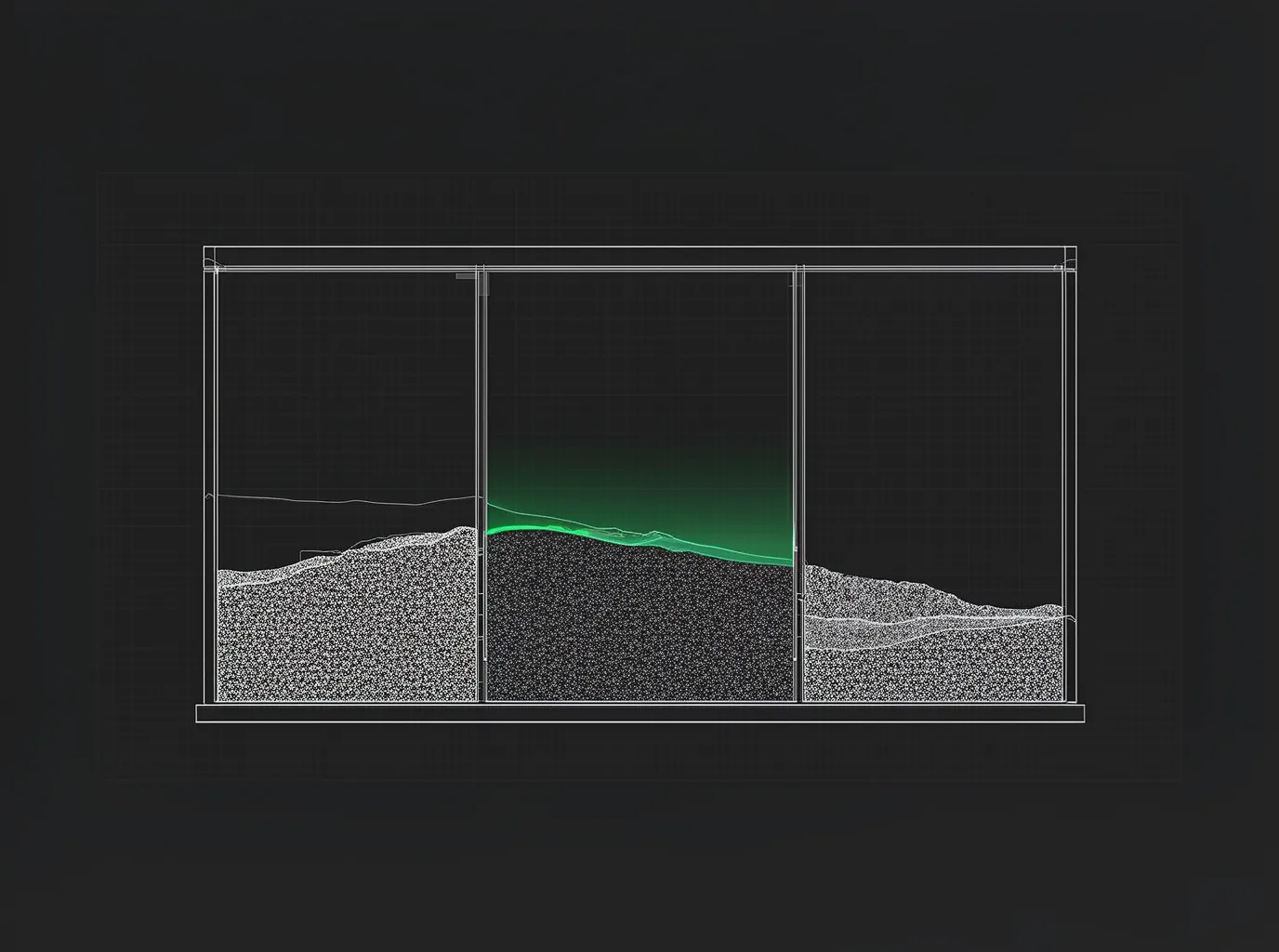
Most planted tanks perform best with a substrate depth of 3 to 5 cm (roughly 1 to 2 inches) across the main planting area. Going too shallow starves roots and makes planting difficult. Going too deep creates anaerobic pockets that release toxic gases. The ideal depth depends on what you are growing, what substrate type you are using, and whether you want a sloped layout for visual depth.
For beginners, 4 cm of uniform depth is the safest starting point. For aquascapers building sloped or terraced layouts, depths can range from 2 cm at the front to 8 cm or more at the back, but the deeper zones require planning to stay healthy.
Why Substrate Depth Matters
In most planted tanks, substrate is not just a decorative layer. It is the root zone, a major biological filtration surface, and a nutrient reservoir. How deep you make it determines how well each of those functions works.
Too shallow, and roots have nowhere to anchor. Stem plants float free after planting. Carpet species cannot spread runners. Root-feeding plants like Cryptocoryne and Amazon Sword struggle because there is simply not enough volume to hold nutrients and moisture near the roots.
Too deep, and water stops circulating through the lower layers. Oxygen-depleted zones develop where anaerobic bacteria produce hydrogen sulfide, a toxic gas with a distinct rotten egg smell. If you have ever disturbed a deep substrate bed and seen dark grey or black patches with a foul odor, that is hydrogen sulfide. It can stress or kill livestock if released in large quantities.
The right depth balances root space, biological activity, and gas exchange. This is why 3 to 5 cm comes up so consistently as the recommended range. It gives plants enough room to root without creating conditions that turn against you.
Minimum Substrate Depth
If you are planting anything with roots, the absolute minimum is 2.5 cm (1 inch). Below this, most plants cannot anchor and will uproot during water changes or when disturbed by fish.
Even at 2.5 cm, you are working with limited room. Fine-rooted carpet plants like Monte Carlo or Dwarf Hairgrass can manage because their root systems are shallow and spread laterally. But heavy root feeders like Echinodorus (Amazon Sword) or large Cryptocoryne species need significantly more depth to develop properly.
In practice, 2.5 cm works only at the very front of sloped layouts where visual openness matters more than dense planting. For any area where you intend to grow rooted plants seriously, treat 3 cm as the functional minimum.
Maximum Substrate Depth
Most aquarists run into trouble above 7 to 8 cm of depth. At this point, the lower substrate layers become oxygen-starved. Water does not penetrate well, detritus accumulates without decomposing aerobically, and anaerobic conditions develop.
There are tanks running 10 cm or more at the back of sloped aquascapes, and they work. But they require specific conditions to stay healthy:
- Coarse substrate or a gravel base layer that allows some water movement
- Active root growth penetrating deep into the substrate
- Periodic light disturbance of the surface layer during maintenance
- Healthy plant mass drawing oxygen into the root zone
If you are planning a deep substrate zone, consider using inert gravel or lava rock as a base filler beneath your planting substrate. This reduces the total volume of nutrient-rich material (lowering the risk of excess decomposition) while maintaining depth for visual effect. Almost always, the deep zones at the back of a tank benefit from this layered approach.
Recommended Depth by Substrate Type
Each substrate material behaves differently at various depths. The grain size, porosity, and nutrient content all influence how deep you can safely go.
Aqua Soil
Aqua soil performs best at 3 to 5 cm. Its fired clay granules are porous enough to allow some gas exchange, but they soften and compact over time. Deep aqua soil beds (above 6 cm) are more prone to anaerobic pockets as the granules break down.
For sloped layouts, keep the front at 3 cm and build up to 6 or 7 cm at the back. Use hardscape (rocks, wood) to support steep slopes so the soil does not migrate forward during water changes. You will often notice aqua soil creeping toward the front glass over the first few months. This is normal and can be managed by repositioning during maintenance.
Gravel
Gravel (2 to 4 mm grain size) is the most forgiving substrate for depth. Its larger particle size allows better water circulation even at deeper levels. Gravel beds of 5 to 7 cm are generally safe from anaerobic issues as long as the grain size is not too fine.
Avoid going deeper than 8 cm with gravel unless you have a specific reason (such as concealing undergravel filter plates or building dramatic slopes). Even though gravel handles depth better than aqua soil, there is no plant benefit to going beyond 6 cm. Roots rarely penetrate that deep in a home aquarium.
Sand
Sand is the most depth-sensitive substrate. Fine sand (under 1 mm grain size) compacts tightly, restricts water flow, and develops anaerobic zones faster than any other material. In most tanks, keep sand layers at 2 to 3 cm maximum.
If you are using sand as a foreground accent over a different base substrate, 1 to 2 cm is sufficient. Sand is not a strong planting substrate on its own. It is typically used for aesthetics, bottom-dwelling fish comfort, or as a capping layer. Malaysian Trumpet Snails can help by burrowing through sand and preventing it from compacting into a solid, oxygen-free mass.
Capped Soil (Dirted Tank)
The capped soil method uses a nutrient-rich base layer (organic potting soil or commercial underlayer) topped with an inert cap of gravel or sand. Total depth typically runs 4 to 6 cm: roughly 2 to 3 cm of soil beneath 2 to 3 cm of cap.
The cap must be thick enough to prevent the soil from escaping into the water column. If you cap too thin (under 1.5 cm), any disturbance from planting, fish, or water changes will expose the soil and cloud the water. In practice, 2 cm of cap is the minimum for a clean setup. Heavier caps of 3 cm offer more security but add total depth that you need to account for.
Depth for Specific Plant Types
Different plants have different root architectures. Matching substrate depth to your plant choices prevents most anchoring and nutrient access problems.
Carpet Plants
Carpet species like Monte Carlo, Dwarf Hairgrass, HC Cuba, and Glossostigma root shallowly (1 to 2 cm depth). A total substrate depth of 3 cm is usually sufficient for carpets. The roots spread laterally rather than diving deep, so horizontal space matters more than vertical depth.
In practice, carpet plants do best in fine-grained substrates (aqua soil or fine gravel) that their delicate roots can penetrate easily. Coarse gravel with large gaps between particles makes carpeting nearly impossible.
Stem Plants
Stem plants like Rotala, Ludwigia, and Bacopa need 3 to 4 cm of depth to anchor securely. Their roots grow downward from the buried lower nodes, and without enough depth, they pull free easily. Freshly planted stems are especially vulnerable because they have not yet developed secondary roots.
A useful technique for stem plants in shallow substrates: plant them slightly deeper than you want them to sit permanently. Once roots establish (7 to 14 days), gently pull the stem up to the desired position. The established root network will hold.
Rosette Plants
Heavy root feeders like Cryptocoryne, Echinodorus, and Vallisneria develop extensive root systems that can reach 5 cm or deeper. These plants benefit from substrate depths of 4 to 6 cm. In shallower setups, their roots will curl along the bottom glass, which is not harmful but limits nutrient access.
Cryptocoryne species in particular tend to develop thick, fleshy root networks that spread both deep and wide. If you are growing large Cryptocoryne specimens, give them at least 5 cm of depth and space them apart so root systems do not compete.
Epiphytes
Anubias, Java Fern, Bucephalandra, and other epiphytes attach to hardscape rather than rooting in substrate. Substrate depth is irrelevant for these plants. This is why epiphytes are the default recommendation for tanks with minimal or no substrate.
Sloped Layouts and Depth Management
Most aquascaped tanks use a front-to-back slope to create visual depth. A shallow foreground (2 to 3 cm) rising to a deeper background (5 to 8 cm) makes the tank appear larger and provides natural planting zones: carpets at the front, stems and rosettes at the back.
Maintaining a slope over time is one of the most common challenges in aquascaping. Substrate migrates forward due to gravity, water flow, fish activity, and disturbances during maintenance. This is usually the point when aquarists start looking for solutions.
Effective slope retention strategies include:
- Using rocks or wood as physical retaining walls between depth zones
- Placing lava rock or filter media bags as filler beneath the deep sections to reduce the total amount of planting substrate needed
- Choosing heavier substrates (gravel, coarse aqua soil) for the back and lighter materials for the front
- Avoiding strong bottom-directed flow from filter outlets, which accelerates substrate migration
Plastic substrate supports and mesh barriers are available commercially, but well-placed hardscape achieves the same result more naturally.
Signs Your Substrate Is Too Deep
When substrate depth exceeds what your tank can support, the warning signs are consistent. Most aquarists notice these within the first few months.
Dark patches visible through the glass. Healthy substrate should appear uniform in color. Black or dark grey zones indicate anaerobic conditions. These are hydrogen sulfide pockets forming where oxygen cannot reach.
Rotten egg smell during maintenance. If disturbing the substrate releases a sulfur smell, anaerobic bacteria are active in the lower layers. Small pockets are manageable, but widespread anaerobic zones indicate the substrate is too deep or too compacted for your setup.
Bubbles rising from the substrate. Gas trapped in deep, compacted substrate will occasionally escape as visible bubbles. Unlike the oxygen pearling that comes from healthy plants, these bubbles rise from the substrate itself and have no connection to photosynthesis.
Plant roots staying shallow. If roots are growing laterally along the top 1 to 2 cm rather than penetrating downward, the deeper layers may be oxygen-poor. Roots naturally avoid anaerobic zones. This is what causes many aquarists to mistake a depth problem for a nutrient problem.
If you see these signs, the solution is not necessarily removing substrate. Introducing Malaysian Trumpet Snails, lightly stirring the top layer during water changes, or adding plants with deep root systems (Vallisneria, Cryptocoryne) can help restore oxygen flow. For severe cases, reducing depth by removing material from the deepest zones is the most direct fix.
Signs Your Substrate Is Too Shallow
Shallow substrate problems tend to show up immediately during planting and persist as long as the depth is insufficient.
Plants will not stay planted. If stems and rosettes float free after planting, the substrate is not deep enough to grip the root base. This is especially common with substrates under 2.5 cm where there is physically not enough material to anchor against.
Root exposure at the surface. When Cryptocoryne or Echinodorus roots push up above the substrate line, the root system has outgrown the available depth. You will often notice this within the first month after planting large rosette species in shallow beds.
Nutrient deficiency despite dosing. In very shallow substrates, root tabs dissolve and dissipate into the water column faster than intended because there is insufficient material above them to contain the nutrients. This reduces their effectiveness for root-feeding plants and can contribute to water column nutrient spikes that feed algae.
Advanced: How Depth Affects Biological Filtration
The substrate in a planted tank is one of the largest surfaces for beneficial bacterial colonization. Nitrifying bacteria (which convert ammonia to nitrite to nitrate) thrive in the upper, oxygenated layers. The depth of this aerobic zone directly affects how much biological filtration your substrate provides.
In most substrates, the aerobic zone extends 2 to 3 cm deep. Below this, oxygen levels drop and different bacterial communities take over. In moderately deep substrates (4 to 6 cm), a thin transitional zone exists where facultative bacteria can process nitrate into nitrogen gas (denitrification). This is actually beneficial in small amounts, as it provides a natural nitrate reduction pathway.
This is why a well-tuned substrate depth of 4 to 5 cm can provide both nitrification and mild denitrification, essentially functioning as a complete nitrogen processing system within the substrate itself. Tanks with this setup often maintain lower nitrate levels between water changes than tanks with very shallow substrate beds.
However, if the substrate is too deep or too compacted, the anaerobic zone dominates. Instead of controlled denitrification, you get sulfate reduction and hydrogen sulfide production. The difference between beneficial denitrification and harmful sulfide production is a matter of centimeters and circulation. This explains why precision in substrate depth matters more than most aquarists initially realize.
Common Myths
"Deeper substrate means better plant growth." More depth does not equal more growth. Roots only use the depth they need, and excess depth creates problems without benefits. A well-fertilized 4 cm bed outperforms an unfertilized 8 cm bed every time.
"You need at least 3 inches of substrate." Three inches (roughly 7.5 cm) is too deep for most substrates in most tanks. This advice likely originated from terrestrial gardening and does not account for the anaerobic risks in a closed aquatic system. Most planted tanks thrive at 3 to 5 cm (1.2 to 2 inches).
"Sand will always go anaerobic." Sand does compact more than gravel, but thin sand layers (2 to 3 cm) with burrowing snails or occasional stirring remain healthy. The problem is not sand itself but thick, undisturbed sand beds with no biological activity to prevent compaction.
"You cannot have a slope without substrate supports." Hardscape (rocks and wood) has been used to retain slopes for decades before commercial substrate supports existed. Strategic placement of stones along depth transitions prevents migration just as effectively as any plastic grid system.
FAQ
What is the ideal substrate depth for a beginner planted tank?
Start with 4 cm (about 1.5 inches) of uniform depth across the tank. This provides enough root space for most common plants, supports biological filtration, and stays safely above the anaerobic threshold. You can always add more later if you plan a rescape.
How much substrate do I need for my tank size?
Calculate the volume in liters: length (cm) x width (cm) x desired depth (cm) / 1000. For a standard 60 cm tank (60 x 30 cm footprint) at 4 cm depth, you need roughly 7.2 liters of substrate. Most aqua soil bags list volume in liters, making this straightforward.
Can I add more substrate to an established tank?
Yes. Adding a thin layer (1 to 2 cm) on top of existing substrate is generally safe. For larger additions, add gradually over several weeks and monitor water parameters. Avoid burying existing plant roots too deeply, as this can suffocate them and cause melting.
Should the substrate be deeper at the back?
For most aquascaped tanks, yes. A front-to-back slope of 2 to 3 cm at the front rising to 5 to 7 cm at the back creates visual depth and provides appropriate zones for different plant types. Anchor the slope with hardscape to prevent forward migration.
Do Malaysian Trumpet Snails really help with substrate health?
They do. MTS burrow through the substrate, creating small channels that improve water circulation and gas exchange. They are especially beneficial in sand and fine-grained substrates where compaction is a concern. In most tanks, a small MTS population provides ongoing substrate maintenance with no effort from you.
How do I know if my substrate depth is causing problems?
Check for dark discoloration visible through the glass, sulfur smell during water changes, bubbles rising from the substrate, or plant roots that refuse to grow downward. Any of these suggest anaerobic conditions, typically caused by excessive depth or compaction. Reducing depth in the affected area or improving circulation is the standard fix.