
Aqua Soil vs Gravel: Which Substrate Is Best for
Quick Summary
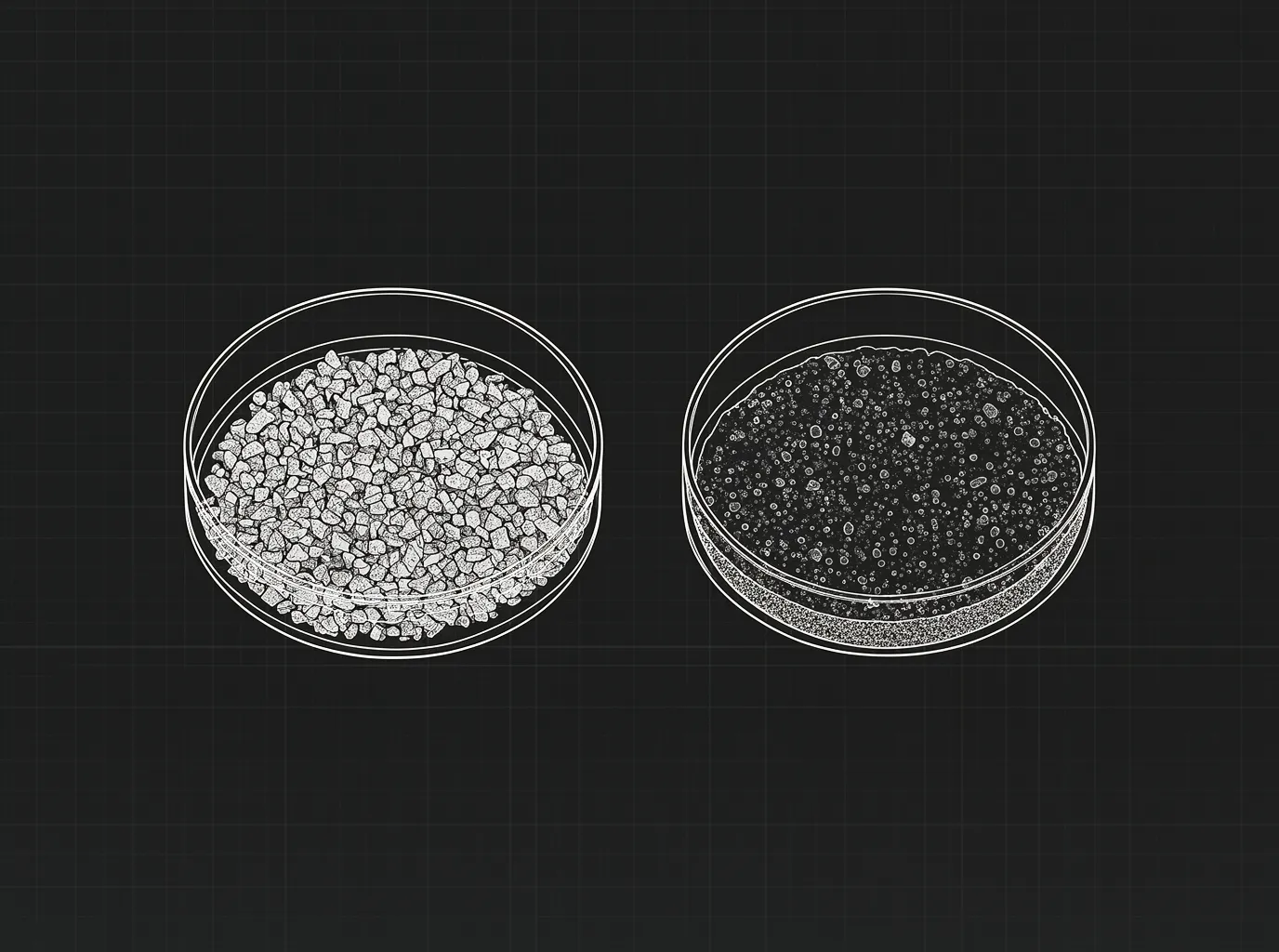
If you are setting up a planted tank, the substrate choice comes down to two main options: aqua soil or gravel. Aqua soil is a nutrient-rich, fired clay substrate that actively lowers pH and feeds plant roots. Gravel is inert, meaning it holds plants in place but contributes nothing to water chemistry or nutrition. Both can grow healthy plants, but they work in fundamentally different ways and suit different types of setups.
Aqua soil is the better choice for high-tech planted tanks, demanding carpet plants, and aquarists who want fast growth out of the gate. Gravel works well for low-tech setups, hardy species, and tanks where stable water chemistry matters more than aggressive plant growth. Neither is universally better. The right substrate depends on what you are growing, how much maintenance you are willing to do, and whether you want active or passive chemistry in your tank.
What Is Aqua Soil?
Most aquarists first encounter aqua soil when researching planted tank substrates, and the marketing can make it sound like a requirement. In practice, aqua soil is baked clay granules that have been enriched with organic compounds and nutrients during manufacturing.
Unlike gravel, aqua soil is chemically active. It buffers pH downward (typically to the 6.0 to 6.8 range), softens water by absorbing calcium and magnesium, and releases ammonia during the first few weeks after setup. This ammonia release is intentional. It kickstarts the nitrogen cycle and provides an initial nitrogen source for plant roots. However, it also means the tank is not safe for livestock until the cycle completes.
Aqua soil has a limited nutrient lifespan. Most brands maintain their buffering and nutrient capacity for 12 to 24 months, after which the substrate becomes partially exhausted. You will often notice pH creeping upward and plant growth slowing as the soil ages. At that point, supplementation with root tabs or liquid fertilizers becomes necessary.
Popular brands include ADA Amazonia, Tropica Aquarium Soil, UNS Controsoil, and Fluval Stratum. Each has slightly different nutrient profiles and buffering strength, but the core function is the same.
What Is Gravel?
Gravel is the substrate most aquarists start with, and for good reason. It is inexpensive, widely available, and does not alter water chemistry. In a planted tank context, gravel refers to small, rounded or angular stones (typically 2 to 5 mm in diameter) that serve as an anchoring medium for plant roots.
Because gravel is inert, it does not release nutrients, buffer pH, or soften water. Your tap water parameters remain stable from the start. This is why gravel is often recommended for beginners or for tanks where consistent water chemistry is a priority, such as community tanks with pH-sensitive fish.
Gravel alone will not feed root-feeding plants. If you choose gravel, you will need to supplement with root tabs or use a nutrient-rich base layer (such as a capped soil method) beneath the gravel. Epiphyte and water-column feeders like Anubias, Java Fern, and Bucephalandra do perfectly well in gravel because they pull nutrients from the water, not the substrate.
How They Affect Plant Growth
In most tanks, the substrate is where the majority of nutrient uptake happens for rooted plants. This is where the difference between aqua soil and gravel becomes most visible.
Root Development
Aqua soil has a porous, granular texture that allows roots to penetrate easily. Plants establish faster, spread runners more readily, and develop denser root networks. Carpet plants like Monte Carlo, Dwarf Hairgrass, and Glossostigma perform significantly better in aqua soil because they rely on rapid lateral root spread.
Gravel is denser and offers more resistance. Roots still grow, but establishment is slower. Fine-rooted plants may struggle to anchor in coarse gravel, and carpeting species often fail entirely without a nutrient-rich underlayer.
Nutrient Availability
Aqua soil provides a ready supply of nitrogen, phosphorus, and micronutrients directly at the root zone. In the first several months, this means plants grow with minimal fertilization. This is why new aqua soil tanks often experience explosive initial growth.
Gravel provides zero nutrients on its own. Every element a plant needs must come from root tabs, liquid dosing, or fish waste that accumulates in the substrate over time. This is not necessarily a disadvantage. It gives you complete control over what nutrients are available and in what quantities. In practice, many experienced aquarists prefer this level of control.
Long-Term Performance
Aqua soil degrades over time. The granules soften, compact, and lose their nutrient charge. After 18 to 24 months, you may notice reduced buffering, slower growth, and muddier substrate texture. Replacing aqua soil means a full teardown or significant disruption.
Gravel lasts indefinitely. It does not break down, compact (if properly sized), or lose structural integrity. A gravel tank that is well-maintained with root tabs can perform at a high level for years without substrate replacement. This is usually the point when the long-term cost comparison shifts in gravel's favor.
How They Affect Water Chemistry
If you have ever set up an aqua soil tank and tested the water the next day, you probably noticed the pH had dropped and ammonia was measurable. This is normal, but it is important to plan for.
pH and Hardness
Aqua soil actively pulls pH downward by absorbing carbonate hardness (KH) from the water column. In most setups, this results in a stable pH between 6.0 and 6.8. For fish and plants that prefer soft, acidic water (most South American and Southeast Asian species), this is ideal.
Gravel does not alter pH or hardness at all. Your water stays at whatever your tap provides. If your tap water is hard and alkaline (KH above 6, pH above 7.5), gravel will keep it that way. This is why aquarists with hard water who want soft, acidic conditions often choose aqua soil for its buffering effect.
Ammonia Cycling
New aqua soil releases ammonia for the first 2 to 6 weeks, depending on the brand and how thoroughly it was rinsed. ADA Amazonia is known for particularly high initial ammonia output. This ammonia must be cycled before adding fish. Running a fishless cycle with aqua soil is standard practice.
Gravel produces no ammonia. A gravel tank can be cycled using other ammonia sources (fish food, pure ammonia dosing) or can support a fish-in cycle more safely since there is no substrate-driven spike.
Stability Over Time
This is where the tradeoff becomes clear. Aqua soil provides excellent conditions early but degrades. As its buffering capacity exhausts, pH swings become possible, especially during water changes with harder tap water. You will often notice KH creeping back up as the soil loses its absorption capacity.
Gravel offers unchanging stability. The chemistry you start with is the chemistry you keep. For tanks housing sensitive livestock alongside plants, this predictability can be more valuable than the growth advantage of aqua soil.
Cost Comparison
In most setups, the upfront and long-term costs tell different stories.
Aqua soil costs significantly more per liter than gravel. A 9-liter bag of quality aqua soil typically runs $25 to $45 USD, and a standard 60 cm tank needs at least two bags for adequate depth. Replacement every 1 to 2 years adds recurring cost.
Gravel costs $1 to $3 per kilogram, and a full substrate bed for a 60 cm tank rarely exceeds $15. Add root tabs ($10 to $15 for a 6-month supply), and the annual cost of maintaining a gravel substrate is still well below a single aqua soil replacement.
Over a 3-year period, a gravel setup with root tabs typically costs 40 to 60 percent less than an equivalent aqua soil setup, assuming one full soil replacement. If you are running multiple tanks, this difference compounds quickly.
When to Choose Aqua Soil
Aqua soil makes the most sense when the tank design demands it. If you have ever tried to grow a dense Monte Carlo carpet in plain gravel, you already know why aqua soil exists.
Choose aqua soil when:
- You are building a high-tech planted tank with CO2 injection and high light
- Your plant list includes demanding carpet species (Monte Carlo, HC Cuba, Glossostigma)
- You want soft, acidic water without needing to use RO water or chemical buffers
- You are comfortable with a fishless cycling period of 4 to 6 weeks
- You plan to rescape or refresh the tank every 1 to 2 years anyway
Aqua soil is also the default choice for aquascaping competition tanks and iwagumi layouts, where dense carpets and precise growth are essential.
When to Choose Gravel
Gravel is the practical choice for the majority of planted tanks that are not chasing competition-level aquascaping. Almost always, a well-maintained gravel tank with root tabs will outperform a neglected aqua soil tank.
Choose gravel when:
- You are running a low-tech tank without CO2 injection
- Your plant list is mostly hardy species (Anubias, Java Fern, Cryptocoryne, Vallisneria)
- You want stable water chemistry without substrate-driven pH swings
- You are keeping fish that prefer neutral to alkaline water
- You want a substrate that lasts indefinitely without replacement
- Budget is a consideration, especially across multiple tanks
Gravel also works well as a cap over nutrient-rich base layers (such as organic potting soil or commercial underlayers), combining the stability of an inert top layer with the nutrition of an active bottom layer. This capped soil method is a popular middle-ground approach.
Can You Mix Aqua Soil and Gravel?
In practice, many aquarists combine both substrates in the same tank. The most common approach is placing aqua soil in heavily planted areas (foreground carpets, midground planting zones) and gravel in hardscape-dominant areas where plants are sparse or absent.
This works, but it requires careful separation. Without a physical barrier (stones, hardscape, or substrate dividers), aqua soil and gravel will mix over time due to maintenance, plant growth, and bottom-dwelling fish. Mixed substrate looks messy and undermines the benefits of both materials.
If you mix substrates, keep the aqua soil layer at least 3 cm deep in planting zones and use hardscape to create natural boundaries. This is what causes most mixed-substrate tanks to succeed or fail: the quality of the separation, not the materials themselves.
Advanced: Substrate Chemistry and the Cation Exchange Capacity
When aqua soil is manufactured, the firing process creates a high cation exchange capacity (CEC) in the clay granules. This means the substrate can hold and release positively charged nutrient ions (ammonium, potassium, calcium, magnesium, iron) at the root zone.
In practice, high CEC substrates act like nutrient batteries. They absorb excess nutrients from the water column and release them when root demand increases. This explains why aqua soil tanks often have lower measurable nutrient levels in the water column but still grow plants aggressively. The nutrients are being held in the substrate and delivered directly to roots.
Gravel has near-zero CEC. It cannot hold or exchange ions. Every nutrient passes through the substrate without being captured. This is why root tabs are essential in gravel. They create localized nutrient pockets that slowly dissolve and feed nearby roots, mimicking (on a smaller scale) what aqua soil does across the entire substrate bed.
This also explains why aqua soil eventually exhausts. The CEC sites become saturated or depleted, and the substrate loses its ability to buffer and feed. At that point, the aqua soil functions more like expensive, fragile gravel.
Advanced: Impact on Biological Filtration
The substrate in any tank is a major surface area for beneficial bacteria. Both aqua soil and gravel support bacterial colonization, but in different ways.
Aqua soil's porous structure provides significantly more surface area per unit volume than smooth gravel. This means aqua soil tanks often develop robust substrate-based biological filtration in addition to whatever filter is running. In heavily planted, lightly stocked tanks, the substrate alone can handle a significant portion of the bioload.
Gravel offers less surface area but compensates with better water flow through the substrate bed. In tanks with undergravel flow or significant circulation near the bottom, gravel's permeability helps prevent anaerobic pockets that can develop in compacted aqua soil.
This is why older aqua soil substrates sometimes develop hydrogen sulfide (rotten egg smell) pockets. As the granules soften and compact, water circulation decreases, and anaerobic bacteria colonize the oxygen-depleted zones. Regular light stirring of the top layer during water changes can prevent this.
Common Myths
"You cannot grow plants in gravel." This is false. Thousands of thriving planted tanks use gravel with root tab supplementation. The key is providing nutrients through tabs and liquid dosing rather than relying on the substrate to supply them. Hardy species like Cryptocoryne, Vallisneria, and Amazon Sword grow perfectly well in gravel.
"Aqua soil lasts forever." It does not. Most aqua soils begin losing buffering capacity and nutrient content within 12 to 18 months. By 24 months, many are functionally exhausted. Planning for eventual supplementation or replacement is part of choosing aqua soil.
"Aqua soil is always better for plants." In the first 6 to 12 months, aqua soil usually produces faster growth. But a properly fertilized gravel tank can match or exceed aqua soil performance over the long term, especially once root tabs establish and detritus accumulates as a natural nutrient source.
"Gravel causes algae because it does not absorb nutrients." Substrate type does not directly cause algae. Algae is driven by light, nutrient imbalance, and instability. A gravel tank with proper lighting and fertilization is no more prone to algae than an aqua soil tank.
FAQ
Is aqua soil worth the extra cost?
For high-tech tanks with demanding plants and CO2 injection, yes. The growth advantage in the first year is significant, and the pH buffering simplifies water chemistry for soft-water species. For low-tech setups with hardy plants, gravel with root tabs delivers comparable results at a fraction of the cost.
How deep should aqua soil be?
Aim for 3 to 5 cm in most areas and up to 7 cm at the back for sloped layouts. Deeper substrate holds more nutrients but increases the risk of anaerobic zones. A depth of 4 cm is the most common recommendation for balanced performance.
Can I switch from gravel to aqua soil without tearing down the tank?
Technically, you can remove gravel and add aqua soil section by section, but it is extremely disruptive. The ammonia release from new aqua soil makes this risky with livestock present. Most aquarists treat a substrate swap as a full rescape.
Do I need root tabs with aqua soil?
Not initially. Fresh aqua soil provides ample nutrients for the first 6 to 12 months. After that, supplementing with root tabs extends the substrate's useful life and keeps heavy root feeders growing well.
What grain size is best for gravel in a planted tank?
Choose 2 to 4 mm diameter gravel. Anything smaller compacts and restricts root growth. Anything larger creates gaps that make planting difficult and allow uprooted stems to float free. Rounded grains are easier on bottom-dwelling fish.
Does aqua soil lower pH permanently?
No. Aqua soil buffers pH downward as long as its CEC capacity holds. Once exhausted (typically 12 to 24 months), pH will gradually rise back toward your tap water's natural level. Regular water testing helps you track when buffering is fading.